 Known to be toxic - Toxic to humans (and suspect other mammals) if ingested.
Plant Names

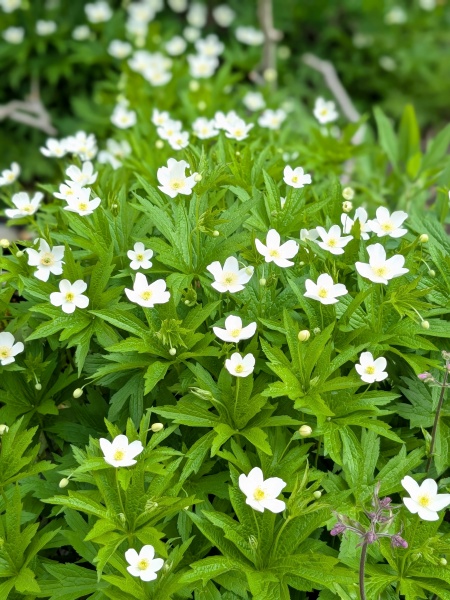
Anemonastrum canadense
Canada Anemone
Anémone du Canada
Synonyms
Canada windflower
meadow anemone
round-leaved anemone
round-leaved thimbleweed
Plant Characteristics
Bloom Colour: White
Bloom Period: May - Jun
Max Height: 1.0 feet
Max Width: 1.0 feet (spreads by rhizome)
Light Condition:
 More than 6 hours of direct sun a day
 More than 2 or 3 hours but less than 6 hours of direct sun a day
Soil conditions:
More than 2 or 3 hours but less than 6 hours of direct sun a day
Soil conditions:
 Tolerates medium soil condition
More than 6 hours of direct sun a day
More than 2 or 3 hours but less than 6 hours of direct sun a day
Tolerates medium soil condition
Lifespan:
Perennial
plants that will come back year after year
Gardener Experience:
 Spreads by rhizome
 Self-seeding
Spreads by rhizome
Self-seeding
Landscape Uses:
 Suitable for Right of Way gardens
 Suitable for wetland garden
 Suitable for rain gardens
 Suitable for shoreline rehabilitation
 Suitable for container garden
 Tolerates boulevard garden conditions
Suitable for Right of Way gardens
Suitable for wetland garden
Suitable for rain gardens
Suitable for shoreline rehabilitation
Suitable for container garden
Tolerates boulevard garden conditions
Ecological Benefits:
No ecological benefits information available.
Tolerates:
 Deer resistant
 Rabbit resistant
 Tolerates limestone conditions
 Tolerates sandy conditions
 Tolerates juglone conditions
 Tolerates transplantation
Deer resistant
Rabbit resistant
Tolerates limestone conditions
Tolerates sandy conditions
Tolerates juglone conditions
Tolerates transplantation
Special Features and Considerations:
Seed and plant distribution status
No seeds available for this plant.
We currently accept seeds for this plant
Fun Facts
Canada Anemone is best planted in larger spaces, rain gardens, or naturalized areas, where it can spread freely and form a dense carpet of white spring blooms. In smaller garden beds, it can quickly outcompete neighbouring plants, but in the right setting, it works well for covering ground and stabilizing moist soils. It tolerates moist conditions and even occasional flooding, making it a strong choice for low areas and stream edges. The white petals are actually sepals, and it attracts early-season pollinators.
Plant Location
Native to Ottawa region: Yes
Distribution according to VASCAN

Ephemeral
Native
Introduced
Excluded
Extirpated
Doubtful
Absent
 Canadensis

Thrives in Ecozones
- Taiga Plains
- Taiga Shield
- Boreal Plains
- Prairies
- Mixed Wood Plains
Ecological Benefits
Butterflies Supported by Anemonastrum canadense
-
Loscopia velata
Veiled ear
Specialized Bees Supported by Anemonastrum canadense
No bee data available for this plant.
Complementary Plants
- No complementary plants found.
Substitute For Non-Native Plants
- Hydrangea (Hydrangea)
- Aegopodium podagraria (Goutweed)
- Convallaria majalis (Lily of the Valley)
- Polygonatum odoratum).1 (Solomon's Seal)
- Lysimachia nummularia (Creeping Jenny)
Sowing Information
Download Seed Envelope Labels (PDF)
- Sowing depth: Sow just below surface
- Sow anytime
- Stratification duration: 0 days
- Self-seeding
- Notes: Might need double dormancy. Sow promptly. Can be kept in fridge up to 2 months.
Harvesting and Seed Sharing
- Harvest start month: August
- Harvesting indicator:
- Seeds easily fall off when you gently pull them off
- Harvesting:
- Use hand to detach from main stem
- Seed viability test:
- No test needed before donating
- Packaging measure: 1 rounded 1/4 teaspoon
- Seed storage:
- Keep moist and cool, in a ziploc bag, in the fridge, with the seeds in soil, paper towel or coffee filter, until donation
- Cultivar: Yes, do not donate unless you know source, and there are no known cultivars in your garden or at proximity
- No harvesting video available at this time.
Toxicity Notes
Toxic to humans (and suspect other mammals) if ingested.