 Known to be toxic - The twigs are toxic if ingested by mammals. Pawpaw seeds contain annonacin and other compounds and should not be consumed. The same applies its leaves and unripe fruit.
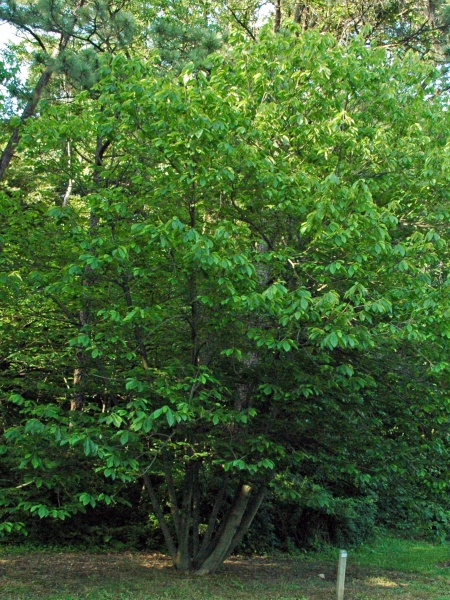
Plant Names

Asimina triloba
Pawpaw
Asiminier trilobé
Synonyms
dog-banana
aciminier
Plant Characteristics
Bloom Colour: Red
Bloom Period: Apr - May
Max Height: 25.0 feet
Max Width: 30.0 feet (spreads by rhizome)
Light Condition:
 More than 6 hours of direct sun a day
 More than 2 or 3 hours but less than 6 hours of direct sun a day
Soil conditions:
More than 2 or 3 hours but less than 6 hours of direct sun a day
Soil conditions:
 Tolerates medium soil condition
More than 6 hours of direct sun a day
More than 2 or 3 hours but less than 6 hours of direct sun a day
Tolerates medium soil condition
Lifespan:
Perennial
plants that will come back year after year
Plant is
dioecious
Need a male and female plant to produce seeds
Gardener Experience:
 Spreads by rhizome
Spreads by rhizome
Landscape Uses:
No landscape information available.
Ecological Benefits:
No ecological benefits information available.
Tolerates:
 Tolerates juglone conditions
Tolerates juglone conditions
Special Features and Considerations:
 This plant is endangered
 This plant causes skin rashes
This plant is endangered
This plant causes skin rashes
Seed and plant distribution status
No seeds available for this plant.
We currently accept seeds for this plant
Fun Facts
Pawpaw is best suited for rich, moist woodland settings or sheltered garden spaces. It prefers part shade when young and can tolerate more sun as it matures. Because it forms colonies, it is better suited for larger spaces or naturalized plantings rather than tight garden beds. It produces unique maroon flowers in spring, followed by large fruits in late summer with a tropical-like flavour.
Pawpaw is slow to establish, particularly during the first few years, while developing its extensive root system. It is often not self-fertile. Planting two or more genetically different trees improves the likelihood of fruit production. Hand-pollination may improve fruit set in some gardens. Fruit ripens quickly once it begins to soften, so check regularly in late summer. Large, soft leaves can become tattered or unattractive later in the season; this is normal and not usually a sign of a problem. Protect young trees from deer and rabbits if browsing is common. Avoid moving established trees—their fleshy, brittle roots make transplanting difficult.
Pawpaw is slow to establish, particularly during the first few years, while developing its extensive root system. It is often not self-fertile. Planting two or more genetically different trees improves the likelihood of fruit production. Hand-pollination may improve fruit set in some gardens. Fruit ripens quickly once it begins to soften, so check regularly in late summer. Large, soft leaves can become tattered or unattractive later in the season; this is normal and not usually a sign of a problem. Protect young trees from deer and rabbits if browsing is common. Avoid moving established trees—their fleshy, brittle roots make transplanting difficult.
Plant Location
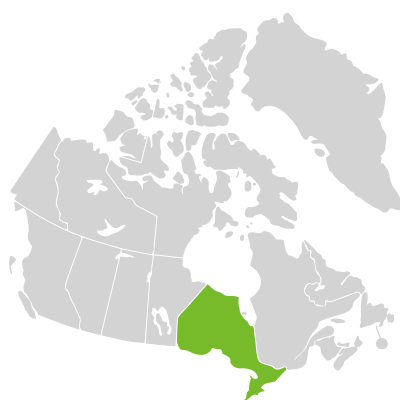
Distribution according to VASCAN
Ephemeral
Native
Introduced
Excluded
Extirpated
Doubtful
Absent
 Canadensis

Thrives in Ecozones
- Mixed Wood Plains
Ecological Benefits
Butterflies Supported by Asimina triloba
-
Protographium marcellus
Zebra swallowtail
Specialized Bees Supported by Asimina triloba
No bee data available for this plant.
Complementary Plants
- No complementary plants found.
Substitute For Non-Native Plants
- Magnoliaceae (Magnolia)
Sowing Information
Download Seed Envelope Labels (PDF)
- Sowing depth: Sow just below surface
- Sow by January
- Stratification duration: 90 days
Harvesting and Seed Sharing
- Harvest start month: September
- Harvesting indicator:
- Berries are ripen and easily fall off or have fallen off
- Harvesting:
- Squeeze berries to extract seeds, wash with soapy water, rinse throroughly
- Seed viability test:
- No test needed before donating
- Packaging measure: Six (6) seeds (eyeball)
- Seed storage:
- Keep moist and cool, in a ziploc bag, in the fridge, with the seeds in soil, paper towel or coffee filter, until donation
- Cultivar: Yes, do not donate unless you know source, and there are no known cultivars in your garden or at proximity
- Remove non-seed material
- No harvesting video available at this time.
Toxicity Notes
The twigs are toxic if ingested by mammals. Pawpaw seeds contain annonacin and other compounds and should not be consumed. The same applies its leaves and unripe fruit.