 Known to be toxic - The seeds and other plant parts are considered poisonous if eaten. Consumption can cause digestive upset and other symptoms. Keep away from children and pets.
Plant Names

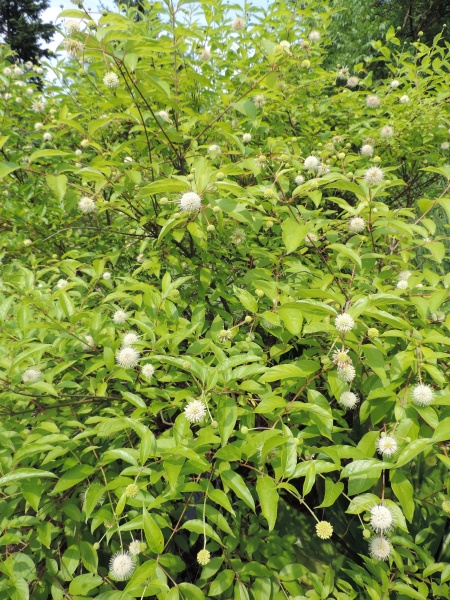
Cephalanthus occidentalis
Eastern Buttonbush
Céphalanthe occidental
Synonyms
bois noir
bois-bouton
céphalante commun
céphalante occidental
Plant Characteristics
Bloom Colour: White
Bloom Period: Jun - Jul
Max Height: 12.0 feet
Max Width: 4.0 feet
Light Condition:
 More than 6 hours of direct sun a day
 More than 2 or 3 hours but less than 6 hours of direct sun a day
Soil conditions:
More than 2 or 3 hours but less than 6 hours of direct sun a day
Soil conditions:
 Tolerates medium soil condition
More than 6 hours of direct sun a day
More than 2 or 3 hours but less than 6 hours of direct sun a day
Tolerates medium soil condition
Lifespan:
Perennial
plants that will come back year after year
Plant is
dioecious
Need a male and female plant to produce seeds
Gardener Experience:
 Easy to germinate
 Self-seeding
Easy to germinate
Self-seeding
Landscape Uses:
 Suitable for wetland garden
 Suitable for rain gardens
 Suitable for shoreline rehabilitation
 Suitable for container garden
 Suitable for school gardens
 Can be used as a hedge
Suitable for wetland garden
Suitable for rain gardens
Suitable for shoreline rehabilitation
Suitable for container garden
Suitable for school gardens
Can be used as a hedge
Ecological Benefits:
No ecological benefits information available.
Tolerates:
 Tolerates salt conditions
 Deer resistant
 Rabbit resistant
 Tolerates limestone conditions
 Tolerates sandy conditions
 Tolerates acidic soil conditions
 Tolerates juglone conditions
 Tolerates transplantation
Tolerates salt conditions
Deer resistant
Rabbit resistant
Tolerates limestone conditions
Tolerates sandy conditions
Tolerates acidic soil conditions
Tolerates juglone conditions
Tolerates transplantation
Special Features and Considerations:
Seed and plant distribution status
No seeds available for this plant.
We currently accept seeds for this plant
Fun Facts
Eastern Buttonbush is suited for wet, marshy, or low-lying areas in gardens. It thrives in consistently moist soil and does not tolerate dry soil conditions. It is a multi-stemmed shrub valued for its unique, fragrant, pincushion-like white flower. Flower heads mature into hard spherical ball-like fruits, which usually persist throughout the winter. It is an excellent choice for a pond edge, wet meadow, or low-lying area. It can tolerate standing water and occasional flooding. Once established, it can tolerate periods of somewhat drier soil, but performs best with reliable moisture.
Eastern Buttonbush has a naturally rounded, somewhat irregular form. You can prune in late winter or early spring if you need to control its size or shape. Give it adequate room; its mature size can be surprising in a small garden. It is an excellent native alternative to ornamental shrubs for difficult wet locations.
Eastern Buttonbush has a naturally rounded, somewhat irregular form. You can prune in late winter or early spring if you need to control its size or shape. Give it adequate room; its mature size can be surprising in a small garden. It is an excellent native alternative to ornamental shrubs for difficult wet locations.
Plant Location
Native to Ottawa region: Yes
Distribution according to VASCAN
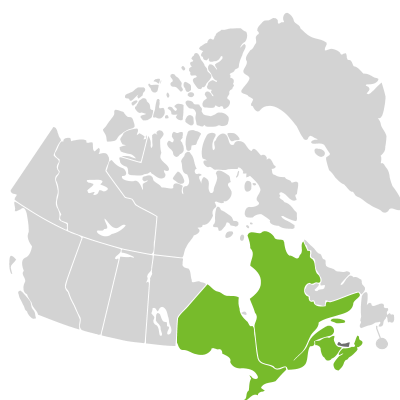
Ephemeral
Native
Introduced
Excluded
Extirpated
Doubtful
Absent
 Canadensis

Thrives in Ecozones
- Atlantic Maritime
- Boreal Shield
- Mixed Wood Plains
Ecological Benefits
Butterflies Supported by Cephalanthus occidentalis
-
Eudryas grata
Beautiful Wood Nymph
Specialized Bees Supported by Cephalanthus occidentalis
No bee data available for this plant.
Complementary Plants
- No complementary plants found.
Substitute For Non-Native Plants
- Buddleia (Butterfly Bush)
- Hydrangea (Hydrangea)
- Buxus sempervirens (Boxwood)
Sowing Information
Download Seed Envelope Labels (PDF)
- Sowing depth: Surface sow
- Sow anytime
- Stratification duration: 0 days
- Self-seeding
- Notes: Can be sown in late spring in warm soil.
Harvesting and Seed Sharing
- Harvest start month: September
- Harvesting indicator:
- Seeds easily fall off when you gently pull them off
- Harvesting:
- Shake seed head in paper bag
- Seed viability test:
- No test needed before donating
- Packaging measure: Six (6) seeds (eyeball)
- Seed storage:
- Air dry in paper bag or open container, for a few days until crisp
- Shake seeds to move them once in a while to prevent molding
- Cultivar: Yes, do not donate unless you know source, and there are no known cultivars in your garden or at proximity
- No harvesting video available at this time.
Toxicity Notes
The seeds and other plant parts are considered poisonous if eaten. Consumption can cause digestive upset and other symptoms. Keep away from children and pets.