 Known to be toxic - Clematis species contain irritating compounds. Sap can cause skin irritation, and chewing or eating plant material may cause mouth and digestive irritation. Keep away from children and pets.
Plant Names

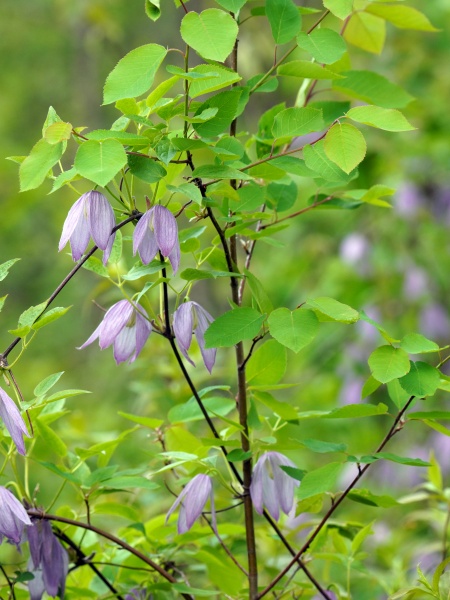
Clematis occidentalis
Purple Clematis
Clématite verticillée
Synonyms
northern blue clematis
purple virgin's-bower
atragène d'Amérique
clématite occidentale
Plant Characteristics
Bloom Colour: Purple
Bloom Period: May - Jul
Max Height: 6.0 feet
Max Width: 4.0 feet
Light Condition:
 More than 6 hours of direct sun a day
 More than 2 or 3 hours but less than 6 hours of direct sun a day
Soil conditions:
More than 2 or 3 hours but less than 6 hours of direct sun a day
Soil conditions:
 Tolerates medium soil condition
More than 6 hours of direct sun a day
More than 2 or 3 hours but less than 6 hours of direct sun a day
Tolerates medium soil condition
Lifespan:
Perennial
plants that will come back year after year
Gardener Experience:
 Suitable for beginner gardeners
 Does not spread uncontrollably
 Self-seeding
Suitable for beginner gardeners
Does not spread uncontrollably
Self-seeding
Landscape Uses:
 Suitable for rock gardens
 Suitable for woodland gardens
Suitable for rock gardens
Suitable for woodland gardens
Ecological Benefits:
No ecological benefits information available.
Tolerates:
 Deer resistant
 Rabbit resistant
 Tolerates juglone conditions
 Tolerates transplantation
Deer resistant
Rabbit resistant
Tolerates juglone conditions
Tolerates transplantation
Special Features and Considerations:
 This plant is septic tank safe
 This plant causes skin rashes
This plant is septic tank safe
This plant causes skin rashes
Seed and plant distribution status
No seeds available for this plant.
We currently accept seeds for this plant
Fun Facts
Purple Clematis is a native perennial vine with attractive blue to purple, bell-shaped flowers appearing in spring. It grows naturally on rocky slopes, woodland edges, cliffs, and open forests. Unlike some garden clematis, it is relatively delicate and has a natural woodland appearance. It is a good choice for a native trellis or woodland garden. It needs support for climbing and prefers cool roots and good drainage. You should avoid disturbing the root system once established. Remove damaged or unwanted growth after flowering. It can take several years to establish. Avoid overly rich or wet soils.
Plant Location
Distribution according to VASCAN
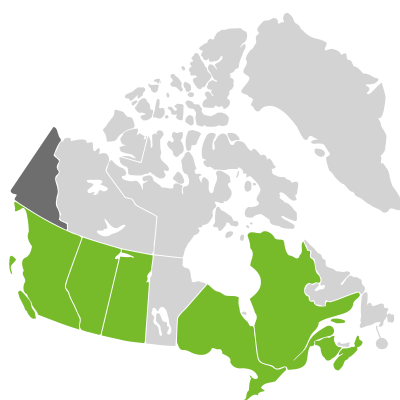
Ephemeral
Native
Introduced
Excluded
Extirpated
Doubtful
Absent
 Canadensis

Thrives in Ecozones
- Boreal Plains
- Montane Cordillera
- Boreal Shield
Ecological Benefits
Butterflies Supported by Clematis occidentalis
No butterfly data available for this plant.
Specialized Bees Supported by Clematis occidentalis
No bee data available for this plant.
Complementary Plants
- No complementary plants found.
Substitute For Non-Native Plants
- Clematis (Non-native Clematis)
- Lonicera).1 (Non-Native Honeysuckle)
- Hedera helix (English Ivy)
- Ipomoea (Morning Glories)
Sowing Information
Download Seed Envelope Labels (PDF)
- Sowing depth: Sow just below surface
- Sow by January
- Stratification duration: 90 days
- Self-seeding
Harvesting and Seed Sharing
- Harvest start month: September
- Harvesting indicator:
- Seeds have become fluffy and can be easily removed by shaking on gently pulling off from stem
- Harvesting:
- Use hand to detach from main stem
- Seed viability test:
- No test needed before donating
- Packaging measure: A dozen (12) seeds (eyeball)
- Seed storage:
- Air dry in paper bag or open container, for a few days until crisp
- Shake seeds to move them once in a while to prevent molding
- Cultivar: Yes, do not donate unless you know source, and there are no known cultivars in your garden or at proximity
- Harvesting video: Watch here
Toxicity Notes
Clematis species contain irritating compounds. Sap can cause skin irritation, and chewing or eating plant material may cause mouth and digestive irritation. Keep away from children and pets.