Plant Names

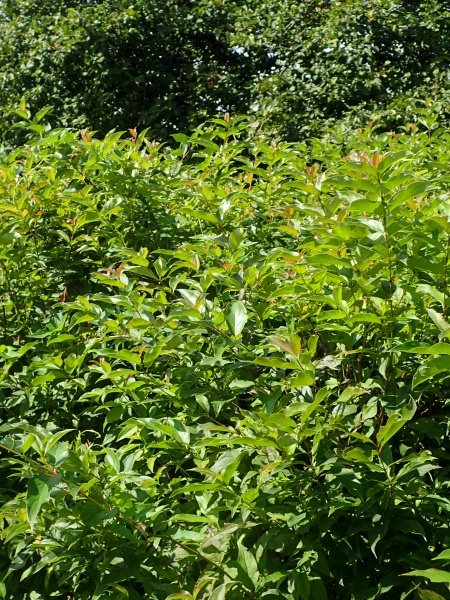
Cornus racemosa
Grey Dogwood
Cornouiller à grappes
Synonyms
northern swamp dogwood
panicled dogwood
red-panicled dogwood
Plant Characteristics
Bloom Colour: White
Bloom Period: May - Jun
Max Height: 15.0 feet
Max Width: 15.0 feet (spreads by rhizome)
Light Condition:
 More than 6 hours of direct sun a day
 More than 2 or 3 hours but less than 6 hours of direct sun a day
Soil conditions:
More than 2 or 3 hours but less than 6 hours of direct sun a day
Soil conditions:
 Tolerates medium soil condition
More than 6 hours of direct sun a day
More than 2 or 3 hours but less than 6 hours of direct sun a day
Tolerates medium soil condition
Lifespan:
Perennial
plants that will come back year after year
Gardener Experience:
 Spreads by rhizome
Spreads by rhizome
Landscape Uses:
 Suitable for rain gardens
 Suitable for shoreline rehabilitation
 Suitable for school gardens
 Can be used as a hedge
Suitable for rain gardens
Suitable for shoreline rehabilitation
Suitable for school gardens
Can be used as a hedge
Ecological Benefits:
 Butterfly host
 Bee host
 Keystone species
Butterfly host
Bee host
Keystone species
Tolerates:
 Deer resistant
 Rabbit resistant
 Tolerates limestone conditions
 Tolerates acidic soil conditions
 Tolerates juglone conditions
Deer resistant
Rabbit resistant
Tolerates limestone conditions
Tolerates acidic soil conditions
Tolerates juglone conditions
Special Features and Considerations:
Seed and plant distribution status
No seeds available for this plant.
We currently accept seeds for this plant
Fun Facts
Grey dogwood is a tolerant of all kinds of soil conditions and city pollution. Leaves turn a subtle purple-red colour in fall, and the red on the tip of branches lasts into the winter.
Plant Location
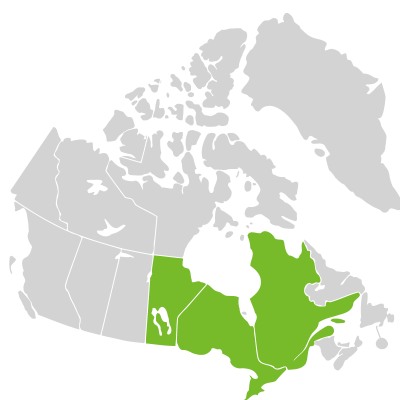
Native to Ottawa region: Yes
Distribution according to VASCAN
Ephemeral
Native
Introduced
Excluded
Extirpated
Doubtful
Absent
 Canadensis

Thrives in Ecozones
- Boreal Plains
- Prairies
- Mixed Wood Plains
Ecological Benefits
Butterflies Supported by Cornus racemosa
-
Celastrina ladon
Spring Azure - Azur Printanier -
Hyalophora cecropia
Cecropia moth - Saturnie Cécropia
Specialized Bees Supported by Cornus racemosa
- Andrena fragilis
- Andrena integra
- Andrena persimulata
Complementary Plants
- No complementary plants found.
Substitute For Non-Native Plants
- Rhamnus cathartica (Common Buckthorn)
- Rhamnus frangula (Glossy Buckthorn)
- Euonymus alatus (Burning Bush)
Sowing Information
Download Seed Envelope Labels (PDF)
- Sowing depth: Sow just below surface
- Sow by December
- Stratification duration: 120 days
- Notes: Warm moist stratify 60d, then cold moist stratify 60d.
Harvesting and Seed Sharing
- Harvest start month: September
- Harvesting indicator:
- Berries are ripen and easily fall off or have fallen off
- Harvesting:
- Squeeze berries to extract seeds, wash with soapy water, rinse throroughly
- Seed viability test:
- Put seed in container filled with water
- If the seed goes at the bottom of the container, you can donate
- If seed floats, do not donate
- Packaging measure: Six (6) seeds (eyeball)
- Seed storage:
- Air dry in paper bag or open container, for a few days until crisp
- Shake seeds to move them once in a while to prevent molding
- Cultivar: No, you can donate without knowing the source as there are only straight species
- Remove non-seed material
- No harvesting video available at this time.
Toxicity Notes
Inadequate information on toxicity found.