Plant Names

Cryptotaenia canadensis
Canada Honewort
Cryptoténie du Canada
Synonyms
Japanese parsley
white chervil
wild chervil
Plant Characteristics
Bloom Colour: White
Bloom Period: Jun - Sep
Max Height: 2.0 feet
Max Width: 2.0 feet (spreads by rhizome)
Light Condition:
 Less than 2 or 3 hours of direct sun a day
Soil conditions:
Less than 2 or 3 hours of direct sun a day
Soil conditions:
 Tolerates medium soil condition
Less than 2 or 3 hours of direct sun a day
Tolerates medium soil condition
Lifespan:
Perennial
plants that will come back year after year
Gardener Experience:
 Suitable for beginner gardeners
 Does not spread uncontrollably
 Spreads by rhizome
 Self-seeding
Suitable for beginner gardeners
Does not spread uncontrollably
Spreads by rhizome
Self-seeding
Landscape Uses:
 Suitable for container garden
 Suitable for school gardens
 Suitable for woodland gardens
Suitable for container garden
Suitable for school gardens
Suitable for woodland gardens
Ecological Benefits:
 Butterfly host
Butterfly host
Tolerates:
 Tolerates juglone conditions
 Tolerates transplantation
Tolerates juglone conditions
Tolerates transplantation
Special Features and Considerations:
Seed and plant distribution status
No seeds available for this plant.
We currently accept seeds for this plant
Fun Facts
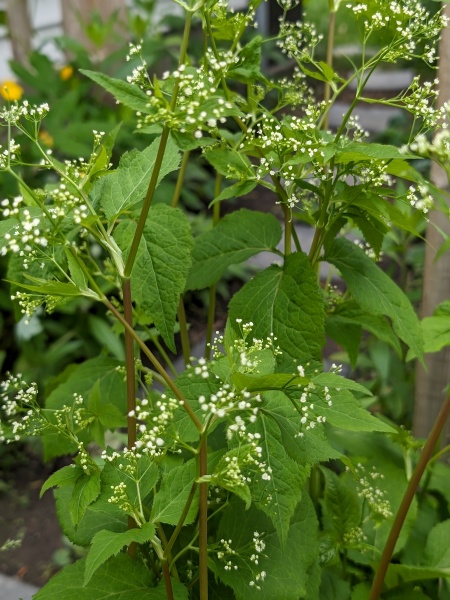
Canada Honewort is delicate with finely divided, bright green leaves and airy umbels of tiny white flowers that appear from early to mid‑summer. Its soft, fern‑like texture makes it an elegant filler in woodland gardens, shady borders, and naturalized understories. Its foliage remains attractive through the growing season, and its small white flowers provide understated charm in early summer. Establishment is straightforward: regular watering in the first season and a layer of leaf mulch help mimic its natural forest habitat. Allow leaf litter to remain around the plant to recreate natural forest soil conditions. A good choice for gardeners seeking subtle texture rather than bold floral display.
Plant Location
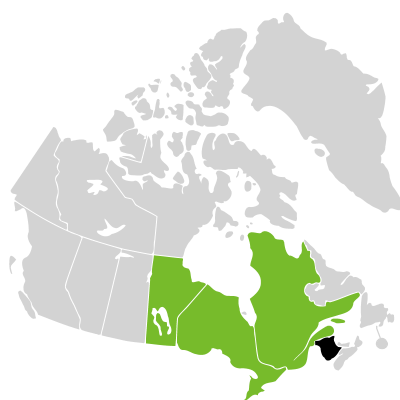
Native to Ottawa region: Yes
Distribution according to VASCAN
Ephemeral
Native
Introduced
Excluded
Extirpated
Doubtful
Absent
 Canadensis

Thrives in Ecozones
- Boreal Plains
- Mixed Wood Plains
Ecological Benefits
Butterflies Supported by Cryptotaenia canadensis
-
Papilio polyxenes
Black Swallowtail - Papillon du Céleri
Specialized Bees Supported by Cryptotaenia canadensis
No bee data available for this plant.
Complementary Plants
- Aquilegia canadensis
Red Columbine
Ancolie du Canada - Elymus hystrix
Bottlebrush Grass
Élyme étalé - Geranium maculatum
Spotted Geranium
Géranium maculé - Osmorhiza longistylis
Smooth Sweet Cicely
Osmorhize à long style - Thalictrum pubescens
Tall Meadow-rue
Pigamon pubescent
Substitute For Non-Native Plants
- Anethum graveolens (Dill)
- Petroselinum crispum (Parsley)
Sowing Information
Download Seed Envelope Labels (PDF)
- Sowing depth: Surface sow
- Sow by February
- Stratification duration: 60 days
- Self-seeding
Harvesting and Seed Sharing
- Harvest start month: August
- Harvesting indicator:
- Seeds easily spring away from plant when you touch the pod
- Harvesting:
- Use hand to detach from main stem
- Seed viability test:
- No test needed before donating
- Packaging measure: 1 rounded 1/32 teaspoon
- Seed storage:
- Air dry in paper bag or open container, for a few days until crisp
- Shake seeds to move them once in a while to prevent molding
- Cultivar: No, you can donate without knowing the source as there are only straight species
- Harvesting video: Watch here
Toxicity Notes
Not known to be toxic to mammals if ingested.