 Known to be toxic - Toxic to mammals if ingested.
Plant Names

Erigeron philadelphicus
Philadelphia Fleabane
Vergerette de Philadelphie
Synonyms
marsh fleabane
Philadelphia daisy
érigéron de Philadelphie
Plant Characteristics
Bloom Colour: White
Bloom Period: Apr - Nov
Max Height: 3.0 feet
Max Width: 2.0 feet (spreads by rhizome)
Light Condition:
 More than 6 hours of direct sun a day
Soil conditions:
More than 6 hours of direct sun a day
Soil conditions:
 Tolerates dry soil condition
 Tolerates medium soil condition
More than 6 hours of direct sun a day
Tolerates dry soil condition
Tolerates medium soil condition
Lifespan:
Biennial
plants that will take two years to bloom, and then will die
Gardener Experience:
 Spreads by rhizome
 Easy to germinate
 Self-seeding
Spreads by rhizome
Easy to germinate
Self-seeding
Landscape Uses:
 Suitable for rock gardens
 Suitable for shoreline rehabilitation
 Suitable for container garden
 Suitable for school gardens
 Suitable for woodland gardens
Suitable for rock gardens
Suitable for shoreline rehabilitation
Suitable for container garden
Suitable for school gardens
Suitable for woodland gardens
Ecological Benefits:
 Butterfly host
 Bee host
Butterfly host
Bee host
Tolerates:
 Tolerates juglone conditions
Tolerates juglone conditions
Special Features and Considerations:
 This plant causes skin rashes
This plant causes skin rashes
Seed and plant distribution status
No seeds available for this plant.
We currently accept seeds for this plant
Fun Facts
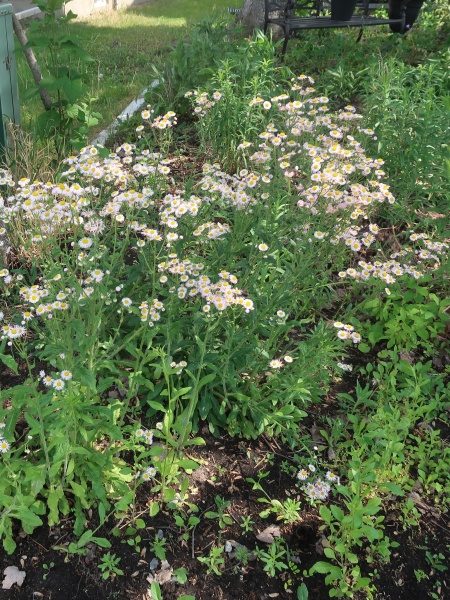
Philadelphia fleabane has delicate white to pale pink daisy-like flowers surrounding yellow centres. Its early flowering makes it useful for adding colour to a naturalized garden before many summer perennials are in bloom.
Philadelphia fleabane is easy to grow and is adaptable. It may appear spontaneously in lawns and garden beds.
You can cut back after flowering if a tidier appearance is desired. It is best suited to informal gardens and meadow plantings.
Philadelphia fleabane is easy to grow and is adaptable. It may appear spontaneously in lawns and garden beds.
You can cut back after flowering if a tidier appearance is desired. It is best suited to informal gardens and meadow plantings.
Plant Location
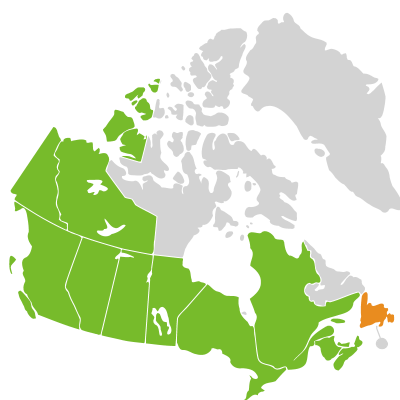
Native to Ottawa region: Yes
Distribution according to VASCAN
Ephemeral
Native
Introduced
Excluded
Extirpated
Doubtful
Absent
 Canadensis

Thrives in Ecozones
- Taiga Plains
- Atlantic Maritime
- Taiga Shield
- Boreal Plains
- Montane Cordillera
- Prairies
- Hudson Plains
- Boreal Shield
- Pacific Maritime
Ecological Benefits
Butterflies Supported by Erigeron philadelphicus
No butterfly data available for this plant.
Specialized Bees Supported by Erigeron philadelphicus
- Megachile inimica
- Megachile pugnata
- Pseudopanurgus aestivalis
Complementary Plants
- Antennaria neglecta
Field Pussytoes
Antennaire négligée - Geum triflorum
Prairie Smoke
Benoîte à trois fleurs - Glyceria canadensis
Canada Mannagrass
Glycérie du Canada - Packera paupercula
Balsam Groundsel
Séneçon appauvri - Penstemon hirsutus
Hairy Beardtongue
Penstémon hirsute
Substitute For Non-Native Plants
- Leucanthemum (Shasta Daisy)
- Gerbera (Gerbera Daisy)
Sowing Information
Download Seed Envelope Labels (PDF)
- Sowing depth: Surface sow
- Sow anytime
- Stratification duration: 0 days
- Self-seeding
- Notes: Can be sown in late spring in warm soil. Scarify if not hulled.
Harvesting and Seed Sharing
- Harvest start month: June
- Harvesting indicator:
- Seeds have become fluffy and can be easily removed by shaking on gently pulling off from stem
- Harvesting:
- Shake seed head in paper bag
- Seed viability test:
- No test needed before donating
- Packaging measure: 1 rounded 1/32 teaspoon
- Seed storage:
- Air dry in paper bag or open container, for a few days until crisp
- Shake seeds to move them once in a while to prevent molding
- Cultivar: Yes, do not donate unless you know source, and there are no known cultivars in your garden or at proximity
- Harvesting video: Watch here
Toxicity Notes
Toxic to mammals if ingested.