 Known to be toxic - Toxic to mammals if ingested. Ash trees contain toxic compounds in their leaves, seeds, bark, and berries that can be harmful if ingested or come into contact with skin.
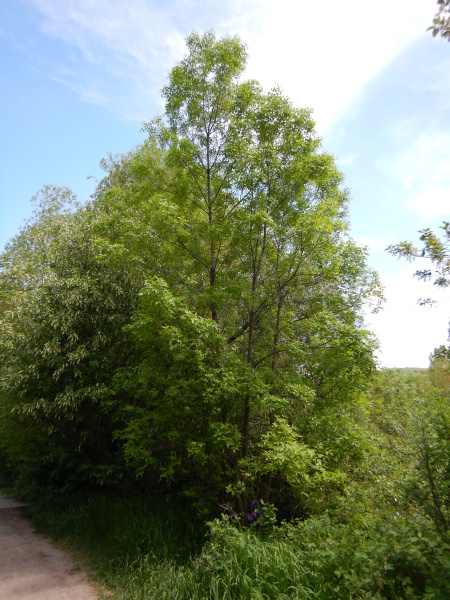
Source: Matt Lavine
Plant Names

Fraxinus pennsylvanica
Red Ash
Frêne rouge
Synonyms
downy ash
green ash
northern red ash
frêne de Pennsylvanie
Plant Characteristics
Bloom Colour: Green
Bloom Period: Apr - May
Max Height: 70.0 feet
Max Width: 50.0 feet (spreads by rhizome)
Light Condition:
 More than 6 hours of direct sun a day
Soil conditions:
More than 6 hours of direct sun a day
Soil conditions:
 Tolerates medium soil condition
More than 6 hours of direct sun a day
Tolerates medium soil condition
Lifespan:
Perennial
plants that will come back year after year
Plant is
dioecious
Need a male and female plant to produce seeds
Gardener Experience:
 Spreads by rhizome
Spreads by rhizome
Landscape Uses:
 Suitable for wetland garden
 Suitable for shoreline rehabilitation
Suitable for wetland garden
Suitable for shoreline rehabilitation
Ecological Benefits:
 Butterfly host
 Keystone species
Butterfly host
Keystone species
Tolerates:
 Tolerates limestone conditions
 Tolerates juglone conditions
Tolerates limestone conditions
Tolerates juglone conditions
Special Features and Considerations:
 This plant causes skin rashes
This plant causes skin rashes
Seed and plant distribution status
No seeds available for this plant.
We currently accept seeds for this plant
Fun Facts
Red Ash has straight trunk, compound leaves, and an attractive, rounded crown. It can become a substantial tree and is best suited to larger properties, parks, restoration projects, and naturalized areas. It tolerates wet soil and occasional flooding. It grows relatively quickly. Red ash is highly susceptible to emerald ash borer (EAB), which has devastated ash populations throughout Ontario. Because of EAB, planting new ash trees for ornamental purposes is generally not recommended where the pest is established.
Plant Location
Native to Ottawa region: Yes
Distribution according to VASCAN
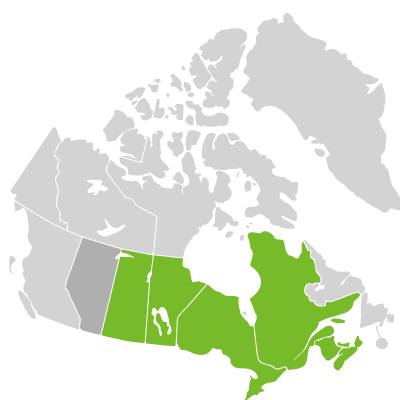
Ephemeral
Native
Introduced
Excluded
Extirpated
Doubtful
Absent
 Canadensis

Thrives in Ecozones
- Atlantic Maritime
- Boreal Plains
- Prairies
- Boreal Shield
- Mixed Wood Plains
Ecological Benefits
Butterflies Supported by Fraxinus pennsylvanica
-
Acronicta radcliffei
Radcliffe’s dagger -
Apatelodes torrefacta
Spotted Apatelodes -
Cingilia catenaria
Chain-dotted geometer - Arpenteuse caténaire -
Papilio glaucus
Eastern Tiger Swallowtail - Papillon Tigré de l'Est -
Satyrium caryaevorus
Hickory Hairstreak - Porte-queue du Caryer
Specialized Bees Supported by Fraxinus pennsylvanica
No bee data available for this plant.
Complementary Plants
- No complementary plants found.
Substitute For Non-Native Plants
- Rhamnus cathartica (Common Buckthorn)
- Rhamnus frangula (Glossy Buckthorn)
- Acer japonicum (Japanese Maple)
- Acer platanoides (Norway Maple)
Sowing Information
Download Seed Envelope Labels (PDF)
- Sowing depth: Sow just below surface
- Sow by February
- Stratification duration: 60 days
- Notes: Soak for 24h.
Harvesting and Seed Sharing
- Harvest start month: September
- Harvesting indicator:
- Pods are released from plant
- Harvesting:
- Open the pod, remove seeds
- Seed viability test:
- No test needed before donating
- Packaging measure: Six (6) seeds (eyeball)
- Seed storage:
- Air dry in paper bag or open container, for a few days until crisp
- Shake seeds to move them once in a while to prevent molding
- Cultivar: Yes, do not donate unless you know source, and there are no known cultivars in your garden or at proximity
- No harvesting video available at this time.
Toxicity Notes
Toxic to mammals if ingested. Ash trees contain toxic compounds in their leaves, seeds, bark, and berries that can be harmful if ingested or come into contact with skin.