Plant Names

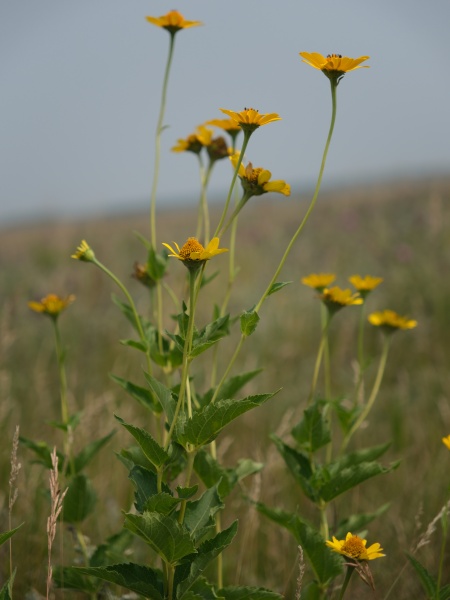
Heliopsis helianthoides
False Sunflower
Héliopsis faux-hélianthe
Synonyms
smooth oxeye
sunflower heliopsis
sunflower-everlasting
sweet oxeye
Plant Characteristics
Bloom Colour: Yellow
Bloom Period: Jun - Sep
Max Height: 5.0 feet
Max Width: 3.0 feet
Light Condition:
 More than 6 hours of direct sun a day
 More than 2 or 3 hours but less than 6 hours of direct sun a day
Soil conditions:
More than 2 or 3 hours but less than 6 hours of direct sun a day
Soil conditions:
 Tolerates dry soil condition
 Tolerates medium soil condition
More than 6 hours of direct sun a day
More than 2 or 3 hours but less than 6 hours of direct sun a day
Tolerates dry soil condition
Tolerates medium soil condition
Lifespan:
Perennial
plants that will come back year after year
Gardener Experience:
 Suitable for beginner gardeners
 Does not spread uncontrollably
 Easy to germinate
 Self-seeding
Suitable for beginner gardeners
Does not spread uncontrollably
Easy to germinate
Self-seeding
Landscape Uses:
 Suitable for rain gardens
 Suitable for shoreline rehabilitation
 Suitable for container garden
 Suitable for school gardens
Suitable for rain gardens
Suitable for shoreline rehabilitation
Suitable for container garden
Suitable for school gardens
Ecological Benefits:
 Butterfly host
 Bee host
 Keystone species
Butterfly host
Bee host
Keystone species
Tolerates:
 Tolerates drought conditions
 Deer resistant
 Rabbit resistant
 Tolerates limestone conditions
 Tolerates juglone conditions
Tolerates drought conditions
Deer resistant
Rabbit resistant
Tolerates limestone conditions
Tolerates juglone conditions
Special Features and Considerations:
 This plant is septic tank safe
This plant is septic tank safe
Seed and plant distribution status
No seeds available for this plant.
We currently accept seeds for this plant
Fun Facts
False Sunflower is a long-lived, easy-to-grow perennial that produces bright yellow daisy-like flowers. It is an excellent choice for borders, pollinator gardens, cottage gardens, and naturalized areas. Once established, it tolerates short periods of drought and is an excellent cut flower.
False Sunflower attracts native bees, bumble bees, butterflies, skippers, hoverflies, and beneficial wasps. Goldfinches and other seed-eating birds feed on the seeds in autumn. It is very easy to grow and long-lived. It forms tidy clumps and spreads slowly.
False Sunflower attracts native bees, bumble bees, butterflies, skippers, hoverflies, and beneficial wasps. Goldfinches and other seed-eating birds feed on the seeds in autumn. It is very easy to grow and long-lived. It forms tidy clumps and spreads slowly.
Plant Location
Native to Ottawa region: Yes
Distribution according to VASCAN
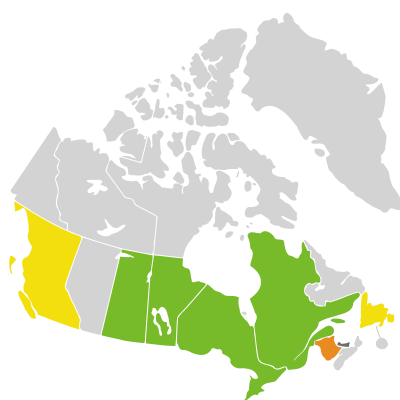
Ephemeral
Native
Introduced
Excluded
Extirpated
Doubtful
Absent
 Canadensis

Thrives in Ecozones
- Atlantic Maritime
- Boreal Plains
- Boreal Shield
- Pacific Maritime
- Mixed Wood Plains
Ecological Benefits
Butterflies Supported by Heliopsis helianthoides
-
Chlorochlamys chloroleucaria
Blackberry looper - Arpenteuse des ronces
Specialized Bees Supported by Heliopsis helianthoides
- Melissodes trinodis
Complementary Plants
- Agastache foeniculum
Blue Giant-hyssop
Agastache fenouil - Andropogon gerardi
Big Bluestem
Barbon de Gérard - Solidago juncea
Early Goldenrod
Verge d'or jonciforme - Symphyotrichum oolentangiense
Sky Blue Aster
Aster azuré - Veronicastrum virginicum
Culver's Root
Véronique de Virginie
Substitute For Non-Native Plants
- Leucanthemum (Shasta Daisy)
- Gerbera (Gerbera Daisy)
- NA (Non-native False Sunflower)
Sowing Information
Download Seed Envelope Labels (PDF)
- Sowing depth: Sow just below surface
- Sow by March
- Stratification duration: 30 days
- Self-seeding
Harvesting and Seed Sharing
- Harvest start month: September
- Harvesting indicator:
- Seeds are dark and dry, and easily fall off when you gently pull them off
- Harvesting:
- Shake seed head in paper bag
- Seed viability test:
- No test needed before donating
- Packaging measure: 1 rounded 1/8 teaspoon
- Seed storage:
- Air dry in paper bag or open container, for a few days until crisp
- Shake seeds to move them once in a while to prevent molding
- Cultivar: Yes, do not donate unless you know source, and there are no known cultivars in your garden or at proximity
- Remove non-seed material
- Harvesting video: Watch here
Toxicity Notes
Inadequate information on toxicity found.