 Known to be toxic - Toxic to mammals if ingested.
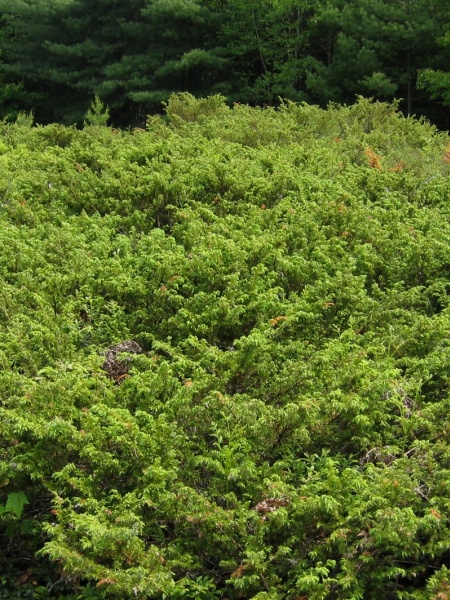
Source: Keith Kanoti
Plant Names

Juniperus communis var. depressa
Depressed Juniper
Genévrier commun déprimé
Synonyms
dwarf juniper
ground juniper
low juniper
old field juniper
genévrier commun
genévrier du Canada
genévrier nain
Plant Characteristics
Bloom Colour: Green
Bloom Period: May - Jun
Max Height: 4.0 feet
Max Width: 10.0 feet (spreads by rhizome)
Light Condition:
 More than 6 hours of direct sun a day
Soil conditions:
More than 6 hours of direct sun a day
Soil conditions:
 Tolerates medium soil condition
More than 6 hours of direct sun a day
Tolerates medium soil condition
Lifespan:
Perennial
plants that will come back year after year
Plant is
dioecious
Need a male and female plant to produce seeds
Gardener Experience:
 Does not spread uncontrollably
 Spreads by rhizome
Does not spread uncontrollably
Spreads by rhizome
Landscape Uses:
 Suitable for rock gardens
 Suitable for school gardens
Suitable for rock gardens
Suitable for school gardens
Ecological Benefits:
 Butterfly host
Butterfly host
Tolerates:
 Tolerates drought conditions
 Deer resistant
 Rabbit resistant
 Tolerates sandy conditions
 Tolerates juglone conditions
 Tolerates transplantation
Tolerates drought conditions
Deer resistant
Rabbit resistant
Tolerates sandy conditions
Tolerates juglone conditions
Tolerates transplantation
Special Features and Considerations:
Seed and plant distribution status
No seeds available for this plant.
We currently accept seeds for this plant
Fun Facts
Depressed Juniper forms a spreading mat of blue-green needles and is often found on rocky slopes, sandy soils, and open woodlands. It prefers full sun and excellent drainage. Its evergreen foliage provides year-round structure and makes it useful for rock gardens, dry slopes, and naturalized landscapes.
Depressed Juniper is very drought tolerant once established. It requires well-drained soil and does not tolerate wet, heavy soils. It is slow growing and is excellent for low-maintenance.
Depressed Juniper is very drought tolerant once established. It requires well-drained soil and does not tolerate wet, heavy soils. It is slow growing and is excellent for low-maintenance.
Plant Location

Ecological Benefits
Butterflies Supported by Juniperus communis var. depressa
-
Callophrys gryneus
Juniper Hairstreak - Porte-queue du Genévrier -
Cingilia catenaria
Chain-dotted geometer - Arpenteuse caténaire -
Eupithecia miserulata
American Common Pug
Specialized Bees Supported by Juniperus communis var. depressa
No bee data available for this plant.
Complementary Plants
- No complementary plants found.
Substitute For Non-Native Plants
- Chamaecyparis (False Cypress)
- Juniperus (Juniper Cultivar)
Sowing Information
Download Seed Envelope Labels (PDF)
- Sowing depth: Sow just below surface
- Sow by January
- Stratification duration: 90 days
- Notes: Stand in hot tap water 6h.
Harvesting and Seed Sharing
- Harvest start month: September
- Harvesting indicator:
- Berries are ripen and easily fall off or have fallen off
- Harvesting:
- Squeeze berries to extract seeds, wash with soapy water, rinse throroughly
- Seed viability test:
- No test needed before donating
- Packaging measure: A dozen (12) seeds (eyeball)
- Seed storage:
- Air dry in paper bag or open container, for a few days until crisp
- Shake seeds to move them once in a while to prevent molding
- Cultivar: Yes, do not donate unless you know source, and there are no known cultivars in your garden or at proximity
- No harvesting video available at this time.
Toxicity Notes
Toxic to mammals if ingested.