Source: No author listed
Plant Names

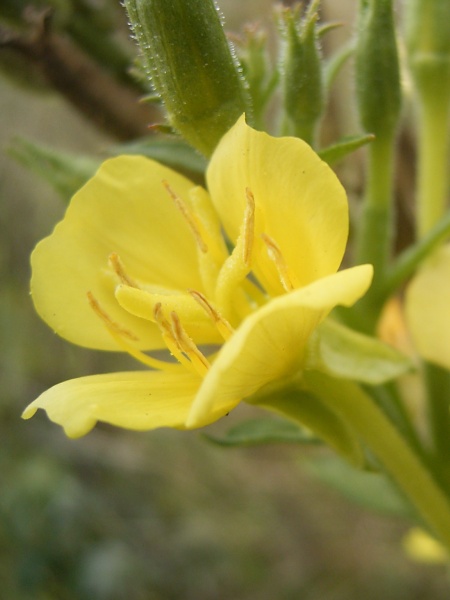
Oenothera parviflora
Small-flowered Evening-primrose
Onagre parviflore
Synonyms
least evening-primrose
northern evening-primrose
onagre à petites fleurs
onagre muriquée
Plant Characteristics
Bloom Colour: Yellow
Bloom Period: Jul - Oct
Max Height: 4.0 feet
Max Width: 2.0 feet
Light Condition:
 More than 6 hours of direct sun a day
Soil conditions:
More than 6 hours of direct sun a day
Soil conditions:
 Tolerates dry soil condition
More than 6 hours of direct sun a day
Tolerates dry soil condition
Lifespan:
Biennial
plants that will take two years to bloom, and then will die
Gardener Experience:
 Does not spread uncontrollably
 Easy to germinate
 Self-seeding
Does not spread uncontrollably
Easy to germinate
Self-seeding
Landscape Uses:
 Suitable for rock gardens
 Suitable for container garden
 Suitable for school gardens
Suitable for rock gardens
Suitable for container garden
Suitable for school gardens
Ecological Benefits:
No ecological benefits information available.
Tolerates:
 Tolerates juglone conditions
Tolerates juglone conditions
Special Features and Considerations:
Seed and plant distribution status
No seeds available for this plant.
We currently accept seeds for this plant
Fun Facts
Small-flowered Evening-primrose produces a tall flowering stalk with yellow, four-petaled flowers that open around sunset, making it an especially interesting plant for gardens that are enjoyed in the evening.
The plant can produce large numbers of seeds, allowing it to appear quickly in suitable open ground.
Small-flowered Evening-primrose is self-compatible, meaning an individual plant can produce seed without requiring pollen from another plant.
The plant's tall flower spike can continue producing flowers over an extended period, with individual flowers opening progressively rather than all at once.
Treat it as a naturalizing plant rather than a formal border perennial. Its biennial habit means individual plants don't necessarily return as the same plant every year, but new seedlings can replace them
The plant can produce large numbers of seeds, allowing it to appear quickly in suitable open ground.
Small-flowered Evening-primrose is self-compatible, meaning an individual plant can produce seed without requiring pollen from another plant.
The plant's tall flower spike can continue producing flowers over an extended period, with individual flowers opening progressively rather than all at once.
Treat it as a naturalizing plant rather than a formal border perennial. Its biennial habit means individual plants don't necessarily return as the same plant every year, but new seedlings can replace them
Plant Location
Native to Ottawa region: Yes
Distribution according to VASCAN
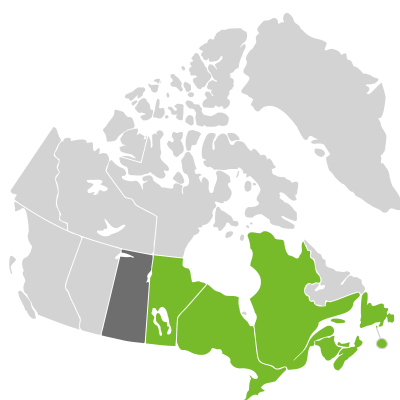
Ephemeral
Native
Introduced
Excluded
Extirpated
Doubtful
Absent
 Canadensis

Thrives in Ecozones
- Atlantic Maritime
- Prairies
- Boreal Shield
- Mixed Wood Plains
Ecological Benefits
Butterflies Supported by Oenothera parviflora
-
Eudryas unio
Pearly Wood Nymph - Agaristine à Bande Courbe -
Hyles lineata
White lined Sphinx - Sphinx à Lignes Blanches -
Mompha eloisella
Red streaked Mompha -
Schinia florida
Primrose
Specialized Bees Supported by Oenothera parviflora
- Lasioglossum oenotherae
Complementary Plants
- No complementary plants found.
Substitute For Non-Native Plants
- Oenothera (Non-Native Primrose)
- Oenothera biennis (Evening Primrose Cultivars)
- Oenothera fructicosa (Sundrops Cultivars)
Sowing Information
Download Seed Envelope Labels (PDF)
- Sowing depth: Surface sow
- Sow anytime
- Stratification duration: 45 days
- Self-seeding
Harvesting and Seed Sharing
- Harvest start month: September
- Harvesting indicator:
- Pods are brown, seeds are dark, and crisp, and little stem connecting the pod to the main stem is brown (not green)
- Harvesting:
- Cut stem (including pods), let air dry in paper bag, then shake seeds off after a few days
- Seed viability test:
- No test needed before donating
- Packaging measure: 1 rounded 1/32 teaspoon
- Seed storage:
- Air dry in paper bag or open container, for a few days until crisp
- Shake seeds to move them once in a while to prevent molding
- Cultivar: Yes, do not donate unless you know source, and there are no known cultivars in your garden or at proximity
- Remove non-seed material
- No harvesting video available at this time.
Toxicity Notes
Inadequate information on toxicity found.