Plant Names

Opuntia cespitosa
Eastern Prickly-pear Cactus
Oponce de l’Est
Synonyms
eastern prickly-pear
figuier d'Inde
oponce vulgaire
raquette de l'Est
Plant Characteristics
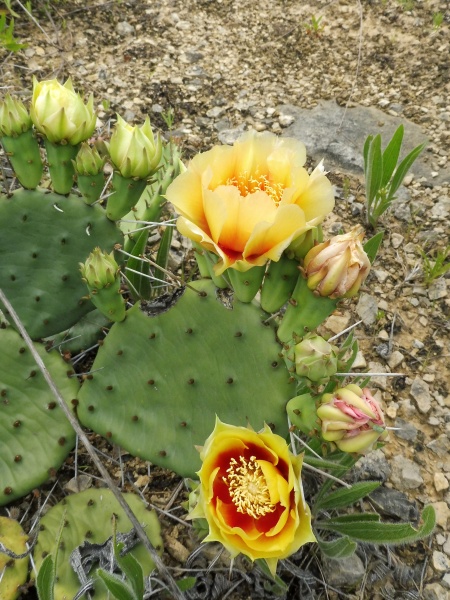
Bloom Colour: Yellow
Bloom Period: Jul - Aug
Max Height: 1.5 feet
Max Width: 1.0 feet
Light Condition:
 More than 6 hours of direct sun a day
Soil conditions:
More than 6 hours of direct sun a day
Soil conditions:
 Tolerates dry soil condition
More than 6 hours of direct sun a day
Tolerates dry soil condition
Lifespan:
Perennial
plants that will come back year after year
Gardener Experience:
 Does not spread uncontrollably
 Self-seeding
Does not spread uncontrollably
Self-seeding
Landscape Uses:
 Suitable for rock gardens
 Suitable for container garden
Suitable for rock gardens
Suitable for container garden
Ecological Benefits:
 Supports birds
Supports birds
Tolerates:
 Deer resistant
 Rabbit resistant
 Tolerates sandy conditions
 Tolerates transplantation
Deer resistant
Rabbit resistant
Tolerates sandy conditions
Tolerates transplantation
Special Features and Considerations:
 This plant is endangered
 This plant is septic tank safe
 This plant produces burs
This plant is endangered
This plant is septic tank safe
This plant produces burs
Seed and plant distribution status
No seeds available for this plant.
We currently accept seeds for this plant
Fun Facts
Eastern Prickly-pear cactus is one of Ontario’s most unusual native plants. It grows naturally in dry habitats and requires excellent drainage. Large yellow flowers appear in late spring or early summer, followed by reddish fruits. It’s a slow-growing perennial that can spread gradually by fallen pads rooting where they touch the ground. Flowers attract native bees, including cactus-specialist bees, as well as bumble bees and other pollinators. Fruits provide food for mammals. Dense patches offer shelter for small wildlife.
Plant Location
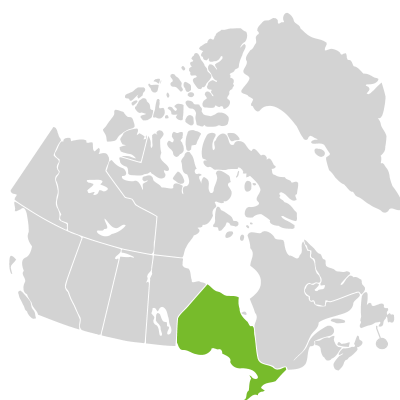
Distribution according to VASCAN
Ephemeral
Native
Introduced
Excluded
Extirpated
Doubtful
Absent
 Canadensis

Thrives in Ecozones
- Mixed Wood Plains
Ecological Benefits
Butterflies Supported by Opuntia cespitosa
No butterfly data available for this plant.
Specialized Bees Supported by Opuntia cespitosa
No bee data available for this plant.
Complementary Plants
- No complementary plants found.
Substitute For Non-Native Plants
- Graptoveria (Echeveria)
- Pachysandra terminalis (Japanese Pachysandra)
Sowing Information
Download Seed Envelope Labels (PDF)
- Sowing depth: Surface sow
- Sow anytime
- Stratification duration: 0 days
- Self-seeding
- Notes: Sow promptly. Can be kept in fridge up to 2 months.
Harvesting and Seed Sharing
- Harvest start month: September
- Harvesting indicator:
- Berries are ripen and easily fall off or have fallen off
- Harvesting:
- Squeeze berries to extract seeds, wash with soapy water, rinse throroughly
- Seed viability test:
- No test needed before donating
- Packaging measure: 1 rounded 1/8 teaspoon
- Seed storage:
- Keep moist and cool, in a ziploc bag, in the fridge, with the seeds in soil, paper towel or coffee filter, until donation
- Cultivar: No, you can donate without knowing the source as there are only straight species
- Remove non-seed material
- No harvesting video available at this time.
Toxicity Notes
Not known to be toxic if ingested however it does contain sharp spikes.