Plant Names

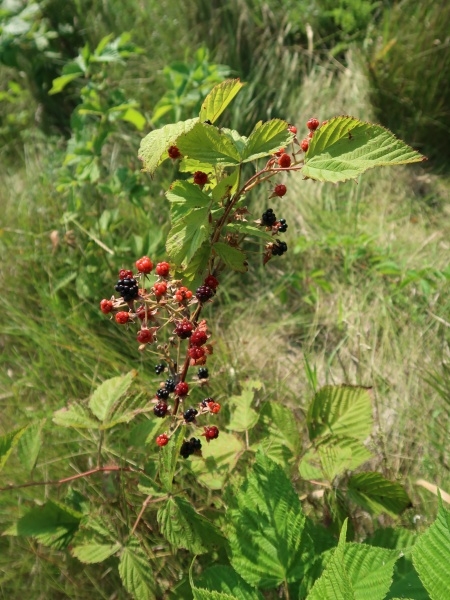
Rubus allegheniensis
Allegheny Blackberry
Ronce des Alléghanys
Plant Characteristics
Bloom Colour: Blue
Bloom Period: May - Jul
Max Height: 7.0 feet
Max Width: 8.0 feet
Light Condition:
 More than 6 hours of direct sun a day
 More than 2 or 3 hours but less than 6 hours of direct sun a day
Soil conditions:
 Tolerates dry soil condition
 Tolerates medium soil condition
More than 6 hours of direct sun a day
More than 2 or 3 hours but less than 6 hours of direct sun a day
Tolerates dry soil condition
Tolerates medium soil condition
Lifespan:
Perennial
plants that will come back year after year
Gardener Experience:
Landscape Uses:
No landscape information available.
Ecological Benefits:
 Butterfly host
 Keystone species
Butterfly host
Keystone species
Tolerates:
Special Features and Considerations:
Seed and plant distribution status
Seeds in stock
Available at table Vines, Shrubs, Trees
Available at table Vines, Shrubs, Trees
We currently accept seeds for this plant
Fun Facts
Allegheny Blackberry is a native fruiting shrub with arching canes, white spring flowers, and large black berries in summer. It grows naturally in forests. While valuable in naturalized landscapes, it can become difficult to manage in smaller gardens due to its vigorous growth. It is excellent for edible landscapes if given space. It spreads aggressively through long canes and root suckers. As a result, it is best suited to larger properties. It can form thorny thickets. You can remove old fruiting canes after harvest.
Plant Location
Distribution according to VASCAN

Ephemeral
Native
Introduced
Excluded
Extirpated
Doubtful
Absent
 Canadensis

No ecozone information available for this plant.
Ecological Benefits
Butterflies Supported by Rubus allegheniensis
-
Chlorochlamys chloroleucaria
Blackberry looper - Arpenteuse des ronces -
Cingilia catenaria
Chain-dotted geometer - Arpenteuse caténaire -
Hyphantria cunea
Fall webworm - Écaille Fileuse -
Papaipema nebris
Stalk borer - Noctuelle à Taches En Grains -
Trichordestra legitima
Striped Garden Caterpillar
Specialized Bees Supported by Rubus allegheniensis
No bee data available for this plant.
Complementary Plants
- No complementary plants found.
Substitute For Non-Native Plants
No substitute plant data available for this plant.
Sowing Information
Download Seed Envelope Labels (PDF)
- Sowing depth: Sow just below surface
- Sow by February
- Stratification duration: 60 days
Harvesting and Seed Sharing
- Harvest start month: September
- Harvesting indicator:
- Berries are ripen and easily fall off or have fallen off
- Harvesting:
- Put berries through strainer to separate seeds, then rinse with water
- Seed viability test:
- No test needed before donating
- Packaging measure: 1 rounded 1/32 teaspoon
- Seed storage:
- Air Dry in paper bag or open container, for a few days until crisp
- Shake seeds to move them once in a while to prevent molding
- Cultivar: No, you can donate without knowing the source as there are only straight species
- Remove non-seed material
- No harvesting video available at this time.