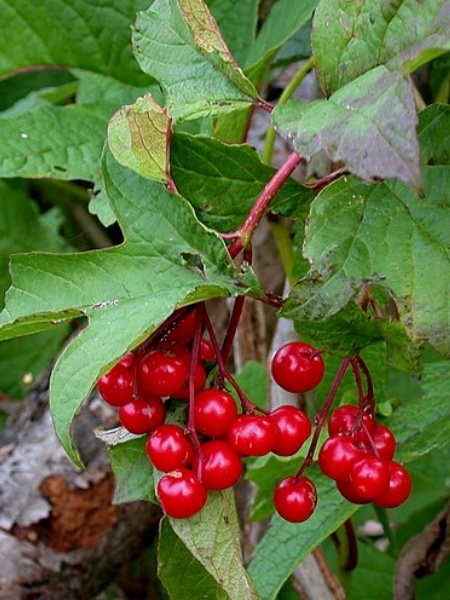
Source: Gilles Ayotte
Viburnum opulus var. americanum
Plant Names

Viburnum opulus var. americanum
Highbush Cranberry
Viorne trilobée
Plant Characteristics
Bloom Colour: White
Bloom Period: May - Jun
Max Height: 12.0 feet
Max Width: 12.0 feet
Light Condition:
 More than 6 hours of direct sun a day
 More than 2 or 3 hours but less than 6 hours of direct sun a day
Soil conditions:
More than 2 or 3 hours but less than 6 hours of direct sun a day
Soil conditions:
 Tolerates medium soil condition
More than 6 hours of direct sun a day
More than 2 or 3 hours but less than 6 hours of direct sun a day
Tolerates medium soil condition
Lifespan:
Perennial
plants that will come back year after year
Gardener Experience:
 Suitable for beginner gardeners
Suitable for beginner gardeners
Landscape Uses:
No landscape information available.
Ecological Benefits:
 Supports birds
 Keystone species
Supports birds
Keystone species
Tolerates:
Special Features and Considerations:
Seed and plant distribution status
No seeds available for this plant.
We currently accept seeds for this plant
Fun Facts
Highbush Cranberry is known for its showy white spring blossoms, brilliant clusters of translucent red berries, and bold fall colour. Its maple‑like leaves, lacecap flower clusters, and glowing fruit give it four‑season ornamental value. Flowering occurs in late spring, followed by bright red berries that mature in late summer and often persist into winter. The foliage turns vivid red, orange, or burgundy in fall. It forms modest clumps over time, but remains manageable in most garden settings. Regular moisture during establishment supports strong growth, and plants in sunnier sites tend to produce heavier fruit displays. It works beautifully as a specimen shrub or in naturalized groupings. If fruit production is low, ensure adequate sunlight and soil moisture.
Plant Location
Native to Ottawa region: Yes
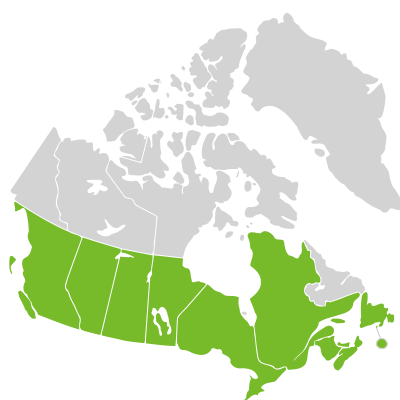
Distribution according to VASCAN
Ephemeral
Native
Introduced
Excluded
Extirpated
Doubtful
Absent
 Canadensis

Thrives in Ecozones
- Atlantic Maritime
- Boreal Plains
- Montane Cordillera
- Prairies
- Boreal Shield
- Pacific Maritime
- Mixed Wood Plains
Ecological Benefits
Butterflies Supported by Viburnum opulus var. americanum
No butterfly data available for this plant.
Specialized Bees Supported by Viburnum opulus var. americanum
No bee data available for this plant.
Complementary Plants
- No complementary plants found.
Substitute For Non-Native Plants
- Rhamnus cathartica (Common Buckthorn)
- Rhamnus frangula (Glossy Buckthorn)
Sowing Information
Download Seed Envelope Labels (PDF)
- Sowing depth: None
- Sow anytime
- Stratification duration: 2 years
- Double dormancy required
Harvesting and Seed Sharing
- Harvest start month: September
- Harvesting indicator:
- Berries are ripen and easily fall off or have fallen off
- Harvesting:
- Put berries through strainer to separate seeds, then rinse with water
- Seed viability test:
- No test needed before donating
- Packaging measure: 1 rounded 1/8 teaspoon
- Seed storage:
- Air Dry in paper bag or open container, for a few days until crisp
- Shake seeds to move them once in a while to prevent molding
- Cultivar: Yes, do not donate unless you know source, and there are no known cultivars in your garden or at proximity
- Remove non-seed material
- No harvesting video available at this time.