
Plant Names

Lactuca biennis
Tall Blue Lettuce
Laitue bisannuelle
Plant Characteristics
Bloom Colour: Purple
Bloom Period: Jul - Sep
Max Height: 7.0 feet
Max Width: 2.0 feet
Light Condition:
 More than 2 or 3 hours but less than 6 hours of direct sun a day
 Less than 2 or 3 hours of direct sun a day
Soil conditions:
Less than 2 or 3 hours of direct sun a day
Soil conditions:
 Tolerates medium soil condition
 Tolerates wet soil condition
More than 2 or 3 hours but less than 6 hours of direct sun a day
Less than 2 or 3 hours of direct sun a day
Tolerates medium soil condition
Tolerates wet soil condition
Lifespan:
Biennial
plants that will take two years to bloom, and then will die
Gardener Experience:
Landscape Uses:
No landscape information available.
Ecological Benefits:
 Butterfly host
Butterfly host
Tolerates:
Special Features and Considerations:
Seed and plant distribution status
No seeds available for this plant.
We currently accept seeds for this plant
Fun Facts
Tall Blue Lettuce has tall stems, blue-green leaves, and clusters of small pale blue flowers in summer. It grows naturally in woodland edges, roadsides, and disturbed areas. It prefers moist, fertile soils. Its tall, architectural form makes it suitable for naturalized gardens where a less formal appearance is desired. If you want plants from year-to-year, it's best to leave it self-seed. It can become tall and may need support in exposed locations.
Plant Location
Native to Ottawa region: Yes
Distribution according to VASCAN
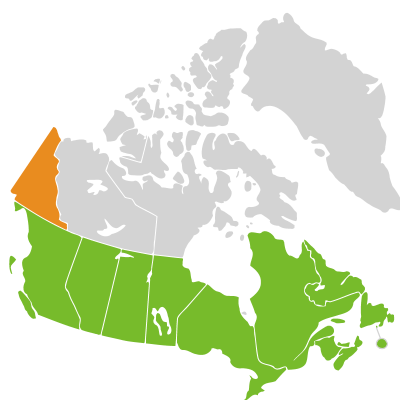
Ephemeral
Native
Introduced
Excluded
Extirpated
Doubtful
Absent
 Canadensis

Thrives in Ecozones
- Atlantic Maritime
- Taiga Shield
- Boreal Plains
- Montane Cordillera
- Prairies
- Taiga Cordillera
- Boreal Shield
- Pacific Maritime
- Mixed Wood Plains
Ecological Benefits
Butterflies Supported by Lactuca biennis
-
Apantesis virgo
Virgin tiger moth - Apanthèse vierge
Specialized Bees Supported by Lactuca biennis
No bee data available for this plant.
Complementary Plants
- No complementary plants found.
Substitute For Non-Native Plants
No substitute plant data available for this plant.
Sowing Information
Download Seed Envelope Labels (PDF)
- Sowing depth: Surface sow
- Sow anytime
- Stratification conditions: Can be sown in the spring
- Stratification duration: 0 days
Harvesting and Seed Sharing
- Harvest start month: October
- Harvesting indicator:
- Seeds have become fluffy and can be easily removed by shaking on gently pulling off from stem
- Harvesting:
- Shake into paper bag
- Seed viability test:
- No test needed before donating
- Packaging measure: 1 rounded 1/8 teaspoon
- Seed storage:
- Air Dry in paper bag or open container, for a few days until crisp
- Shake seeds to move them once in a while to prevent molding
- Cultivar: No, you can donate without knowing the source as there are only straight species
- No harvesting video available at this time.