 Known to be toxic - All parts of the plant, especially the berries and roots, contain toxins and should not be eaten by humans or pets.
Plant Names

Actaea pachypoda
White Baneberry
Actée à gros pédicelles
Plant Characteristics
Bloom Colour: White
Bloom Period: May - Jun
Max Height: 3.0 feet
Max Width: 3.0 feet
Light Condition:
 More than 2 or 3 hours but less than 6 hours of direct sun a day
 Less than 2 or 3 hours of direct sun a day
Soil conditions:
Less than 2 or 3 hours of direct sun a day
Soil conditions:
 Tolerates medium soil condition
More than 2 or 3 hours but less than 6 hours of direct sun a day
Less than 2 or 3 hours of direct sun a day
Tolerates medium soil condition
Lifespan:
Perennial
plants that will come back year after year
Gardener Experience:
 Does not spread uncontrollably
Does not spread uncontrollably
Landscape Uses:
 Suitable for woodland gardens
Suitable for woodland gardens
Ecological Benefits:
No ecological benefits information available.
Tolerates:
Special Features and Considerations:
 This plant causes skin rashes
This plant causes skin rashes
Seed and plant distribution status
No seeds available for this plant.
We currently accept seeds for this plant
Fun Facts
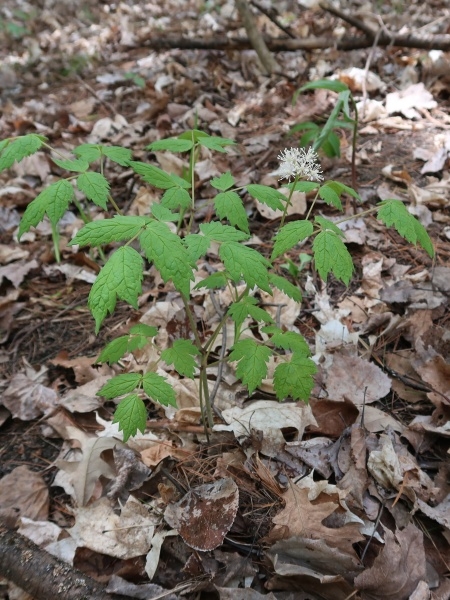
White Baneberry is found in rich, moist forests and shaded woodland gardens. It has attractive clusters of white flowers in spring followed by distinctive white berries with dark “eye-like” spots on red stalks. The berries remain into late summer and add unique visual interest. It is excellent for woodland restoration. It is slow growing and long-lived. It forms tidy clumps and does not spread aggressively. It prefers moist, rich, organic woodland soils. Avoid hot, dry locations.
Plant Location
Distribution according to VASCAN
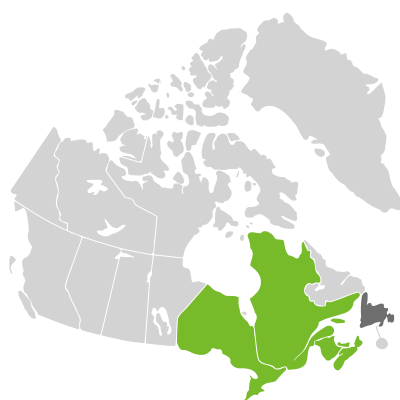
Ephemeral
Native
Introduced
Excluded
Extirpated
Doubtful
Absent
 Canadensis

No ecozone information available for this plant.
Ecological Benefits
Butterflies Supported by Actaea pachypoda
No butterfly data available for this plant.
Specialized Bees Supported by Actaea pachypoda
No bee data available for this plant.
Complementary Plants
- No complementary plants found.
Substitute For Non-Native Plants
No substitute plant data available for this plant.
Sowing Information
Download Seed Envelope Labels (PDF)
- Sowing depth: Surface sow
- Sow anytime
- Stratification duration: 2 years
- Double dormancy required
- Notes: Keep moist in fridge
Harvesting and Seed Sharing
- Harvest start month: August
- Harvesting indicator:
- None
- Harvesting:
- None
- Seed viability test:
- None
- Packaging measure: None
- Seed storage:
- None
- Cultivar: None
- No harvesting video available at this time.
Toxicity Notes
All parts of the plant, especially the berries and roots, contain toxins and should not be eaten by humans or pets.