 Known to be toxic - Seeds, bark, and leaves contain toxins harmful to humans, pets, and livestock if eaten.
Plant Names

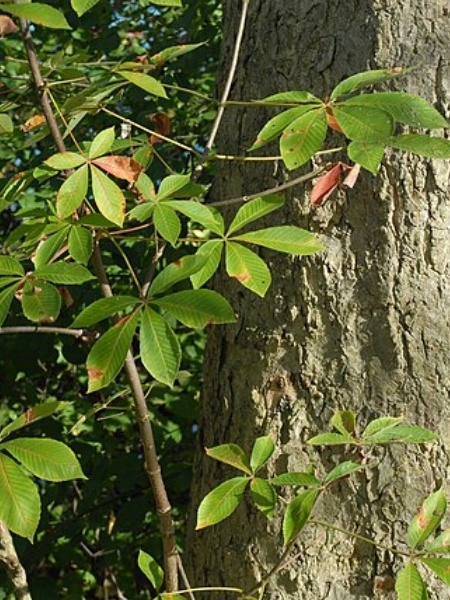
Aesculus glabra
Ohio Buckeye
Marronnier glabre
Plant Characteristics
Bloom Colour: Yellow
Bloom Period: Apr - May
Max Height: 75.0 feet
Max Width: 40.0 feet
Light Condition:
 More than 6 hours of direct sun a day
 More than 2 or 3 hours but less than 6 hours of direct sun a day
Soil conditions:
More than 2 or 3 hours but less than 6 hours of direct sun a day
Soil conditions:
 Tolerates medium soil condition
More than 6 hours of direct sun a day
More than 2 or 3 hours but less than 6 hours of direct sun a day
Tolerates medium soil condition
Lifespan:
Perennial
plants that will come back year after year
Gardener Experience:
 Self-seeding
Self-seeding
Ecological Benefits:
No ecological benefits information available.
Special Features and Considerations:
Seed and plant distribution status
No seeds available for this plant.
We currently accept seeds for this plant
Fun Facts
Ohio Buckeye is found in forests, woodland edges, floodplains, and open areas. It develops a rounded crown with palm-shaped leaves and produces upright clusters of yellow-green flowers in spring, followed by shiny brown seeds with a pale “eye.” It provides strong seasonal interest. It is excellent for large yards, parks, woodland restoration, and native landscapes. It prefers moist, fertile soils but adapts to many conditions. It has a moderate growth rate and is low maintenance once established. Plant only where there is enough space for a mature tree. Young trees benefit from regular watering during establishment. It provides excellent shade and wildlife value.
Plant Location
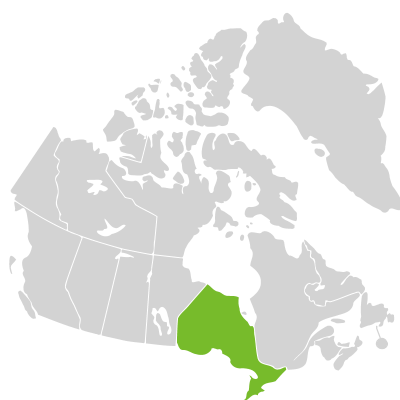
Distribution according to VASCAN
Ephemeral
Native
Introduced
Excluded
Extirpated
Doubtful
Absent
 Canadensis

No ecozone information available for this plant.
Ecological Benefits
Sowing Information
Download Seed Envelope Labels (PDF)
- Sowing depth: Sow 1 inch deep
- Sow by January
- Stratification conditions: Soak for 24h
- Stratification duration: 90 days
- Self-seeding
Harvesting and Seed Sharing
- Harvest start month: September
- Harvesting indicator:
- None
- Harvesting:
- None
- Seed viability test:
- None
- Packaging measure: Six (6) seeds (eyeball)
- Seed storage:
- Keep moist and cool, in a ziploc bag, in the fridge, with the seeds in soil, paper towel or coffee filter, until donation
- Cultivar: None
- No harvesting video available at this time.
Toxicity Notes
Seeds, bark, and leaves contain toxins harmful to humans, pets, and livestock if eaten.