Plant Names

Celtis occidentalis
Northern Hackberry
Micocoulier occidental
Plant Characteristics
Bloom Colour: White
Bloom Period: Apr - May
Max Height: 60.0 feet
Max Width: 60.0 feet
Light Condition:
 More than 6 hours of direct sun a day
 More than 2 or 3 hours but less than 6 hours of direct sun a day
Soil conditions:
More than 2 or 3 hours but less than 6 hours of direct sun a day
Soil conditions:
 Tolerates medium soil condition
More than 6 hours of direct sun a day
More than 2 or 3 hours but less than 6 hours of direct sun a day
Tolerates medium soil condition
Lifespan:
Perennial
plants that will come back year after year
Gardener Experience:
 Self-seeding
Self-seeding
Landscape Uses:
 Suitable for shoreline rehabilitation
Suitable for shoreline rehabilitation
Ecological Benefits:
 Supports birds
Supports birds
Tolerates:
 Tolerates drought conditions
 Tolerates salt conditions
 Deer resistant
 Tolerates limestone conditions
 Tolerates sandy conditions
 Tolerates acidic soil conditions
 Tolerates juglone conditions
Tolerates drought conditions
Tolerates salt conditions
Deer resistant
Tolerates limestone conditions
Tolerates sandy conditions
Tolerates acidic soil conditions
Tolerates juglone conditions
Special Features and Considerations:
Seed and plant distribution status
No seeds available for this plant.
We currently accept seeds for this plant
Fun Facts
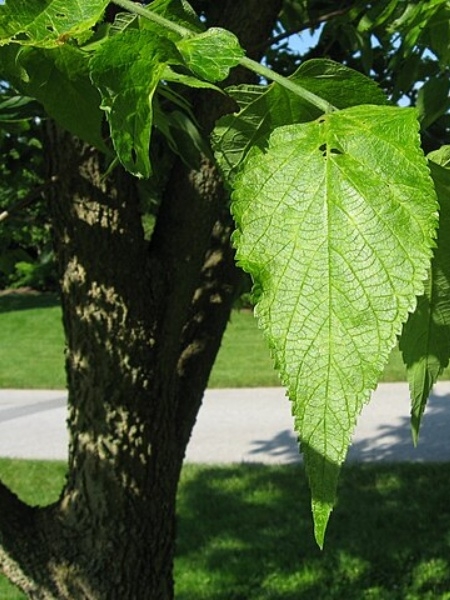
Northern Hackberry is a fast-growing member of the elm family. It exhibits an upright form with a generally rounded crown, and branches starting relatively high on the trunk, making it an excellent shade tree. It is a long-lived with an expected lifespan between 150 to 200 years, and it establishes quickly. It is valued for its hardiness and tolerance of urban conditions and challenging landscapes. While it is not commonly planted for ornamental purposes, it is a good alternative to elms as shade trees, being similar in size and shape but immune to Dutch elm disease.
Plant Location
Native to Ottawa region: Yes
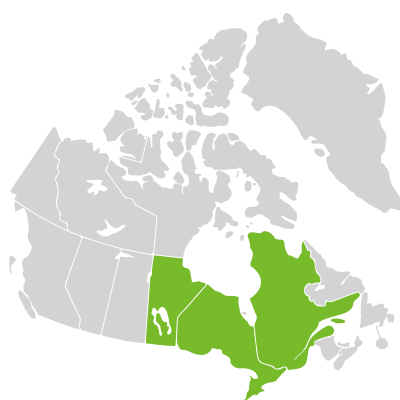
Distribution according to VASCAN
Ephemeral
Native
Introduced
Excluded
Extirpated
Doubtful
Absent
 Canadensis

Thrives in Ecozones
- Prairies
- Boreal Shield
- Mixed Wood Plains
Ecological Benefits
Butterflies Supported by Celtis occidentalis
-
Asterocampa celtis
Hackberry Emperor - Papillon du Micocoulier -
Asterocampa clyton
Tawny Emperor - Empereur Fauve -
Libytheana carinenta
American Snout - Papillon Longs-Palpes -
Nymphalis antiopa
Mourning Cloak - Morio -
Polygonia interrogationis
Question Mark - Polygone à Queue Violacée
Specialized Bees Supported by Celtis occidentalis
No bee data available for this plant.
Complementary Plants
- No complementary plants found.
Substitute For Non-Native Plants
- Rhamnus cathartica (Common Buckthorn)
- Rhamnus frangula (Glossy Buckthorn)
Sowing Information
Download Seed Envelope Labels (PDF)
- Sowing depth: 3/8 inch
- Sow by January
- Stratification conditions: Soak for 24h
- Stratification duration: 90 days
- Self-seeding
Harvesting and Seed Sharing
- Harvest start month: June
- Harvesting indicator:
- Berries are ripen and easily fall off or have fallen off
- Harvesting:
- Squeeze berries to extract seeds, wash with soapy water to remove flesh, rinse throroughly using a strainer
- Seed viability test:
- No test needed before donating
- Packaging measure: Six (6) seeds (eyeball)
- Seed storage:
- Air Dry in paper bag or open container, for a few days until crisp
- Shake seeds to move them once in a while to prevent molding
- Cultivar: Yes, do not donate unless you know source, and there are no known cultivars in your garden or at proximity
- Remove non-seed material
- No harvesting video available at this time.