 Connu comme étant toxique - May contain compounds that can be irritating or toxic if eaten in large quantities. Avoid consumption.
Plant Names

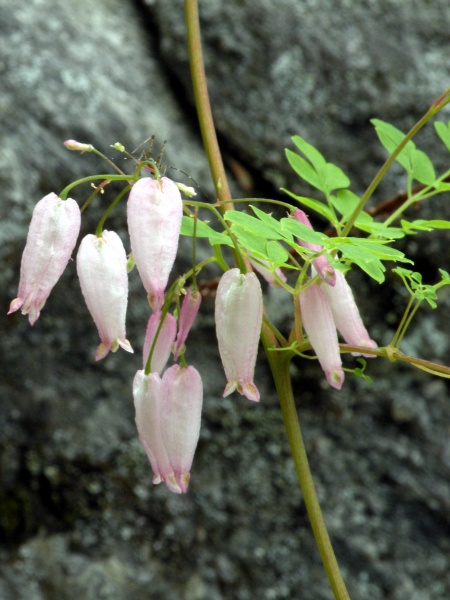
Adlumia fungosa
Climbing Fumitory
Adlumie fongueuse
Synonyms
allegheny vine
canary vine
mountain-fringe
Plant Characteristics
Couleur de floraison: Rose
Bloom Period: Jun - Sep
Hauteur max: 13,0 feet
Max Width: 3,0 feet
Light Condition:
 More than 2 or 3 hours but less than 6 hours of direct sun a day
Soil conditions:
More than 2 or 3 hours but less than 6 hours of direct sun a day
Soil conditions:
 Tolerates medium soil condition
More than 2 or 3 hours but less than 6 hours of direct sun a day
Tolerates medium soil condition
Lifespan:
Bisannuel
des plantes qui mettront deux ans à fleurir, puis mourront
Gardener Experience:
 Ne se propage pas de manière incontrôlable
 Self-seeding
Ne se propage pas de manière incontrôlable
Self-seeding
Landscape Uses:
 Suitable for rock gardens
 Suitable for woodland gardens
Suitable for rock gardens
Suitable for woodland gardens
Ecological Benefits:
No ecological benefits information available.
Tolerates:
 Tolerates limestone conditions
Tolerates limestone conditions
Special Features and Considerations:
 This plant causes skin rashes
This plant causes skin rashes
Seed and plant distribution status
No seeds available for this plant.
Nous acceptions les semences de cette plante
Faits intéressants
Climbing Fumitory is found in rich woodlands, rocky slopes, forest edges, and shaded areas. It produces graceful fern-like foliage and clusters of small pink flowers. Unlike aggressive garden vines, it is a gentle woodland plant that climbs by leaning onto nearby vegetation. It is excellent for woodland gardens, shady fences, and naturalized areas. It move around naturally rather than forming dense colonies. It prefers moist, rich soils. It needs nearby plants or supports to lean on. Allow it to self-seed if you want it to return yearly. It may disappear after flowering but can return from seed. It is a great choice for gardeners wanting a delicate, natural woodland look.
Plant Location
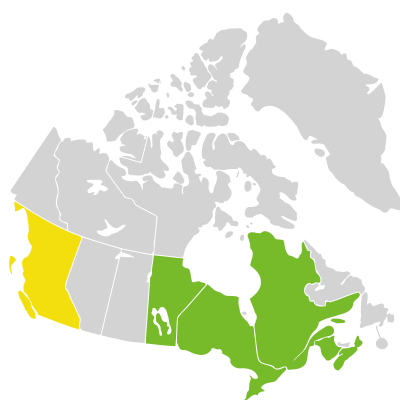
Native to Ottawa region: Oui
Distribution according to VASCAN
Ephemeral
Native
Introduced
Excluded
Extirpated
Doubtful
Absent
 Canadensis

Thrives in Ecozones
- Maritime de l'Atlantique
- Plaines boréales
- Bouclier boréal
- Plaines à forêts mixtes
Ecological Benefits
Butterflies Supported by Adlumia fungosa
No butterfly data available for this plant.
Specialized Bees Supported by Adlumia fungosa
No bee data available for this plant.
Complementary Plants
- No complementary plants found.
Substitute For Non-Native Plants
- Wisteria frutescens (American Wisteria)
- Lonicera (Non-Native Honeysuckle)
- Hedera helix (English Ivy)
- Ipomoea (Morning Glories)
Sowing Information
Download Seed Envelope Labels (PDF)
- Sowing depth: Couvrir très légèrement
- Sow by February
- Stratification duration: 60 days
- Self-seeding
Harvesting and Seed Sharing
- Harvest start month: September
- Harvesting indicator:
- Pods are brown and slightly open
- Harvesting:
- Utiliser la main pour détacher de la tige principale
- Seed viability test:
- Pas de test requis avant le don
- Packaging measure: 1 rounded 1/8 teaspoon
- Seed storage:
- Sécher à l'air dans un sac en papier ou contenant ouvert, pour quelques jours jusqu'à sec
- Secouer de temps à autre pour prévenir la moisissure
- Cultivar: No, you can donate without knowing the source as there are only straight species
- Harvesting notes: You can keep the beans in the bods. They will germinate in the pods.
- No harvesting video available at this time.
Toxicity Notes
May contain compounds that can be irritating or toxic if eaten in large quantities. Avoid consumption.