 Connu comme étant toxique - Toxic to humans and pets if ingested.
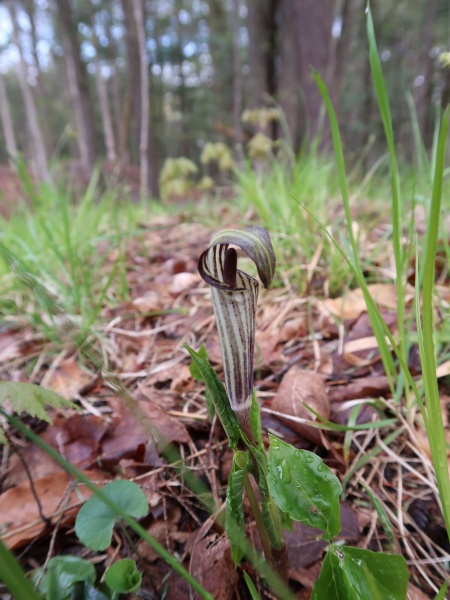
Plant Names

Arisaema triphyllum
Jack-in-the-pulpit
Arisème petit-prêcheur
Synonyms
ariséma rouge-foncé
gouet
oignon sauvage
petit-prêcheur
pied de veau
Plant Characteristics
Couleur de floraison: Vert
Bloom Period: May - Jul
Hauteur max: 2,0 feet
Max Width: 1,5 feet
Light Condition:
 Less than 2 or 3 hours of direct sun a day
Soil conditions:
Less than 2 or 3 hours of direct sun a day
Soil conditions:
 Tolerates medium soil condition
Less than 2 or 3 hours of direct sun a day
Tolerates medium soil condition
Lifespan:
Vivace
des plantes qui reviennent année après année
(Spring Ephemeral)
Plant is
dioecious
Need a male and female plant to produce seeds
Gardener Experience:
 Ne se propage pas de manière incontrôlable
 Self-seeding
Ne se propage pas de manière incontrôlable
Self-seeding
Landscape Uses:
 Suitable for rain gardens
 Suitable for woodland gardens
Suitable for rain gardens
Suitable for woodland gardens
Ecological Benefits:
 Butterfly host
Butterfly host
Tolerates:
 Deer resistant
 Rabbit resistant
 Tolerates limestone conditions
 Tolerates juglone conditions
 Tolerates transplantation
Deer resistant
Rabbit resistant
Tolerates limestone conditions
Tolerates juglone conditions
Tolerates transplantation
Special Features and Considerations:
 This plant causes skin rashes
This plant causes skin rashes
Seed and plant distribution status
Semences disponible
Disponible à la table Ombre
Disponible à la table Ombre
Nous acceptions les semences de cette plante
Faits intéressants
Jack-in-the-pulpit, is a native woodland plant, is hardy in cold winters and grows best in moist, rich, well-drained soil and prefers shady areas. Keeping the soil moist in spring and adding mulch in summer helps it stay healthy. In spring, it produces a unique hooded flower. By late summer, bright red berries appear, adding colour to the garden and attracting wildlife.
Plant Location
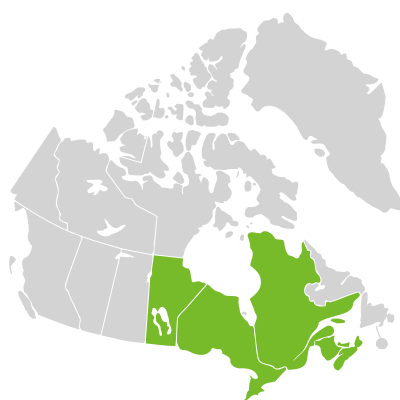
Native to Ottawa region: Oui
Distribution according to VASCAN
Ephemeral
Native
Introduced
Excluded
Extirpated
Doubtful
Absent
 Canadensis

Thrives in Ecozones
- Maritime de l'Atlantique
- Plaines à forêts mixtes
Ecological Benefits
Butterflies Supported by Arisaema triphyllum
-
Spilosoma latipennis
Pink-legged tiger
Specialized Bees Supported by Arisaema triphyllum
No bee data available for this plant.
Complementary Plants
- No complementary plants found.
Substitute For Non-Native Plants
- Convallaria majalis (Lily of the Valley)
- Lysimachia nummularia (Creeping Jenny)
- Iridaceae (Crocus)
- Scilla siberica (Siberian Squill)
- Tulipa (Tulips)
Sowing Information
Download Seed Envelope Labels (PDF)
- Sowing depth: Couvrir très légèrement
- Sow anytime
- Stratification duration: 0 days
- Self-seeding
- Notes: Double dormancy. Sow promptly. Can be kept in fridge up to 2 months.
Harvesting and Seed Sharing
- Harvest start month: August
- Harvesting indicator:
- Berries are ripen and easily fall off or have fallen off
- Harvesting:
- Squeeze berries to extract seeds, wash with soapy water, rinse throroughly
- Seed viability test:
- Pas de test requis avant le don
- Packaging measure: Six (6) seeds (eyeball)
- Seed storage:
- Garder humide et frais, danssac refermable au frigo, avec graines dans de terre, papier essuie-tout, filtre à café ou vermiculite, jusqu'au don
- Cultivar: Yes, do not donate unless you know source, and there are no known cultivars in your garden or at proximity
- Remove non-seed material
- No harvesting video available at this time.
Toxicity Notes
Toxic to humans and pets if ingested.