 Inconnu - Inadequate information on toxicity found.
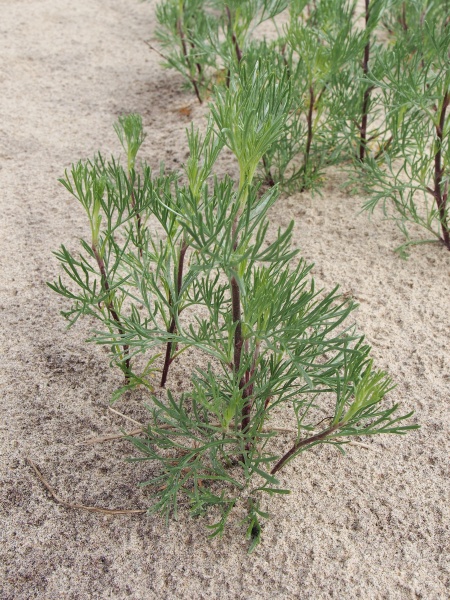
Plant Names

Artemisia campestris
Field Wormwood
Armoise des champs
Synonyms
field sagewort
sand wormwood
armoise champêtre
Plant Characteristics
Couleur de floraison: Blanc
Bloom Period: Jul - Sep
Hauteur max: 3,0 feet
Max Width: 2,0 feet
Light Condition:
 Plus de 6 heures d'ensoleillement par jour
 More than 2 or 3 hours but less than 6 hours of direct sun a day
Soil conditions:
More than 2 or 3 hours but less than 6 hours of direct sun a day
Soil conditions:
 Tolère des conditions de sol sec
 Tolerates medium soil condition
Plus de 6 heures d'ensoleillement par jour
More than 2 or 3 hours but less than 6 hours of direct sun a day
Tolère des conditions de sol sec
Tolerates medium soil condition
Lifespan:
Vivace
des plantes qui reviennent année après année
Gardener Experience:
 Suitable for beginner gardeners
 Facile à germer
 Self-seeding
Suitable for beginner gardeners
Facile à germer
Self-seeding
Landscape Uses:
 Suitable for rock gardens
Suitable for rock gardens
Ecological Benefits:
 Butterfly host
Butterfly host
Tolerates:
 Deer resistant
 Rabbit resistant
 Tolerates limestone conditions
 Tolerates sandy conditions
Deer resistant
Rabbit resistant
Tolerates limestone conditions
Tolerates sandy conditions
Special Features and Considerations:
Seed and plant distribution status
No seeds available for this plant.
Nous acceptions les semences de cette plante
Faits intéressants
Field Wormwood is a hardy native plant that can handle cold winters, dry weather, and poor soils. This plant has fine, silvery-green leaves and a soft, feathery look. It grows well in full sun and prefers sandy or well-drained soil. it is a good choice for dry areas, naturalized spaces, and prairie-style gardens where other plants may struggle.
Plant Location
Native to Ottawa region: Oui
Distribution according to VASCAN
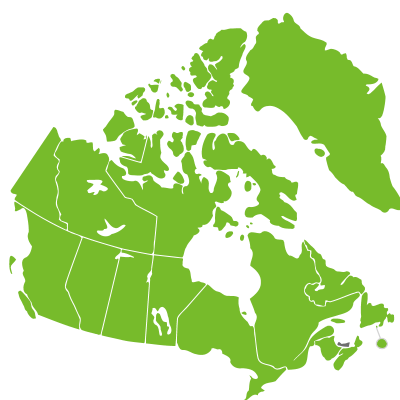
Ephemeral
Native
Introduced
Excluded
Extirpated
Doubtful
Absent
 Canadensis

Thrives in Ecozones
- Taïga des plaines
- Maritime de l'Atlantique
- Taïga du Bouclier
- Bas-Arctique
- Plaines boréales
- Cordillière montagnarde
- Prairies
- Bouclier boréal
- Cordillière boréale
- Plaines à forêts mixtes
Ecological Benefits
Butterflies Supported by Artemisia campestris
-
Depressaria alienella
Yarrow webworm -
Spaelotis Clandestina
Clandestine dart - Ver-gris clandestin -
Vanessa Cardui
Painted Lady - Vanesse du Chardon -
Vanessa virginiensis
American Lady - Vanesse de Virginie
Specialized Bees Supported by Artemisia campestris
No bee data available for this plant.
Complementary Plants
- No complementary plants found.
Substitute For Non-Native Plants
- Perovskia Atriplicifolia (Russian Sage)
- Lupinus (Non-Native Lupins)
- Salvia (Non-Native Sage)
Sowing Information
Download Seed Envelope Labels (PDF)
- Sowing depth: Surface sow
- Sow anytime
- Stratification duration: 0 days
- Self-seeding
Harvesting and Seed Sharing
- Harvest start month: September
- Harvesting indicator:
- Pods are slightly open and seeds inside are dark
- Harvesting:
- Cut stem (including pods), let air dry in paper bag, then shake seeds off after a few days
- Seed viability test:
- Pas de test requis avant le don
- Packaging measure: 1 rounded 1/8 teaspoon
- Seed storage:
- Sécher à l'air dans un sac en papier ou contenant ouvert, pour quelques jours jusqu'à sec
- Secouer de temps à autre pour prévenir la moisissure
- Cultivar: No, you can donate without knowing the source as there are only straight species
- No harvesting video available at this time.
Toxicity Notes
Inadequate information on toxicity found.