 Inconnu - Inadequate information on toxicity found.
Plant Names

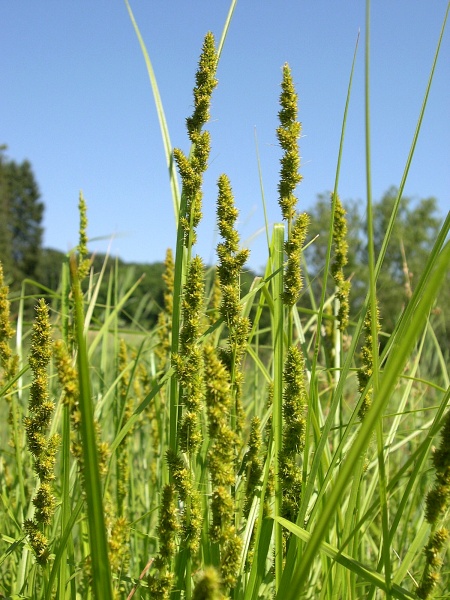
Carex vulpinoidea
Fox Sedge
Carex vulpinoïde
Synonyms
brown fox sedge
common fox sedge
carex faux-vulpin
laiche fausse laiche des renards
Plant Characteristics
Couleur de floraison: Vert
Bloom Period: Jun - Jul
Hauteur max: 3,0 feet
Max Width: 2,0 feet (spreads by rhizome)
Light Condition:
 Plus de 6 heures d'ensoleillement par jour
 More than 2 or 3 hours but less than 6 hours of direct sun a day
Soil conditions:
More than 2 or 3 hours but less than 6 hours of direct sun a day
Soil conditions:
 Tolère des conditions de sol humide
Plus de 6 heures d'ensoleillement par jour
More than 2 or 3 hours but less than 6 hours of direct sun a day
Tolère des conditions de sol humide
Lifespan:
Vivace
des plantes qui reviennent année après année
Gardener Experience:
 Spreads by rhizome
 Facile à germer
 Self-seeding
Spreads by rhizome
Facile à germer
Self-seeding
Landscape Uses:
 Souhaitable dans les jardins de zone humide
 Suitable for rain gardens
 Suitable for shoreline rehabilitation
 Suitable for container garden
 Suitable for school gardens
Souhaitable dans les jardins de zone humide
Suitable for rain gardens
Suitable for shoreline rehabilitation
Suitable for container garden
Suitable for school gardens
Ecological Benefits:
No ecological benefits information available.
Tolerates:
 Tolerates limestone conditions
 Tolerates juglone conditions
 Tolerates transplantation
Tolerates limestone conditions
Tolerates juglone conditions
Tolerates transplantation
Special Features and Considerations:
 This plant is a GRASP candidate
This plant is a GRASP candidate
Seed and plant distribution status
No seeds available for this plant.
Nous acceptions les semences de cette plante
Faits intéressants
Fox Sedge is typically found in wet meadows, marshes and along rivers and lakes, though it is adaptable to a wide range of habitats and moisture. It forms dense clumps with narrow green leaves and is recognized by its distinctive seed heads which mature in late summer to a golden brown colour.
Fox Sedge gets its common name from the seed heads which resemble a fox’s tail. It is an excellent choice for erosion control and wetland restoration projects. In urban settings, it can serve as an anchor in landscaping and looks great hanging over a rock wall near a water feature. Under ideal conditions, this sedge can colonize rapidly, so plant where spreading is desirable or can be controlled.
Fox Sedge gets its common name from the seed heads which resemble a fox’s tail. It is an excellent choice for erosion control and wetland restoration projects. In urban settings, it can serve as an anchor in landscaping and looks great hanging over a rock wall near a water feature. Under ideal conditions, this sedge can colonize rapidly, so plant where spreading is desirable or can be controlled.
Plant Location
Native to Ottawa region: Oui
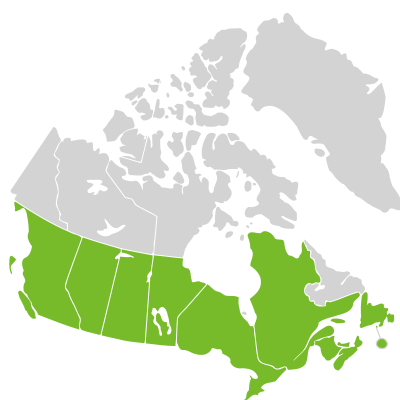
Distribution according to VASCAN
Ephemeral
Native
Introduced
Excluded
Extirpated
Doubtful
Absent
 Canadensis

Thrives in Ecozones
- Maritime de l'Atlantique
- Plaines boréales
- Cordillière montagnarde
- Prairies
- Bouclier boréal
- Maritime du Pacifique
- Plaines à forêts mixtes
Ecological Benefits
Butterflies Supported by Carex vulpinoidea
No butterfly data available for this plant.
Specialized Bees Supported by Carex vulpinoidea
No bee data available for this plant.
Complementary Plants
- No complementary plants found.
Substitute For Non-Native Plants
- Pennisetum setaceum (Fountain Grass)
Sowing Information
Download Seed Envelope Labels (PDF)
- Sowing depth: Surface sow
- Sow by February
- Stratification duration: 60 days
- Self-seeding
Harvesting and Seed Sharing
- Harvest start month: August
- Harvesting indicator:
- Seeds easily fall off when you gently pull them off
- Harvesting:
- Utiliser la main pour détacher de la tige principale
- Seed viability test:
- Pas de test requis avant le don
- Packaging measure: 1 rounded 1/32 teaspoon
- Seed storage:
- Sécher à l'air dans un sac en papier ou contenant ouvert, pour quelques jours jusqu'à sec
- Secouer de temps à autre pour prévenir la moisissure
- Cultivar: No, you can donate without knowing the source as there are only straight species
- No harvesting video available at this time.
Toxicity Notes
Inadequate information on toxicity found.
GRASP Candidate
Overlooked or difficult to grow plants (eg ghost plants, shrubs, trees, complicated germination etc); sapling sitters, seed sitters, skilled germination, growers with right conditions- aiming for local stock; these plants may not be extinct, but overlooked OR support habitat OR support a vulnerable animal/insect.