 Connu comme étant toxique - Toxic to mammals if ingested. ike other Clematis, plant material is harmful if eaten. Keep away from children and pets.
Plant Names

Clematis virginiana
Virgin's Bower
Clématite de Virginie
Synonyms
devil's darning needles
virgin's-bower
Virginia virgin's-bower
herbe aux gueux
Plant Characteristics
Couleur de floraison: Blanc
Bloom Period: Aug - Oct
Hauteur max: 9,0 feet
Max Width: 4,0 feet (spreads by rhizome)
Light Condition:
 Plus de 6 heures d'ensoleillement par jour
 More than 2 or 3 hours but less than 6 hours of direct sun a day
Soil conditions:
More than 2 or 3 hours but less than 6 hours of direct sun a day
Soil conditions:
 Tolerates medium soil condition
Plus de 6 heures d'ensoleillement par jour
More than 2 or 3 hours but less than 6 hours of direct sun a day
Tolerates medium soil condition
Lifespan:
Vivace
des plantes qui reviennent année après année
Plant is
dioecious
Need a male and female plant to produce seeds
Gardener Experience:
 Suitable for beginner gardeners
 Spreads by rhizome
 Self-seeding
Suitable for beginner gardeners
Spreads by rhizome
Self-seeding
Landscape Uses:
No landscape information available.
Ecological Benefits:
 Butterfly host
Butterfly host
Tolerates:
 Deer resistant
 Rabbit resistant
 Tolerates limestone conditions
 Tolerates juglone conditions
 Tolerates transplantation
Deer resistant
Rabbit resistant
Tolerates limestone conditions
Tolerates juglone conditions
Tolerates transplantation
Special Features and Considerations:
 This plant is septic tank safe
 This plant causes skin rashes
This plant is septic tank safe
This plant causes skin rashes
Seed and plant distribution status
Semences disponible
Disponible à la table Vignes, arbustes, arbres
Disponible à la table Vignes, arbustes, arbres
Nous acceptions les semences de cette plante
Faits intéressants
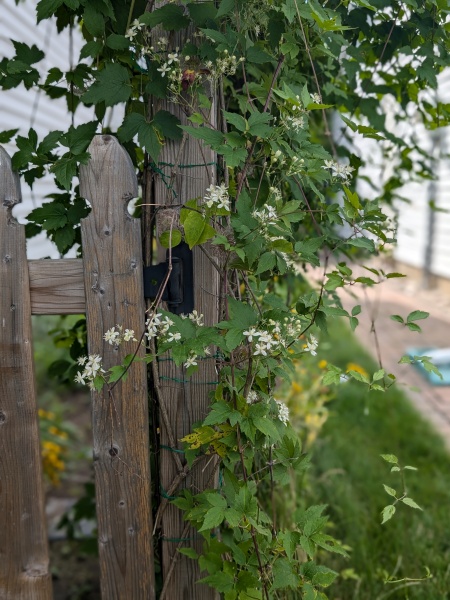
Virgin's Bower is a vigorous climbing vine covered with masses of small white flowers in late summer and early fall. The flowers are followed by attractive silvery, feathery seed heads. It naturally grows along woodland edges, stream banks, hedgerows, and open areas. It prefers moist to average soil. It needs substantial support. Prune hard in late winter or early spring if necessary. It is excellent for covering fences, large trellises, or unsightly structures. Give it plenty of room.
Plant Location
Native to Ottawa region: Oui
Distribution according to VASCAN
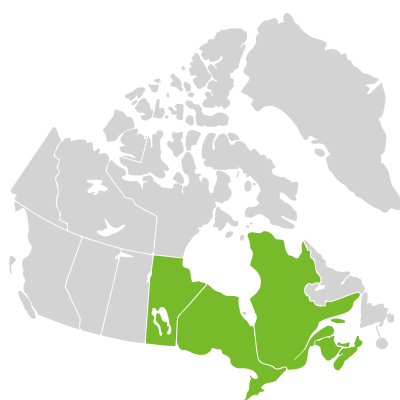
Ephemeral
Native
Introduced
Excluded
Extirpated
Doubtful
Absent
 Canadensis

Thrives in Ecozones
- Maritime de l'Atlantique
- Plaines boréales
- Bouclier boréal
- Plaines à forêts mixtes
Ecological Benefits
Butterflies Supported by Clematis virginiana
-
Hyphantria cunea
Fall webworm - Écaille Fileuse
Specialized Bees Supported by Clematis virginiana
No bee data available for this plant.
Complementary Plants
- No complementary plants found.
Substitute For Non-Native Plants
- Clematis (Non-native Clematis)
- Lonicera).1 (Non-Native Honeysuckle)
- Hedera helix (English Ivy)
- Ipomoea (Morning Glories)
Sowing Information
Download Seed Envelope Labels (PDF)
- Sowing depth: Couvrir très légèrement
- Sow by March
- Stratification duration: 30 days
- Self-seeding
- Notes: Best planted outdoors in fall.
Harvesting and Seed Sharing
- Harvest start month: September
- Harvesting indicator:
- Seeds have become fluffy and can be easily removed by shaking on gently pulling off from stem
- Harvesting:
- Utiliser la main pour détacher de la tige principale
- Seed viability test:
- Pas de test requis avant le don
- Packaging measure: A dozen (12) seeds (eyeball)
- Seed storage:
- Sécher à l'air dans un sac en papier ou contenant ouvert, pour quelques jours jusqu'à sec
- Secouer de temps à autre pour prévenir la moisissure
- Cultivar: Yes, do not donate unless you know source, and there are no known cultivars in your garden or at proximity
- Harvesting video: Watch here
Toxicity Notes
Toxic to mammals if ingested. ike other Clematis, plant material is harmful if eaten. Keep away from children and pets.