 Inconnu - Inadequate information on toxicity found.
Plant Names

Cornus sericea
Red-osier Dogwood
Cornouiller hart-rouge
Synonyms
red-osier cornel
cornouiller stolonifère
hart rouge
Plant Characteristics
Couleur de floraison: Blanc
Bloom Period: May - Jun
Hauteur max: 12,0 feet
Max Width: 10,0 feet (spreads by rhizome)
Light Condition:
 Plus de 6 heures d'ensoleillement par jour
 More than 2 or 3 hours but less than 6 hours of direct sun a day
Soil conditions:
More than 2 or 3 hours but less than 6 hours of direct sun a day
Soil conditions:
 Tolerates medium soil condition
Plus de 6 heures d'ensoleillement par jour
More than 2 or 3 hours but less than 6 hours of direct sun a day
Tolerates medium soil condition
Lifespan:
Vivace
des plantes qui reviennent année après année
Gardener Experience:
 Spreads by rhizome
 Facile à germer
 Self-seeding
Spreads by rhizome
Facile à germer
Self-seeding
Landscape Uses:
 Souhaitable dans les jardins de zone humide
 Suitable for rain gardens
 Suitable for shoreline rehabilitation
 Suitable for school gardens
 Can be used as a hedge
Souhaitable dans les jardins de zone humide
Suitable for rain gardens
Suitable for shoreline rehabilitation
Suitable for school gardens
Can be used as a hedge
Ecological Benefits:
 Supports birds
 Butterfly host
 Bee host
 Keystone species
Supports birds
Butterfly host
Bee host
Keystone species
Tolerates:
 Deer resistant
 Rabbit resistant
 Tolerates limestone conditions
 Tolerates acidic soil conditions
 Tolerates juglone conditions
 Tolerates transplantation
Deer resistant
Rabbit resistant
Tolerates limestone conditions
Tolerates acidic soil conditions
Tolerates juglone conditions
Tolerates transplantation
Special Features and Considerations:
Seed and plant distribution status
Semences disponible
Disponible à la table Vignes, arbustes, arbres
Disponible à la table Vignes, arbustes, arbres
Nous acceptions les semences de cette plante
Faits intéressants
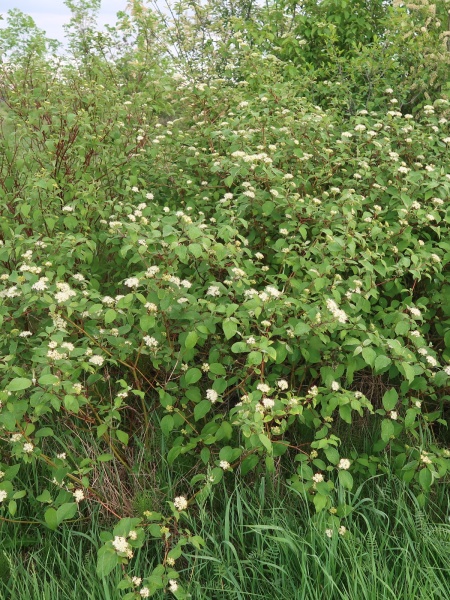
Red-Osier Dogwood is an upright, red-stemmed shrub that spreads by suckering into a small thicket. If not desired, suckers can be pruned, and the height can be pruned as well in late winter if needed. It is often planted in urban areas as it is tolerant of all kinds of soil types, although it prefers slightly wetter soils. It does well in areas that are flooded in spring. Small white umbrella-shaped flowers give way to white drupes in fall which are enjoyed by many birds. Dark green leaves grow on the beautiful red stems and these leaves turn a red shading to purple in the fall. In the winter, the red stems of Red Osier Dogwood are sometimes the only colour to be found in the landscape, where they show up bright red against the snow. It gives habitat and food to many small birds and animals.
Plant Location
Native to Ottawa region: Oui
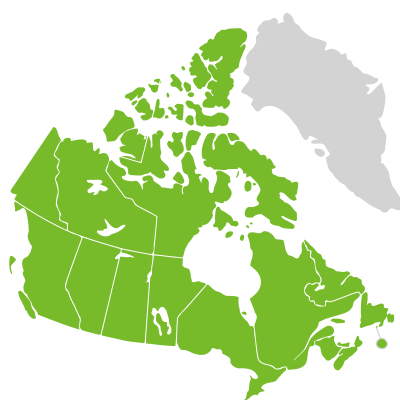
Distribution according to VASCAN
Ephemeral
Native
Introduced
Excluded
Extirpated
Doubtful
Absent
 Canadensis

Thrives in Ecozones
- Taïga des plaines
- Maritime de l'Atlantique
- Cordillière montagnarde
- Plaines hudsoniennes
- Bouclier boréal
- Plaines à forêts mixtes
Ecological Benefits
Butterflies Supported by Cornus sericea
-
Celastrina ladon
Spring Azure - Azur Printanier -
Hyalophora cecropia
Cecropia moth - Saturnie Cécropia -
Malacosoma americanum
Eastern Tent Caterpillar - Livrée d'Amérique
Specialized Bees Supported by Cornus sericea
- Andrena fragilis
- Andrena integra
- Andrena persimulata
Complementary Plants
- No complementary plants found.
Substitute For Non-Native Plants
- Rhamnus cathartica (Common Buckthorn)
- Rhamnus frangula (Glossy Buckthorn)
- Euonymus alatus (Burning Bush)
- Elaeagnus angustifolia (Russian Olive)
- Elaeagnus umbellata (Autumn Olive)
Sowing Information
Download Seed Envelope Labels (PDF)
- Sowing depth: Couvrir très légèrement
- Sow by January
- Stratification duration: 90 days
- Self-seeding
- Notes: Best planted outdoors in fall.
Harvesting and Seed Sharing
- Harvest start month: August
- Harvesting indicator:
- Berries are ripen and easily fall off or have fallen off
- Harvesting:
- Squeeze berries to extract seeds, wash with soapy water, rinse throroughly
- Seed viability test:
- Pas de test requis avant le don
- Packaging measure: Six (6) seeds (eyeball)
- Seed storage:
- Sécher à l'air dans un sac en papier ou contenant ouvert, pour quelques jours jusqu'à sec
- Secouer de temps à autre pour prévenir la moisissure
- Cultivar: Yes, do not donate unless you know source, and there are no known cultivars in your garden or at proximity
- Remove non-seed material
- No harvesting video available at this time.
Toxicity Notes
Inadequate information on toxicity found.