 Inconnu - Inadequate information on toxicity if ingested but the seeds can become foreign bodies in the eyes, toes, ears etc of pets.
Plant Names

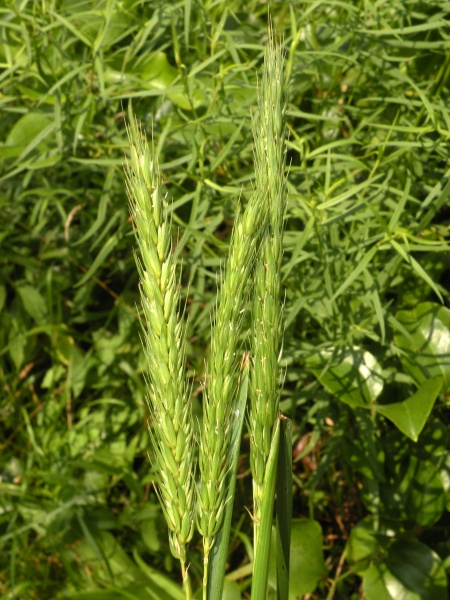
Elymus virginicus
Virginia Wild Rye
Élyme de Virginie
Synonyms
eastern wildrye
terrell grass
Plant Characteristics
Couleur de floraison: Vert
Bloom Period: Jul - Aug
Hauteur max: 4,0 feet
Max Width: 1,0 feet (spreads by rhizome)
Light Condition:
 Plus de 6 heures d'ensoleillement par jour
 More than 2 or 3 hours but less than 6 hours of direct sun a day
Soil conditions:
More than 2 or 3 hours but less than 6 hours of direct sun a day
Soil conditions:
 Tolerates medium soil condition
Plus de 6 heures d'ensoleillement par jour
More than 2 or 3 hours but less than 6 hours of direct sun a day
Tolerates medium soil condition
Lifespan:
Vivace
des plantes qui reviennent année après année
Gardener Experience:
 Ne se propage pas de manière incontrôlable
 Spreads by rhizome
 Facile à germer
 Self-seeding
Ne se propage pas de manière incontrôlable
Spreads by rhizome
Facile à germer
Self-seeding
Landscape Uses:
 Suitable for rain gardens
 Suitable for school gardens
Suitable for rain gardens
Suitable for school gardens
Ecological Benefits:
 Supports birds
Supports birds
Tolerates:
 Tolerates salt conditions
 Deer resistant
 Rabbit resistant
 Tolerates limestone conditions
 Tolerates sandy conditions
 Tolerates acidic soil conditions
 Tolerates juglone conditions
Tolerates salt conditions
Deer resistant
Rabbit resistant
Tolerates limestone conditions
Tolerates sandy conditions
Tolerates acidic soil conditions
Tolerates juglone conditions
Special Features and Considerations:
Seed and plant distribution status
Semences disponible
Disponible à la table Plein soleil, moyen
Disponible à la table Plein soleil, moyen
Nous acceptions les semences de cette plante
Faits intéressants
Virginia Wild Rye is grazed by many species, including geese and insects. The seeds are eaten by small mammals, and the grass blades are used for denning and nesting material. These plants mature quite quickly and often fade within a few years allowing slower maturing species to take over. They are very adaptable, growing in marshes, cliffs, bals or ledges, coastal beaches, forests, shores of rivers or lakes, and wetland marshes.
Plant Location
Native to Ottawa region: Oui
Distribution according to VASCAN
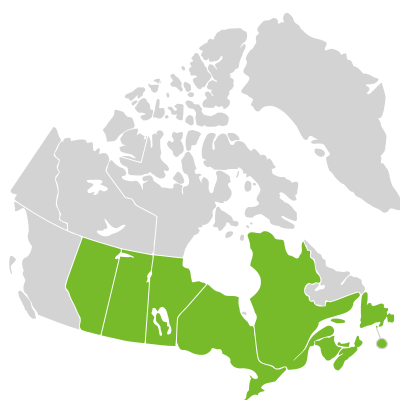
Ephemeral
Native
Introduced
Excluded
Extirpated
Doubtful
Absent
 Canadensis

Thrives in Ecozones
- Maritime de l'Atlantique
- Prairies
- Bouclier boréal
- Plaines à forêts mixtes
Ecological Benefits
Butterflies Supported by Elymus virginicus
No butterfly data available for this plant.
Specialized Bees Supported by Elymus virginicus
No bee data available for this plant.
Complementary Plants
- Chamaenerion angustifolium
Fireweed
Épilobe à feuilles étroites - Eupatorium altissimum
Tall Boneset
Eupatoire élevée - Ratibida pinnata
Grey-headed Prairie Coneflower
Ratibida à feuilles pennées - Vernonia missurica
Missouri Ironweed
Vernonie du Missouri
Substitute For Non-Native Plants
- Miscanthus (Silvergrass)
- Cortaderia selloana (Pampas Grass)
- Pennisetum setaceum (Fountain Grass)
Sowing Information
Download Seed Envelope Labels (PDF)
- Sowing depth: Couvrir très légèrement
- Sow anytime
- Stratification duration: 0 days
- Self-seeding
- Notes: Can be sown in late spring in warm soil.
Harvesting and Seed Sharing
- Harvest start month: September
- Harvesting indicator:
- Seeds easily fall off when you gently pull them off
- Harvesting:
- Utiliser la main pour détacher de la tige principale
- Seed viability test:
- Pas de test requis avant le don
- Packaging measure: A dozen (12) seeds (eyeball)
- Seed storage:
- Sécher à l'air dans un sac en papier ou contenant ouvert, pour quelques jours jusqu'à sec
- Secouer de temps à autre pour prévenir la moisissure
- Cultivar: Yes, do not donate unless you know source, and there are no known cultivars in your garden or at proximity
- Harvesting video: Watch here
Toxicity Notes
Inadequate information on toxicity if ingested but the seeds can become foreign bodies in the eyes, toes, ears etc of pets.