 Inconnu - Inadequate information on toxicity found.
Plant Names

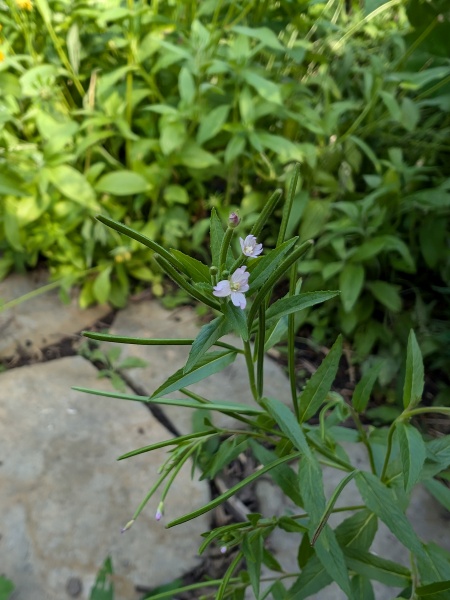
Epilobium ciliatum
Northern Willowherb
Épilobe cilié
Synonyms
northern willowherb
purple-leaved willowherb
Plant Characteristics
Couleur de floraison: Rose
Bloom Period: Jun - Oct
Hauteur max: 2,0 feet
Max Width: 2,0 feet (spreads by rhizome)
Light Condition:
 Plus de 6 heures d'ensoleillement par jour
 More than 2 or 3 hours but less than 6 hours of direct sun a day
Soil conditions:
More than 2 or 3 hours but less than 6 hours of direct sun a day
Soil conditions:
 Tolerates medium soil condition
 Tolère des conditions de sol humide
Plus de 6 heures d'ensoleillement par jour
More than 2 or 3 hours but less than 6 hours of direct sun a day
Tolerates medium soil condition
Tolère des conditions de sol humide
Lifespan:
Annuel
des plantes qui ont une durée de vie d'un an
Gardener Experience:
 Spreads by rhizome
 Facile à germer
 Self-seeding
Spreads by rhizome
Facile à germer
Self-seeding
Landscape Uses:
 Suitable for rock gardens
 Souhaitable dans les jardins de zone humide
 Suitable for container garden
 Suitable for school gardens
Suitable for rock gardens
Souhaitable dans les jardins de zone humide
Suitable for container garden
Suitable for school gardens
Ecological Benefits:
No ecological benefits information available.
Tolerates:
 Tolerates limestone conditions
Tolerates limestone conditions
Special Features and Considerations:
Seed and plant distribution status
Semences disponible
Disponible à la table Mi-soleil, humide
Disponible à la table Mi-soleil, humide
Nous acceptions les semences de cette plante
Faits intéressants
Fringed Willowherb is an upright native perennial that produces small pink to white flowers along slender stems from summer into fall. It commonly occurs in moist meadows, stream edges, disturbed soils, roadsides, and open woodlands. The long, narrow seed capsules eventually release numerous tiny seeds, allowing the plant to colonize suitable areas. It is best suited to naturalized areas rather than formal beds. It tolerates disturbed and compacted soils. It may behave more like a volunteer than a deliberately placed garden specimen.
Plant Location
Native to Ottawa region: Oui
Distribution according to VASCAN
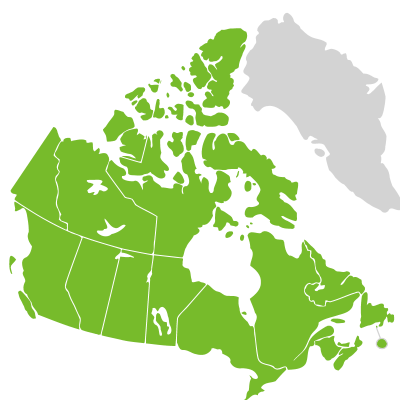
Ephemeral
Native
Introduced
Excluded
Extirpated
Doubtful
Absent
 Canadensis

Thrives in Ecozones
- Taïga des plaines
- Maritime de l'Atlantique
- Plaines boréales
- Cordillière montagnarde
- Prairies
- Bouclier boréal
- Cordillière boréale
- Maritime du Pacifique
- Plaines à forêts mixtes
Ecological Benefits
Butterflies Supported by Epilobium ciliatum
-
Eudryas unio
Pearly Wood Nymph - Agaristine à Bande Courbe -
Hyles lineata
White lined Sphinx - Sphinx à Lignes Blanches
Specialized Bees Supported by Epilobium ciliatum
No bee data available for this plant.
Complementary Plants
- No complementary plants found.
Substitute For Non-Native Plants
- Miscanthus (Silvergrass)
- Cortaderia selloana (Pampas Grass)
- Pennisetum setaceum (Fountain Grass)
Sowing Information
Download Seed Envelope Labels (PDF)
- Sowing depth: Surface sow
- Sow by February
- Stratification duration: 60 days
- Self-seeding
Harvesting and Seed Sharing
- Harvest start month: July
- Harvesting indicator:
- Seeds have become fluffy and can be easily removed by shaking on gently pulling off from stem
- Harvesting:
- Secouer le porte-graines dans un sac de papier
- Seed viability test:
- Pas de test requis avant le don
- Packaging measure: 1 rounded 1/32 teaspoon
- Seed storage:
- Sécher à l'air dans un sac en papier ou contenant ouvert, pour quelques jours jusqu'à sec
- Secouer de temps à autre pour prévenir la moisissure
- Cultivar: No, you can donate without knowing the source as there are only straight species
- Harvesting video: Watch here
Toxicity Notes
Inadequate information on toxicity found.