 Inconnu - Inadequate information on toxicity found.
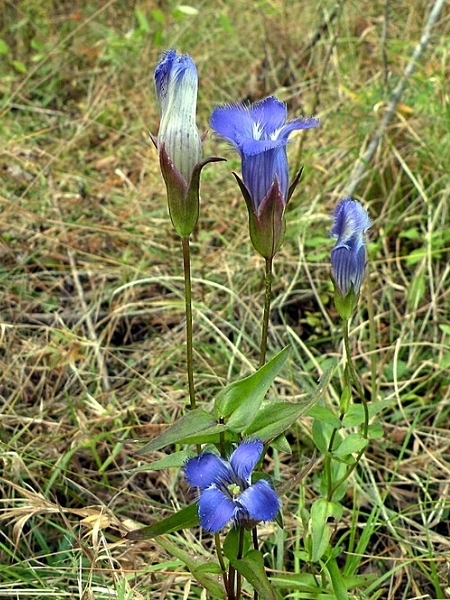
Plant Names

Gentianopsis crinita
Greater Fringed-gentian
Gentiane frangée
Synonyms
eastern fringed-gentian
gentianopsis frangé
Plant Characteristics
Couleur de floraison: Bleu
Bloom Period: Aug - Oct
Hauteur max: 1,0 feet
Max Width: 2,0 feet
Light Condition:
 Plus de 6 heures d'ensoleillement par jour
Soil conditions:
Plus de 6 heures d'ensoleillement par jour
Soil conditions:
 Tolère des conditions de sol humide
Plus de 6 heures d'ensoleillement par jour
Tolère des conditions de sol humide
Lifespan:
Bisannuel
des plantes qui mettront deux ans à fleurir, puis mourront
Gardener Experience:
 Ne se propage pas de manière incontrôlable
 Self-seeding
Ne se propage pas de manière incontrôlable
Self-seeding
Landscape Uses:
No landscape information available.
Ecological Benefits:
No ecological benefits information available.
Tolerates:
 Deer resistant
 Rabbit resistant
 Tolerates limestone conditions
Deer resistant
Rabbit resistant
Tolerates limestone conditions
Special Features and Considerations:
 This plant is a GRASP candidate
This plant is a GRASP candidate
Seed and plant distribution status
No seeds available for this plant.
Nous acceptions les semences de cette plante
Faits intéressants
Fringed Gentian is one of North America's most spectacular native wildflowers, producing large, deep blue flowers with finely fringed petals in late summer and fall. It thrives in moist meadows, fens, and open woodland edges.
Fringed Gentian is breathtaking in bloom, it can also be somewhat challenging to establish and is best suited to naturalized native gardens. It does not tolerate prolonged drought. It is best left undisturbed once established.
Fringed Gentian is breathtaking in bloom, it can also be somewhat challenging to establish and is best suited to naturalized native gardens. It does not tolerate prolonged drought. It is best left undisturbed once established.
Plant Location
Native to Ottawa region: Oui
Distribution according to VASCAN
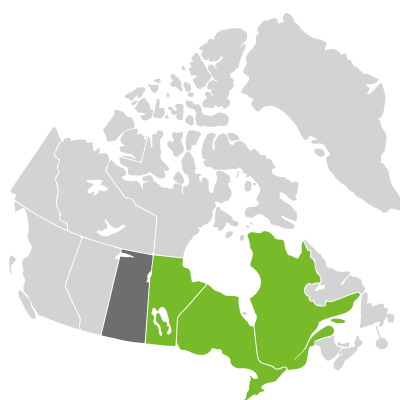
Ephemeral
Native
Introduced
Excluded
Extirpated
Doubtful
Absent
 Canadensis

Thrives in Ecozones
- Maritime de l'Atlantique
- Plaines à forêts mixtes
Ecological Benefits
Butterflies Supported by Gentianopsis crinita
No butterfly data available for this plant.
Specialized Bees Supported by Gentianopsis crinita
No bee data available for this plant.
Complementary Plants
- No complementary plants found.
Substitute For Non-Native Plants
- Ajuga reptans (Bugleweed)
- Buddleia (Butterfly Bush)
- Delphinium (Delphinium)
- Salvia (Non-Native Sage)
- Iris pseudacorus (Yellow Iris)
- Iris (Iris Cultivars)
- Hyacinthus (Non-Native Hyacynth)
- Myosotis sylvatica (Forget-me-not)
- Baptisia (False Indigo)
Sowing Information
Download Seed Envelope Labels (PDF)
- Sowing depth: Surface sow
- Sow by February
- Stratification duration: 60 days
- Self-seeding
Harvesting and Seed Sharing
- Harvest start month: September
- Harvesting indicator:
- Pods are open
- Harvesting:
- Cut stem (including pods), let air dry in paper bag, then shake seeds off after a few days
- Seed viability test:
- Pas de test requis avant le don
- Packaging measure: 1 rounded 1/32 teaspoon
- Seed storage:
- Sécher à l'air dans un sac en papier ou contenant ouvert, pour quelques jours jusqu'à sec
- Secouer de temps à autre pour prévenir la moisissure
- Cultivar: Yes, do not donate unless you know source, and there are no known cultivars in your garden or at proximity
- Remove non-seed material
- No harvesting video available at this time.
Toxicity Notes
Inadequate information on toxicity found.
GRASP Candidate
Rare/endangered native plants within 50km radius of Ottawa approximately. Burton is anchor study, plus iNaturalist observations to corroborate if any recent spotting.