 Connu comme étant toxique - The plant can cause skin irritation/rashes in some people
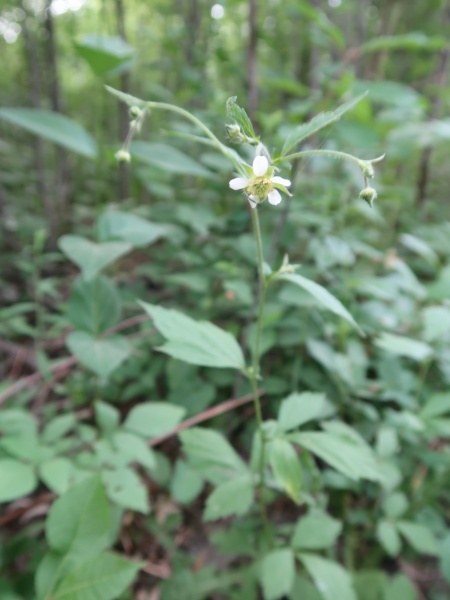
Plant Names

Geum canadense
Canada Avens
Benoîte du Canada
Plant Characteristics
Couleur de floraison: Blanc
Bloom Period: May - Jul
Hauteur max: 2,0 feet
Max Width: 2,0 feet (spreads by rhizome)
Light Condition:
 Less than 2 or 3 hours of direct sun a day
Soil conditions:
Less than 2 or 3 hours of direct sun a day
Soil conditions:
 Tolerates medium soil condition
Less than 2 or 3 hours of direct sun a day
Tolerates medium soil condition
Lifespan:
Vivace
des plantes qui reviennent année après année
Gardener Experience:
 Spreads by rhizome
 Facile à germer
 Self-seeding
Spreads by rhizome
Facile à germer
Self-seeding
Landscape Uses:
 Suitable for rock gardens
 Suitable for school gardens
 Suitable for woodland gardens
Suitable for rock gardens
Suitable for school gardens
Suitable for woodland gardens
Ecological Benefits:
No ecological benefits information available.
Tolerates:
 Deer resistant
 Rabbit resistant
 Tolerates limestone conditions
 Tolerates juglone conditions
Deer resistant
Rabbit resistant
Tolerates limestone conditions
Tolerates juglone conditions
Special Features and Considerations:
 This plant produces burs
 This plant causes skin rashes
This plant produces burs
This plant causes skin rashes
Seed and plant distribution status
Semences disponible
Disponible à la table Ombre
Disponible à la table Ombre
Nous acceptions les semences de cette plante
Faits intéressants
Canada Avens is a member of the rose family (Rosaceae), so it is related to roses, strawberries and raspberries.
Its flowers are small—only a few millimeters across—but the plant can produce many flowers over an extended period, creating a delicate cloud of white in a woodland garden.
After flowering, it produces distinctive bur-like seed structures. These can catch on fur, clothing and other materials, helping the seeds travel to new locations.
Usually does not require fertilizer when grown in ordinary garden soil. A layer of compost in spring is generally sufficient. If you want a low-maintenance woodland groundcover that can fill in naturally, Canada Avens is a good candidate—but give it some room because its rhizomes allow it to expand.
The seed structures are covered with hooked or rough structures that can attach to clothing or animal fur. The plant can cause skin irritation/rashes in some people, so sensitive gardeners should consider wearing gloves when handling it.
Its flowers are small—only a few millimeters across—but the plant can produce many flowers over an extended period, creating a delicate cloud of white in a woodland garden.
After flowering, it produces distinctive bur-like seed structures. These can catch on fur, clothing and other materials, helping the seeds travel to new locations.
Usually does not require fertilizer when grown in ordinary garden soil. A layer of compost in spring is generally sufficient. If you want a low-maintenance woodland groundcover that can fill in naturally, Canada Avens is a good candidate—but give it some room because its rhizomes allow it to expand.
The seed structures are covered with hooked or rough structures that can attach to clothing or animal fur. The plant can cause skin irritation/rashes in some people, so sensitive gardeners should consider wearing gloves when handling it.
Plant Location
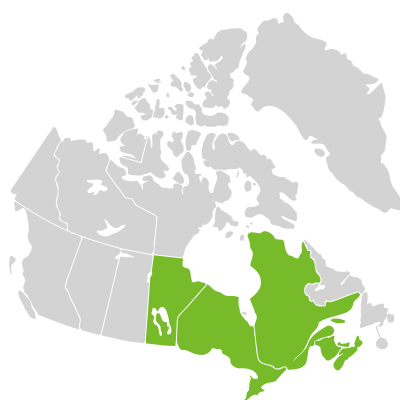
Native to Ottawa region: Oui
Distribution according to VASCAN
Ephemeral
Native
Introduced
Excluded
Extirpated
Doubtful
Absent
 Canadensis

Thrives in Ecozones
- Maritime de l'Atlantique
- Bouclier boréal
- Plaines à forêts mixtes
Ecological Benefits
Butterflies Supported by Geum canadense
No butterfly data available for this plant.
Specialized Bees Supported by Geum canadense
No bee data available for this plant.
Complementary Plants
- No complementary plants found.
Substitute For Non-Native Plants
No substitute plant data available for this plant.
Sowing Information
Download Seed Envelope Labels (PDF)
- Sowing depth: Couvrir très légèrement
- Sow by February
- Stratification duration: 60 days
- Self-seeding
Harvesting and Seed Sharing
- Harvest start month: August
- Harvesting indicator:
- Pods are brown and crisp and starting to open
- Seeds are dark and tiny stem attaching to the main stem is brown
- Seeds easily fall off pod when shaken
- Little stem connecting the pod to the main stem is brown (not green)
- Harvesting:
- Secouer le porte-graines dans un sac de papier
- Seed viability test:
- Pas de test requis avant le don
- Packaging measure: 1 rounded 1/8 teaspoon
- Seed storage:
- Sécher à l'air dans un sac en papier ou contenant ouvert, pour quelques jours jusqu'à sec
- Secouer de temps à autre pour prévenir la moisissure
- Cultivar: No, you can donate without knowing the source as there are only straight species
- No harvesting video available at this time.
Toxicity Notes
The plant can cause skin irritation/rashes in some people