 Connu comme étant toxique - Toxic if ingested by mammals.
Plant Names

Heracleum maximum
American Cow Parsnip
Berce laineuse
Synonyms
common cow parsnip
cow parsnip
berce très grande
grande berce
poglus
Plant Characteristics
Couleur de floraison: Blanc
Bloom Period: Jun - Jul
Hauteur max: 8,0 feet
Max Width: 3,0 feet
Light Condition:
 Plus de 6 heures d'ensoleillement par jour
 More than 2 or 3 hours but less than 6 hours of direct sun a day
Soil conditions:
More than 2 or 3 hours but less than 6 hours of direct sun a day
Soil conditions:
 Tolerates medium soil condition
Plus de 6 heures d'ensoleillement par jour
More than 2 or 3 hours but less than 6 hours of direct sun a day
Tolerates medium soil condition
Lifespan:
Bisannuel
des plantes qui mettront deux ans à fleurir, puis mourront
Gardener Experience:
 Ne se propage pas de manière incontrôlable
 Self-seeding
Ne se propage pas de manière incontrôlable
Self-seeding
Landscape Uses:
No landscape information available.
Ecological Benefits:
 Butterfly host
Butterfly host
Tolerates:
 Tolerates limestone conditions
 Tolerates acidic soil conditions
Tolerates limestone conditions
Tolerates acidic soil conditions
Special Features and Considerations:
 This plant is septic tank safe
 This plant causes skin rashes
This plant is septic tank safe
This plant causes skin rashes
Seed and plant distribution status
No seeds available for this plant.
Nous acceptions les semences de cette plante
Faits intéressants
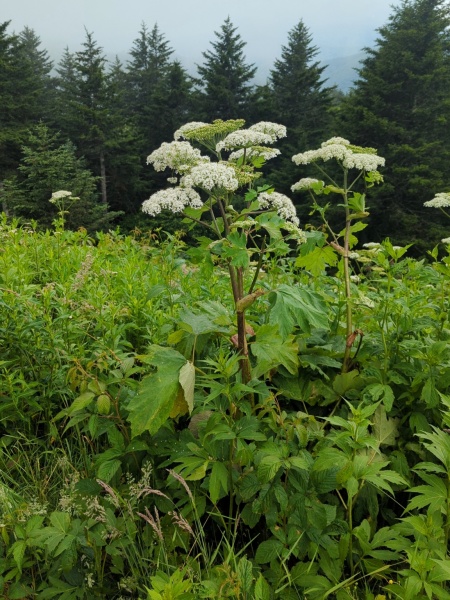
American Cow Parsnip is a bold native perennial with enormous leaves and large white umbrella-shaped flower clusters. It prefers moist meadows, woodland edges, and stream sides. Its dramatic size makes it an excellent focal plant. Flowers attract hundreds of species including native bees, tiny solitary bees, hoverflies, beetles, parasitic wasps, butterflies, and beneficial insects. Birds may use the foliage for shelter. It is excellent for naturalized landscapes. Leave plenty of space for mature size.
Plant Location
Native to Ottawa region: Oui
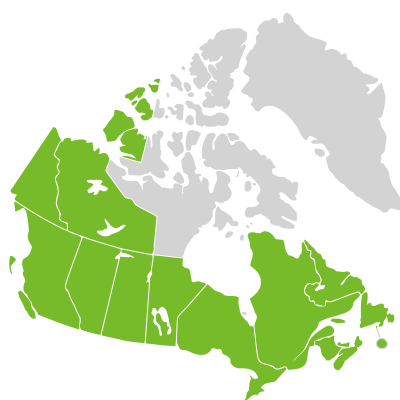
Distribution according to VASCAN
Ephemeral
Native
Introduced
Excluded
Extirpated
Doubtful
Absent
 Canadensis

Thrives in Ecozones
- Taïga des plaines
- Maritime de l'Atlantique
- Plaines boréales
- Cordillière montagnarde
- Prairies
- Plaines hudsoniennes
- Taïga de la Cordillière
- Bouclier boréal
- Cordillière boréale
- Maritime du Pacifique
- Cordillière arctique
- Plaines à forêts mixtes
Ecological Benefits
Butterflies Supported by Heracleum maximum
-
Eupithecia tripunctaria
White spotted pug - Eupithécie Triponctuée -
Papaipema harrisii
Heracleum stem borer -
Papilio brevicauda
Short-tailed swallowtail - Papillon Queue-Courte -
Papilio polyxenes
Black Swallowtail - Papillon du Céleri
Specialized Bees Supported by Heracleum maximum
No bee data available for this plant.
Complementary Plants
- No complementary plants found.
Substitute For Non-Native Plants
- Sorbaria sorbifolia (False spirea)
- Aruncus dioicus (Goat's Beard)
- Hydrangea (Hydrangea)
Sowing Information
Download Seed Envelope Labels (PDF)
- Sowing depth: Surface sow
- Sow anytime
- Stratification duration: 0 days
- Self-seeding
- Notes: Double dormancy.
Harvesting and Seed Sharing
- Harvest start month: August
- Harvesting indicator:
- Seeds are dark and dry, and easily fall off when you gently pull them off
- Harvesting:
- Secouer le porte-graines dans un sac de papier
- Seed viability test:
- Pas de test requis avant le don
- Packaging measure: 1 rounded 1/4 teaspoon
- Seed storage:
- Sécher à l'air dans un sac en papier ou contenant ouvert, pour quelques jours jusqu'à sec
- Secouer de temps à autre pour prévenir la moisissure
- Cultivar: No, you can donate without knowing the source as there are only straight species
- No harvesting video available at this time.
Toxicity Notes
Toxic if ingested by mammals.