 Connu comme étant toxique - Toxic to mammals if ingested. Contains alkaloids that are toxic if ingested, particularly the seeds and pods. Can cause poisoning in livestock, pets, and people if eaten in quantity. Handle seeds with care around children and animals.
Plant Names

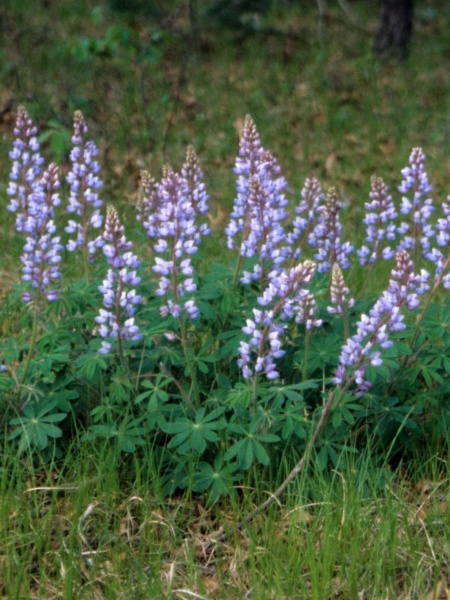
Lupinus perennis
Sundial Lupine
Lupin vivace
Synonyms
perennial lupine
lupin pérenne
Plant Characteristics
Couleur de floraison: Violet
Bloom Period: May - Jul
Hauteur max: 2,0 feet
Max Width: 1,5 feet (spreads by rhizome)
Light Condition:
 Plus de 6 heures d'ensoleillement par jour
 More than 2 or 3 hours but less than 6 hours of direct sun a day
Soil conditions:
More than 2 or 3 hours but less than 6 hours of direct sun a day
Soil conditions:
 Tolère des conditions de sol sec
Plus de 6 heures d'ensoleillement par jour
More than 2 or 3 hours but less than 6 hours of direct sun a day
Tolère des conditions de sol sec
Lifespan:
Vivace
des plantes qui reviennent année après année
Gardener Experience:
 Ne se propage pas de manière incontrôlable
 Spreads by rhizome
 Facile à germer
 Self-seeding
Ne se propage pas de manière incontrôlable
Spreads by rhizome
Facile à germer
Self-seeding
Landscape Uses:
 Suitable for rock gardens
Suitable for rock gardens
Ecological Benefits:
 Supports hummingbirds
 Supports birds
 Butterfly host
 Bee host
 Fixes nitrogen in the soil
Supports hummingbirds
Supports birds
Butterfly host
Bee host
Fixes nitrogen in the soil
Tolerates:
 Tolerates sandy conditions
 Tolerates juglone conditions
Tolerates sandy conditions
Tolerates juglone conditions
Special Features and Considerations:
Seed and plant distribution status
No seeds available for this plant.
Nous acceptions les semences de cette plante
Faits intéressants
Wild Lupine produces spikes of blue to purple flowers in late spring. It grows best in sandy, well-drained, nutrient-poor soil. It does not like rich, heavily fertilized gardens. As a nitrogen-fixing plant, it naturally improves soil fertility. It is an outstanding pollinator plant that attracts bumble bees, mining bees, butterflies, and other native bees. Seeds are occasionally eaten by small mammals. Its deep taproot makes transplanting difficult. It is long-lived once established.
Plant Location
Distribution according to VASCAN
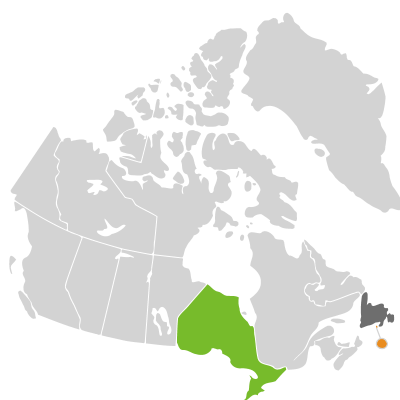
Ephemeral
Native
Introduced
Excluded
Extirpated
Doubtful
Absent
 Canadensis

Thrives in Ecozones
- Maritime de l'Atlantique
- Bouclier boréal
- Plaines à forêts mixtes
Ecological Benefits
Butterflies Supported by Lupinus perennis
-
Glaucopsyche lygdamus
Silvery Blue - Bleu Argenté -
Plebejus samuelis
Karner Blue -
Vanessa Cardui
Painted Lady - Vanesse du Chardon
Specialized Bees Supported by Lupinus perennis
- Megachile melanophaea
Complementary Plants
- No complementary plants found.
Substitute For Non-Native Plants
- Buddleia (Butterfly Bush)
- Delphinium (Delphinium)
- Iris pseudacorus (Yellow Iris)
- Iris (Iris Cultivars)
- Hesperis matronalis (Dame Rocket)
Sowing Information
Download Seed Envelope Labels (PDF)
- Sowing depth: Couvrir très légèrement
- Sow by February
- Stratification duration: 60 days
- Self-seeding
- Notes: Needs scarification if started in fridge
Harvesting and Seed Sharing
- Harvest start month: June
- Harvesting indicator:
- Pods are open
- Harvesting:
- Ouvrir la gousse, enlever les graines
- Seed viability test:
- Pas de test requis avant le don
- Packaging measure: 1 rounded 1/32 teaspoon
- Seed storage:
- Sécher à l'air dans un sac en papier ou contenant ouvert, pour quelques jours jusqu'à sec
- Secouer de temps à autre pour prévenir la moisissure
- Cultivar: Yes, do not donate unless you know source, and there are no known cultivars in your garden or at proximity
- Remove non-seed material
- No harvesting video available at this time.
Toxicity Notes
Toxic to mammals if ingested. Contains alkaloids that are toxic if ingested, particularly the seeds and pods. Can cause poisoning in livestock, pets, and people if eaten in quantity. Handle seeds with care around children and animals.