 Inconnu - Inadequate information on toxicity found.
Plant Names

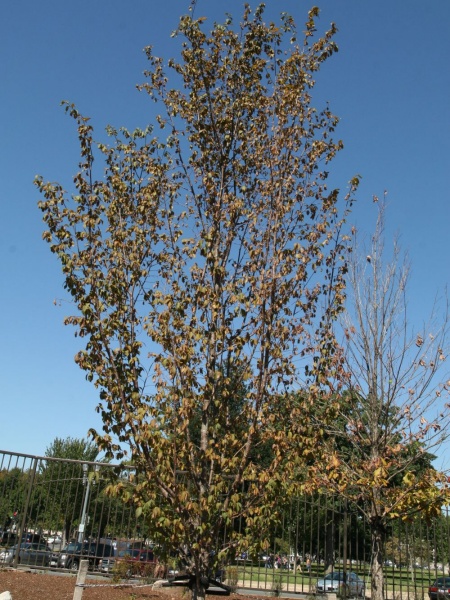
Ostrya virginiana
Eastern Hop-hornbeam
Ostryer de Virginie
Synonyms
American hop-hornbeam
hop-hornbeam
ironwood
leverwood
bois à levier
bois de fer
bois dur
ostryer de la Virginie
Plant Characteristics
Couleur de floraison: Vert
Bloom Period: Apr - Apr
Hauteur max: 40,0 feet
Max Width: 20,0 feet
Light Condition:
 Plus de 6 heures d'ensoleillement par jour
 More than 2 or 3 hours but less than 6 hours of direct sun a day
Soil conditions:
More than 2 or 3 hours but less than 6 hours of direct sun a day
Soil conditions:
 Tolère des conditions de sol sec
 Tolerates medium soil condition
Plus de 6 heures d'ensoleillement par jour
More than 2 or 3 hours but less than 6 hours of direct sun a day
Tolère des conditions de sol sec
Tolerates medium soil condition
Lifespan:
Vivace
des plantes qui reviennent année après année
Gardener Experience:
 Ne se propage pas de manière incontrôlable
 Self-seeding
Ne se propage pas de manière incontrôlable
Self-seeding
Landscape Uses:
 Suitable for rock gardens
 Suitable for shoreline rehabilitation
Suitable for rock gardens
Suitable for shoreline rehabilitation
Ecological Benefits:
 Supports pollinators
 Butterfly host
Supports pollinators
Butterfly host
Tolerates:
 Deer resistant
 Rabbit resistant
 Tolerates acidic soil conditions
Deer resistant
Rabbit resistant
Tolerates acidic soil conditions
Special Features and Considerations:
 This plant causes skin rashes
This plant causes skin rashes
Seed and plant distribution status
Semences disponible
Disponible à la table Vignes, arbustes, arbres
Disponible à la table Vignes, arbustes, arbres
Nous acceptions les semences de cette plante
Faits intéressants
Eastern Hop-hornbeam is a mid-sized, moderately drought tolerant winner for urban lots. It rarely grows more than a foot thick, with an oval crown. It is suitable beneath overhead utility lines because of its moderate size.
Eastern Hop-hornbeam fares poorly with flooding. It is slow-growing but requires very little maintenance. It adapts well to poor, rocky, and dry soils. It is benefits birds who eat the seeds.
Eastern Hop-hornbeam fares poorly with flooding. It is slow-growing but requires very little maintenance. It adapts well to poor, rocky, and dry soils. It is benefits birds who eat the seeds.
Plant Location
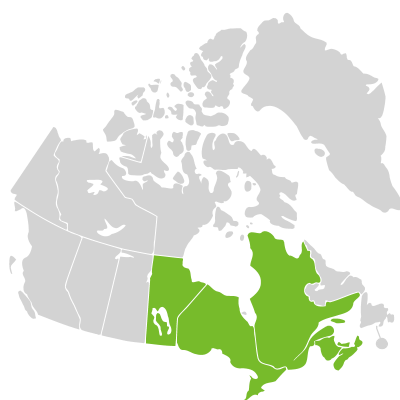
Native to Ottawa region: Oui
Distribution according to VASCAN
Ephemeral
Native
Introduced
Excluded
Extirpated
Doubtful
Absent
 Canadensis

Thrives in Ecozones
- Maritime de l'Atlantique
- Plaines boréales
- Bouclier boréal
- Plaines à forêts mixtes
Ecological Benefits
Butterflies Supported by Ostrya virginiana
No butterfly data available for this plant.
Specialized Bees Supported by Ostrya virginiana
No bee data available for this plant.
Complementary Plants
- No complementary plants found.
Substitute For Non-Native Plants
- Rhamnus cathartica (Common Buckthorn)
- Rhamnus frangula (Glossy Buckthorn)
- Magnoliaceae (Magnolia)
- Acer japonicum (Japanese Maple)
- Acer platanoides (Norway Maple)
Sowing Information
Download Seed Envelope Labels (PDF)
- Sowing depth: Couvrir très légèrement
- Sow by January
- Stratification duration: 2 years
- Self-seeding
- Double dormancy required
- Notes: 3 months warm moist stratification. Then 4 months cold moist stratification. Before stratifying, a 24 hr water soak, at room temperature, is required.
Harvesting and Seed Sharing
- Harvest start month: September
- Harvesting indicator:
- Pods are brown, seeds are dark, and crisp, and little stem connecting the pod to the main stem is brown (not green)
- Harvesting:
- Ouvrir la gousse, enlever les graines
- Seed viability test:
- Pas de test requis avant le don
- Packaging measure: Six (6) seeds (eyeball)
- Seed storage:
- Sécher à l'air dans un sac en papier ou contenant ouvert, pour quelques jours jusqu'à sec
- Secouer de temps à autre pour prévenir la moisissure
- Cultivar: No, you can donate without knowing the source as there are only straight species
- Remove non-seed material
- No harvesting video available at this time.
Toxicity Notes
Inadequate information on toxicity found.