 Inconnu - Inadequate information on toxicity found.
Plant Names

Ptelea trifoliata
Common Hop-tree
Ptéléa trifolié
Plant Characteristics
Couleur de floraison: Vert
Bloom Period: May - Jun
Hauteur max: 20,0 feet
Max Width: 15,0 feet
Light Condition:
 More than 2 or 3 hours but less than 6 hours of direct sun a day
Soil conditions:
More than 2 or 3 hours but less than 6 hours of direct sun a day
Soil conditions:
 Tolère des conditions de sol sec
 Tolerates medium soil condition
More than 2 or 3 hours but less than 6 hours of direct sun a day
Tolère des conditions de sol sec
Tolerates medium soil condition
Lifespan:
Vivace
des plantes qui reviennent année après année
Plant is
dioecious
Need a male and female plant to produce seeds
Gardener Experience:
 Ne se propage pas de manière incontrôlable
 Self-seeding
Ne se propage pas de manière incontrôlable
Self-seeding
Landscape Uses:
 Suitable for rock gardens
 Suitable for shoreline rehabilitation
Suitable for rock gardens
Suitable for shoreline rehabilitation
Ecological Benefits:
 Supports pollinators
 Butterfly host
Supports pollinators
Butterfly host
Tolerates:
 Tolerates limestone conditions
 Tolerates sandy conditions
Tolerates limestone conditions
Tolerates sandy conditions
Special Features and Considerations:
 This plant causes skin rashes
This plant causes skin rashes
Seed and plant distribution status
Semences disponible
Disponible à la table Vignes, arbustes, arbres
Disponible à la table Vignes, arbustes, arbres
Nous acceptions les semences de cette plante
Faits intéressants
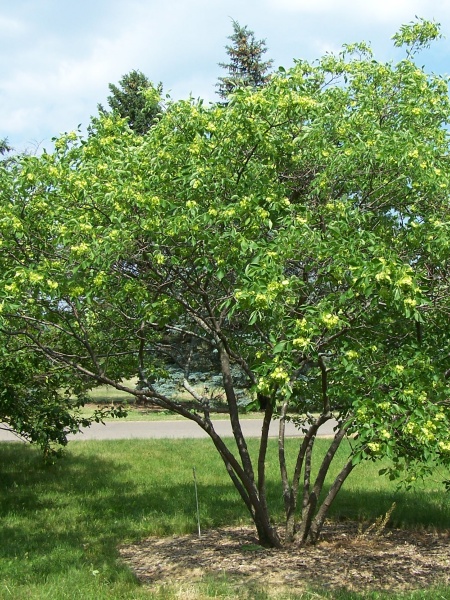
Common hoptree is a clusters of small, fragrant, greenish-white flowers bloom in late spring, followed by attractive wafer-like winged seeds that persist into winter. The glossy, three-part leaves give the tree an attractive tropical appearance, making it an excellent specimen for smaller native gardens. It will grow a crooked little trunk and a rounded crown. Dark green leaves in summer turn yellow in fall; greenish white flowers in the spring.
Common Hop-tree is very tolerant of drought once established. It can be grown as a multi-stem shrub or pruned into a small tree. It grows moderately fast. It is an excellent choice for difficult sites where many trees struggle.
Common Hop-tree is very tolerant of drought once established. It can be grown as a multi-stem shrub or pruned into a small tree. It grows moderately fast. It is an excellent choice for difficult sites where many trees struggle.
Plant Location
Distribution according to VASCAN
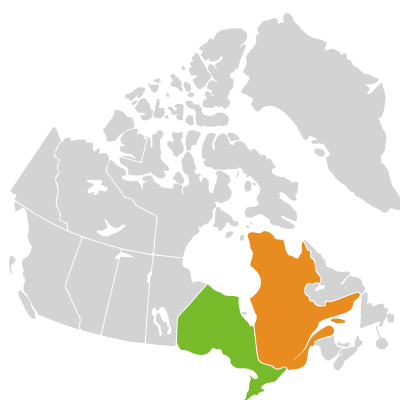
Ephemeral
Native
Introduced
Excluded
Extirpated
Doubtful
Absent
 Canadensis

Thrives in Ecozones
- Plaines à forêts mixtes
Ecological Benefits
Butterflies Supported by Ptelea trifoliata
-
Eupithecia miserulata
American Common Pug -
Papilio cresphontes
Giant swallowtail - Grand Porte-Queue
Specialized Bees Supported by Ptelea trifoliata
No bee data available for this plant.
Complementary Plants
- No complementary plants found.
Substitute For Non-Native Plants
- Magnoliaceae (Magnolia)
- Forsythieae (Forsythia)
Sowing Information
Download Seed Envelope Labels (PDF)
- Sowing depth: Couvrir très légèrement
- Sow anytime
- Stratification duration: 0 days
- Self-seeding
- Notes: Scarify, soak in warm water for 24h. Double dormancy.
Harvesting and Seed Sharing
- Harvest start month: October
- Harvesting indicator:
- Pods are released from plant
- Harvesting:
- La noix a été extraite de l'arbre
- Seed viability test:
- Pas de test requis avant le don
- Packaging measure: Six (6) seeds (eyeball)
- Seed storage:
- Sécher à l'air dans un sac en papier ou contenant ouvert, pour quelques jours jusqu'à sec
- Secouer de temps à autre pour prévenir la moisissure
- Cultivar: Yes, do not donate unless you know source, and there are no known cultivars in your garden or at proximity
- No harvesting video available at this time.
Toxicity Notes
Inadequate information on toxicity found.