 Pas connu comme étant toxique - Not known to be toxic to mammals if ingested.
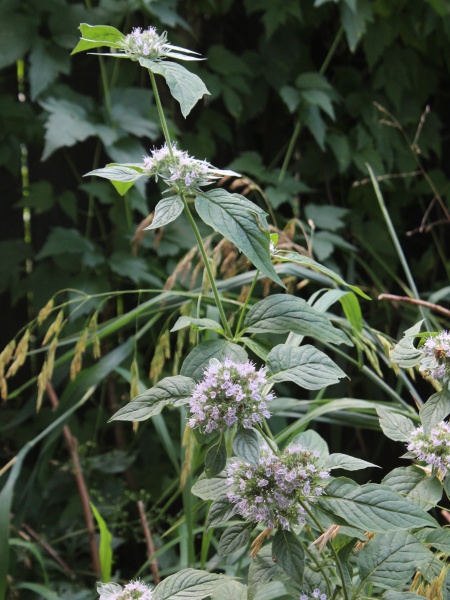
Plant Names

Pycnanthemum incanum
Hoary Mountain-mint
Pycnanthème gris
Plant Characteristics
Couleur de floraison: Violet
Bloom Period: Jul - Sep
Hauteur max: 3,0 feet
Max Width: 3,0 feet (spreads by rhizome)
Light Condition:
 Plus de 6 heures d'ensoleillement par jour
 More than 2 or 3 hours but less than 6 hours of direct sun a day
Soil conditions:
More than 2 or 3 hours but less than 6 hours of direct sun a day
Soil conditions:
 Tolère des conditions de sol sec
 Tolerates medium soil condition
Plus de 6 heures d'ensoleillement par jour
More than 2 or 3 hours but less than 6 hours of direct sun a day
Tolère des conditions de sol sec
Tolerates medium soil condition
Lifespan:
Vivace
des plantes qui reviennent année après année
Gardener Experience:
 Spreads by rhizome
 Facile à germer
 Self-seeding
Spreads by rhizome
Facile à germer
Self-seeding
Landscape Uses:
 Suitable for rock gardens
 Suitable for container garden
 Suitable for school gardens
Suitable for rock gardens
Suitable for container garden
Suitable for school gardens
Ecological Benefits:
No ecological benefits information available.
Tolerates:
 Deer resistant
 Rabbit resistant
 Tolerates transplantation
Deer resistant
Rabbit resistant
Tolerates transplantation
Special Features and Considerations:
Seed and plant distribution status
No seeds available for this plant.
Nous acceptions les semences de cette plante
Faits intéressants
Hoary Mountain-mint is highly fragrant and has silvery flower bracts surrounding clusters of white flowers. It is an excellent pollinator garden plant. It is very easy to grow. It is best given room to naturalize. It is drought tolerant once established.
Plant Location
Distribution according to VASCAN
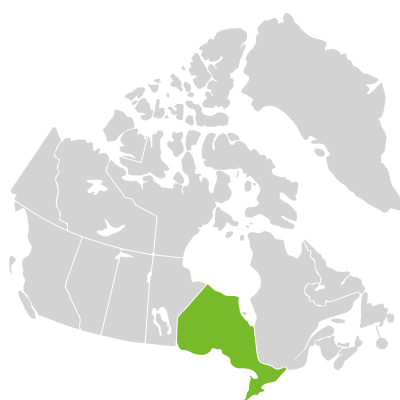
Ephemeral
Native
Introduced
Excluded
Extirpated
Doubtful
Absent
 Canadensis

Thrives in Ecozones
- Plaines à forêts mixtes
Ecological Benefits
Butterflies Supported by Pycnanthemum incanum
No butterfly data available for this plant.
Specialized Bees Supported by Pycnanthemum incanum
No bee data available for this plant.
Complementary Plants
- No complementary plants found.
Substitute For Non-Native Plants
- Lamium (Dead nettle)
- Ajuga reptans (Bugleweed)
- Salvia (Non-Native Sage)
- Lamium galeobdolon (Yellow Archangel)
- Leucanthemum (Shasta Daisy)
- Gerbera (Gerbera Daisy)
- Hesperis matronalis (Dame Rocket)
- Mentha (Non-Native Mints)
- Monarda (Beebalm Cultivars)
Sowing Information
Download Seed Envelope Labels (PDF)
- Sowing depth: Surface sow
- Sow anytime
- Stratification duration: 0 days
- Self-seeding
- Notes: Can be surface sown in late spring on warm soil.
Harvesting and Seed Sharing
- Harvest start month: September
- Harvesting indicator:
- Pods are brown and crisp and starting to open
- Seeds are dark and tiny stem attaching to the main stem is brown
- Seeds easily fall off pod when shaken
- Little stem connecting the pod to the main stem is brown (not green)
- Harvesting:
- Put pods in food processor or blender and blend seeds, and strain seeds using a strainer
- Seed viability test:
- Pas de test requis avant le don
- Packaging measure: 1 rounded 1/32 teaspoon
- Seed storage:
- Sécher à l'air dans un sac en papier ou contenant ouvert, pour quelques jours jusqu'à sec
- Secouer de temps à autre pour prévenir la moisissure
- Cultivar: No, you can donate without knowing the source as there are only straight species
- No harvesting video available at this time.
Toxicity Notes
Not known to be toxic to mammals if ingested.