 Pas connu comme étant toxique - Not toxic as per ASPCA.
Plant Names

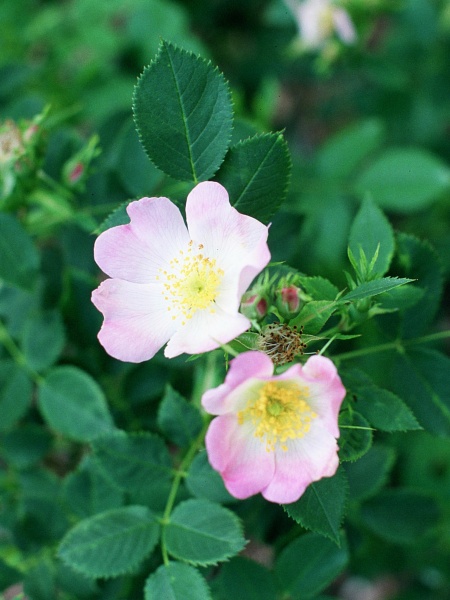
Rosa blanda
Smooth Rose
Rosier inerme
Synonyms
meadow rose
smooth wild rose
églantier
rosier agréable
rosier sauvage
Plant Characteristics
Couleur de floraison: Rose
Bloom Period: Jun - Jul
Hauteur max: 5,0 feet
Max Width: 3,0 feet (spreads by rhizome)
Light Condition:
 Plus de 6 heures d'ensoleillement par jour
 More than 2 or 3 hours but less than 6 hours of direct sun a day
Soil conditions:
More than 2 or 3 hours but less than 6 hours of direct sun a day
Soil conditions:
 Tolère des conditions de sol sec
 Tolerates medium soil condition
Plus de 6 heures d'ensoleillement par jour
More than 2 or 3 hours but less than 6 hours of direct sun a day
Tolère des conditions de sol sec
Tolerates medium soil condition
Lifespan:
Vivace
des plantes qui reviennent année après année
Gardener Experience:
 Suitable for beginner gardeners
 Spreads by rhizome
 Self-seeding
Suitable for beginner gardeners
Spreads by rhizome
Self-seeding
Landscape Uses:
 Suitable for rock gardens
 Suitable for shoreline rehabilitation
 Suitable for container garden
 Can be used as a hedge
 Tolerates boulevard garden conditions
Suitable for rock gardens
Suitable for shoreline rehabilitation
Suitable for container garden
Can be used as a hedge
Tolerates boulevard garden conditions
Ecological Benefits:
 Butterfly host
 Keystone species
Butterfly host
Keystone species
Tolerates:
 Tolerates limestone conditions
 Tolerates sandy conditions
 Tolerates juglone conditions
 Tolerates transplantation
Tolerates limestone conditions
Tolerates sandy conditions
Tolerates juglone conditions
Tolerates transplantation
Special Features and Considerations:
Seed and plant distribution status
No seeds available for this plant.
Nous acceptions les semences de cette plante
Faits intéressants
Smooth Rose has attractive pink flowers appearing in early summer followed by red rose hips in fall. Unlike many roses, it has few or no prickles, making it easier to handle in gardens. It grows naturally in prairies, open woodlands, roadsides, and shorelines. It tolerates a variety of soils. It is drought tolerant once established.
Plant Location
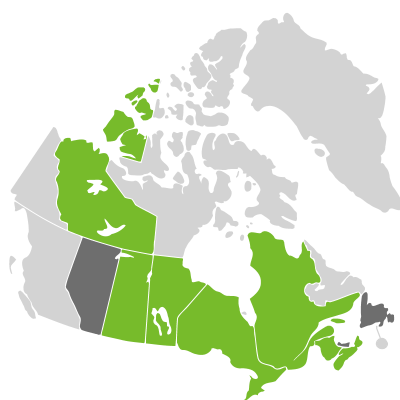
Native to Ottawa region: Oui
Distribution according to VASCAN
Ephemeral
Native
Introduced
Excluded
Extirpated
Doubtful
Absent
 Canadensis

Thrives in Ecozones
- Taïga des plaines
- Maritime de l'Atlantique
- Plaines boréales
- Prairies
- Bouclier boréal
- Plaines à forêts mixtes
Ecological Benefits
Butterflies Supported by Rosa blanda
-
Amphipyra tragopoginis
Mouse moth - Triponctuée -
Catocala ultronia
Ultronia Underwing - Likénée du Prunier -
Cingilia catenaria
Chain-dotted geometer - Arpenteuse caténaire -
Eupithecia nimbicolor
Attenuated pug -
Hyphantria cunea
Fall webworm - Écaille Fileuse -
Malacosoma americanum
Eastern Tent Caterpillar - Livrée d'Amérique -
Olethreutes permundana
Raspberry Leafroller -
Papaipema nebris
Stalk borer - Noctuelle à Taches En Grains -
Sphinx poecila
Poecila Sphinx - Sphinx Nordique des Bleuets
Specialized Bees Supported by Rosa blanda
No bee data available for this plant.
Complementary Plants
- No complementary plants found.
Substitute For Non-Native Plants
- Rosa (Non-native Roses)
- Rosa multiflora (Multiflora Rose)
Sowing Information
Download Seed Envelope Labels (PDF)
- Sowing depth: Couvrir très légèrement
- Sow anytime
- Stratification duration: 0 days
- Self-seeding
- Notes: Double dormancy needed. Scarification needed if not winter sowing.
Harvesting and Seed Sharing
- Harvest start month: August
- Harvesting indicator:
- Berries are ripen and easily fall off or have fallen off
- Harvesting:
- Squeeze berries to extract seeds, wash with soapy water, rinse throroughly
- Seed viability test:
- Pas de test requis avant le don
- Packaging measure: Six (6) seeds (eyeball)
- Seed storage:
- Sécher à l'air dans un sac en papier ou contenant ouvert, pour quelques jours jusqu'à sec
- Secouer de temps à autre pour prévenir la moisissure
- Cultivar: No, you can donate without knowing the source as there are only straight species
- No harvesting video available at this time.
Toxicity Notes
Not toxic as per ASPCA.