 Connu comme étant toxique - Toxic to livestock and cats if ingested.
Plant Names

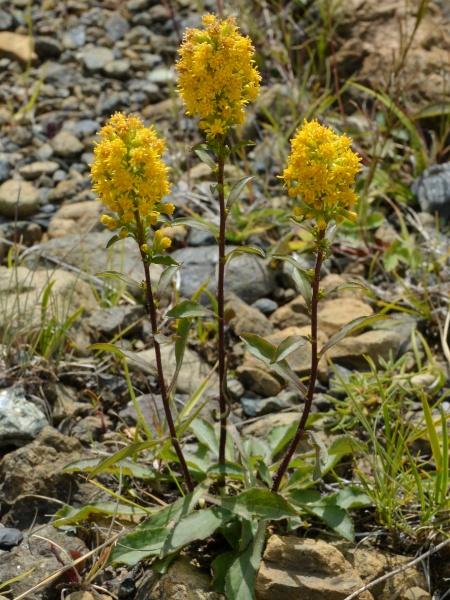
Solidago hispida
Hairy Goldenrod
Verge d'or hispid
Synonyms
pale goldenrod
shaggy goldenrod
upland goldenrod
solidage hispide
Plant Characteristics
Couleur de floraison: Jaune
Bloom Period: Jul - Sep
Hauteur max: 3,0 feet
Max Width: 1,0 feet (spreads by rhizome)
Light Condition:
 Plus de 6 heures d'ensoleillement par jour
Soil conditions:
Plus de 6 heures d'ensoleillement par jour
Soil conditions:
 Tolère des conditions de sol sec
 Tolerates medium soil condition
Plus de 6 heures d'ensoleillement par jour
Tolère des conditions de sol sec
Tolerates medium soil condition
Lifespan:
Vivace
des plantes qui reviennent année après année
Gardener Experience:
 Ne se propage pas de manière incontrôlable
 Spreads by rhizome
 Facile à germer
 Self-seeding
Ne se propage pas de manière incontrôlable
Spreads by rhizome
Facile à germer
Self-seeding
Landscape Uses:
 Suitable for rock gardens
 Suitable for container garden
 Suitable for school gardens
Suitable for rock gardens
Suitable for container garden
Suitable for school gardens
Ecological Benefits:
 Butterfly host
 Bee host
 Keystone species
Butterfly host
Bee host
Keystone species
Tolerates:
 Tolerates limestone conditions
 Tolerates juglone conditions
 Tolerates transplantation
Tolerates limestone conditions
Tolerates juglone conditions
Tolerates transplantation
Special Features and Considerations:
 This plant is a GRASP candidate
 This plant causes skin rashes
This plant is a GRASP candidate
This plant causes skin rashes
Seed and plant distribution status
No seeds available for this plant.
Nous acceptions les semences de cette plante
Faits intéressants
Hairy Goldenrod does not spread aggressively like other goldenrod species. These characteristics, coupled with its unique appearance, and the fact that it's well behaved makes it suitable for smaller gardens. It does not require rich soil and is drought tolerant once established.
Plant Location
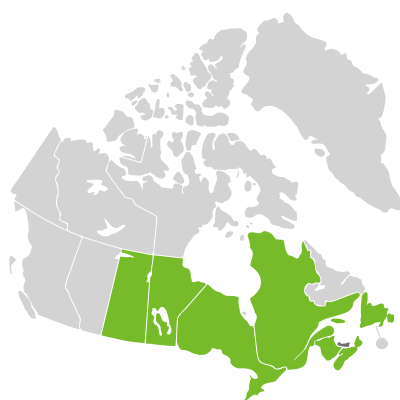
Native to Ottawa region: Oui
Distribution according to VASCAN
Ephemeral
Native
Introduced
Excluded
Extirpated
Doubtful
Absent
 Canadensis

Thrives in Ecozones
- Maritime de l'Atlantique
- Plaines à forêts mixtes
Ecological Benefits
Butterflies Supported by Solidago hispida
-
Chlorochlamys chloroleucaria
Blackberry looper - Arpenteuse des ronces -
Cucullia convexipennis
Brown Hooded Owlet - Noctuelle Huppée de la Verge d'Or -
Eupithecia miserulata
American Common Pug -
Euplexia benesimilis
American Angle Shades -
Leuconycta diphteroides
Green Leuconycta -
Melanchra adjuncta
Hitched Arches -
Phragmatobia fuliginosa
Ruby Tiger - Écaille Cramoisie -
Trichordestra legitima
Striped Garden Caterpillar
Specialized Bees Supported by Solidago hispida
- Andrena aliciae
- Andrena asteris
- Andrena canadensis
- Andrena chromotricha
- Andrena hirticincta
- Andrena nubecula
- Andrena placata
- Andrena simplex
- Complexe Colletes americanus
- Complexe Colletes compactus
- Complexe Colletes simulans
- Dianthidium simile
- Megachile inimica
- Melissodes agilis
- Melissodes illatus
- Melissodes trinodis
- Protandrena andrenoides
- Pseudopanurgus aestivalis
Complementary Plants
- No complementary plants found.
Substitute For Non-Native Plants
- Oenothera (Non-Native Primrose)
- Oenothera biennis (Evening Primrose Cultivars)
- Oenothera fructicosa (Sundrops Cultivars)
- Helianthus (Non-Native Sunflower)
- NA (Black Eyed Susan's Cultivars)
- Rudbeckia Triloba (Brown Eyed Susan's)
- Echinacea (Coneflowers)
- NA (Coreopsis cultivars)
- NA (Non-native False Sunflower)
Sowing Information
Download Seed Envelope Labels (PDF)
- Sowing depth: Surface sow
- Sow anytime
- Stratification duration: 0 days
- Self-seeding
Harvesting and Seed Sharing
- Harvest start month: September
- Harvesting indicator:
- Seeds have become fluffy and can be easily removed by shaking on gently pulling off from stem
- Harvesting:
- Secouer le porte-graines dans un sac de papier
- Seed viability test:
- Pas de test requis avant le don
- Packaging measure: 1 rounded 1/4 teaspoon
- Seed storage:
- Sécher à l'air dans un sac en papier ou contenant ouvert, pour quelques jours jusqu'à sec
- Secouer de temps à autre pour prévenir la moisissure
- Cultivar: No, you can donate without knowing the source as there are only straight species
- No harvesting video available at this time.
Toxicity Notes
Toxic to livestock and cats if ingested.
GRASP Candidate
Rare/endangered native plants within 50km radius of Ottawa approximately. Burton is anchor study, plus iNaturalist observations to corroborate if any recent spotting.