 Inconnu - Inadequate information on toxicity found.
Plant Names

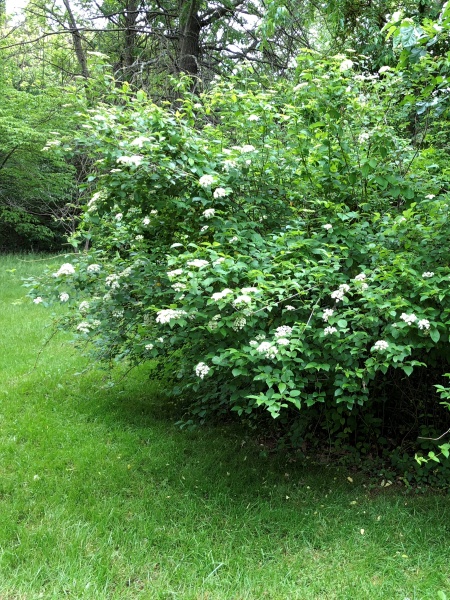
Viburnum dentatum
Arrowwood Viburnum
Viorne dentée
Plant Characteristics
Couleur de floraison: Blanc
Bloom Period: May - Jun
Hauteur max: 10,0 feet
Max Width: 10,0 feet (spreads by rhizome)
Light Condition:
 Plus de 6 heures d'ensoleillement par jour
 More than 2 or 3 hours but less than 6 hours of direct sun a day
Soil conditions:
More than 2 or 3 hours but less than 6 hours of direct sun a day
Soil conditions:
 Tolerates medium soil condition
Plus de 6 heures d'ensoleillement par jour
More than 2 or 3 hours but less than 6 hours of direct sun a day
Tolerates medium soil condition
Lifespan:
Vivace
des plantes qui reviennent année après année
Gardener Experience:
 Spreads by rhizome
 Facile à germer
 Self-seeding
Spreads by rhizome
Facile à germer
Self-seeding
Landscape Uses:
 Suitable for rain gardens
 Suitable for shoreline rehabilitation
 Can be used as a hedge
Suitable for rain gardens
Suitable for shoreline rehabilitation
Can be used as a hedge
Ecological Benefits:
 Supports birds
 Keystone species
Supports birds
Keystone species
Tolerates:
 Tolerates drought conditions
 Tolerates juglone conditions
 Tolerates transplantation
Tolerates drought conditions
Tolerates juglone conditions
Tolerates transplantation
Special Features and Considerations:
Seed and plant distribution status
No seeds available for this plant.
Nous acceptions les semences de cette plante
Faits intéressants
Arrowwood Viburnum is alued for its clusters of white spring flowers, blue-black fruits and attractive fall colour. Its common name comes from the traditional use of its straight young stems for making arrow shafts. The name “Arrowwood” has a practical origin. Indigenous peoples use the straight, strong shoots of this shrub for making arrows and other implements.
Arrowwood's flowers are arranged in flat-topped clusters called cymes, creating a showy display in late spring. After flowering, the shrub produces clusters of blue to blue-black drupes. These can remain attractive into fall and are eaten by birds and other wildlife. Don't plant it too close to a walkway or small foundation bed. It may look modest when young but can become a broad, dense shrub as it matures. If your goal is abundant berries, plant more than one genetically distinct Arrowwood Viburnum where possible.
Arrowwood's flowers are arranged in flat-topped clusters called cymes, creating a showy display in late spring. After flowering, the shrub produces clusters of blue to blue-black drupes. These can remain attractive into fall and are eaten by birds and other wildlife. Don't plant it too close to a walkway or small foundation bed. It may look modest when young but can become a broad, dense shrub as it matures. If your goal is abundant berries, plant more than one genetically distinct Arrowwood Viburnum where possible.
Plant Location
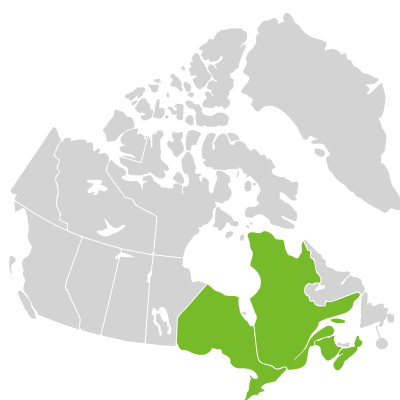
Native to Ottawa region: Oui
Distribution according to VASCAN
Ephemeral
Native
Introduced
Excluded
Extirpated
Doubtful
Absent
 Canadensis

Thrives in Ecozones
- Plaines à forêts mixtes
Ecological Benefits
Butterflies Supported by Viburnum dentatum
-
Agriopodes teratophora
Green Marvel -
Amblyscirtes hegon
Pepper and salt skipper - Hespérie Poivrée -
Celastrina ladon
Spring Azure - Azur Printanier -
Lomographa vestaliata
White Spring Moth
Specialized Bees Supported by Viburnum dentatum
No bee data available for this plant.
Complementary Plants
- No complementary plants found.
Substitute For Non-Native Plants
- Hydrangea (Hydrangea)
- Rhamnus cathartica (Common Buckthorn)
- Rhamnus frangula (Glossy Buckthorn)
- Euonymus alatus (Burning Bush)
- Buxus sempervirens (Boxwood)
- Impatiens glandulifera (Himalayan Balsam)
- Berberis (Barberry)
Sowing Information
Download Seed Envelope Labels (PDF)
- Sowing depth: Couvrir très légèrement
- Sow anytime
- Stratification duration: 240 days
- Self-seeding
- Notes: Warm moist stratify 180d, then cold moist stratify 60d.
Harvesting and Seed Sharing
- Harvest start month: July
- Harvesting indicator:
- Berries are ripen and easily fall off or have fallen off
- Harvesting:
- Presser les baies pour extraire les graines, laver d'eau savonneuse et enlever la chair, bien rincer
- Seed viability test:
- Pas de test requis avant le don
- Packaging measure: Six (6) seeds (eyeball)
- Seed storage:
- Sécher à l'air dans un sac en papier ou contenant ouvert, pour quelques jours jusqu'à sec
- Secouer de temps à autre pour prévenir la moisissure
- Cultivar: Yes, do not donate unless you know source, and there are no known cultivars in your garden or at proximity
- No harvesting video available at this time.
Toxicity Notes
Inadequate information on toxicity found.