
Plant Names

Corylus americana
American Hazelnut
Noisetier d'Amérique
Plant Characteristics
Couleur de floraison: Jaune
Bloom Period: Apr - Apr
Hauteur max: 15,0 feet
Max Width: 12,0 feet (spreads by rhizome)
Light Condition:
 Plus de 6 heures d'ensoleillement par jour
 More than 2 or 3 hours but less than 6 hours of direct sun a day
Soil conditions:
More than 2 or 3 hours but less than 6 hours of direct sun a day
Soil conditions:
 Tolerates medium soil condition
Plus de 6 heures d'ensoleillement par jour
More than 2 or 3 hours but less than 6 hours of direct sun a day
Tolerates medium soil condition
Lifespan:
Vivace
des plantes qui reviennent année après année
Gardener Experience:
 Spreads by rhizome
Spreads by rhizome
Landscape Uses:
 Suitable for woodland gardens
 Can be used as a hedge
Suitable for woodland gardens
Can be used as a hedge
Ecological Benefits:
 Supports birds
 Butterfly host
 Keystone species
Supports birds
Butterfly host
Keystone species
Tolerates:
 Tolerates drought conditions
 Tolerates limestone conditions
 Tolerates sandy conditions
 Tolerates acidic soil conditions
 Tolerates juglone conditions
Tolerates drought conditions
Tolerates limestone conditions
Tolerates sandy conditions
Tolerates acidic soil conditions
Tolerates juglone conditions
Special Features and Considerations:
 This plant is a GRASP candidate
This plant is a GRASP candidate
Seed and plant distribution status
No seeds available for this plant.
Nous acceptions les semences de cette plante
Faits intéressants
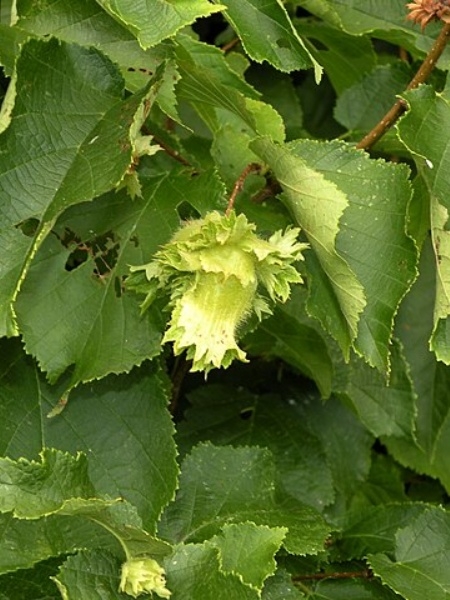
American Hazelnut is a beautiful large shrub or small tree that spreads by suckering into a small thicket. In the spring, pale catkins dangle from the tips of branches, and tiny red-tipped buds poke from the branches. Wind transfers the pollen from the male catkins to the female flowers. These are on the same branch, so it does not need multiple trees to pollinate, though more nuts will grow with more trees.
American Hazelnut's fruit is a round nut in a hard shell, familiar to many as hazelnuts or filberts, though the American hazelnuts are slightly smaller than the European hazelnut which is the source of most sold at a grocery store. However, they are otherwise very similar. Clusters of nuts grow sheathed in interesting, spiky-looking ruffled husk. The nuts.
American Hazelnut's fruit is a round nut in a hard shell, familiar to many as hazelnuts or filberts, though the American hazelnuts are slightly smaller than the European hazelnut which is the source of most sold at a grocery store. However, they are otherwise very similar. Clusters of nuts grow sheathed in interesting, spiky-looking ruffled husk. The nuts.
Plant Location
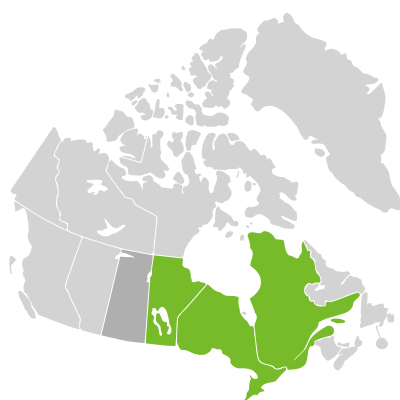
Distribution according to VASCAN
Ephemeral
Native
Introduced
Excluded
Extirpated
Doubtful
Absent
 Canadensis

No ecozone information available for this plant.
Ecological Benefits
Butterflies Supported by Corylus americana
-
Actias luna
Luna Moth - Papillon Lune -
Cingilia catenaria
Chain-dotted geometer - Arpenteuse caténaire -
Hyphantria cunea
Fall webworm - Écaille Fileuse -
Melanchra picta
Zebra caterpillar
Specialized Bees Supported by Corylus americana
No bee data available for this plant.
Complementary Plants
- No complementary plants found.
Substitute For Non-Native Plants
No substitute plant data available for this plant.
Sowing Information
Download Seed Envelope Labels (PDF)
- Sowing depth: Semer à un pouce de creux
- Sow by November
- Stratification conditions: Soak for 24h
- Stratification duration: 180 days
Harvesting and Seed Sharing
- Harvest start month: September
- Harvesting indicator:
- None
- Harvesting:
- None
- Seed viability test:
- None
- Packaging measure: A dozen (12) seeds (eyeball)
- Seed storage:
- Sécher à l'air dans un sac en papier ou contenant ouvert, pour quelques jours jusqu'à sec
- Secouer de temps à autre pour prévenir la moisissure
- Cultivar: None
- No harvesting video available at this time.
GRASP Candidate
Rare/endangered native plants within 50km radius of Ottawa approximately. Burton is anchor study, plus iNaturalist observations to corroborate if any recent spotting.