 Connu comme étant toxique - All parts of the plant, especially the berries and roots, contain toxins and should not be eaten by humans or pets.
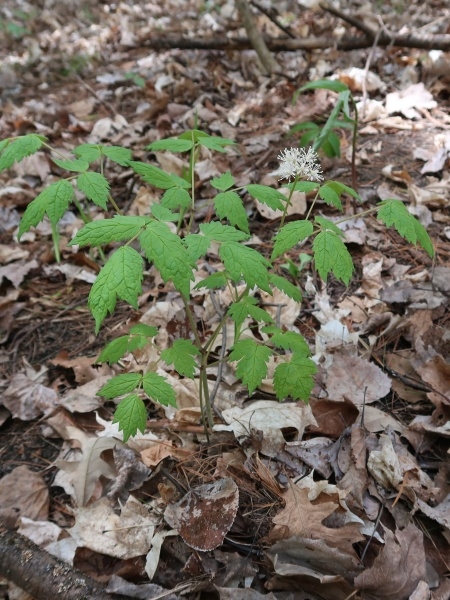
Plant Names

Actaea pachypoda
White Baneberry
Actée à gros pédicelles
Plant Characteristics
Couleur de floraison: Blanc
Bloom Period: May - Jun
Hauteur max: 3,0 feet
Max Width: 3,0 feet
Light Condition:
 More than 2 or 3 hours but less than 6 hours of direct sun a day
 Less than 2 or 3 hours of direct sun a day
Soil conditions:
 Tolerates medium soil condition
More than 2 or 3 hours but less than 6 hours of direct sun a day
Less than 2 or 3 hours of direct sun a day
Tolerates medium soil condition
Lifespan:
Vivace
des plantes qui reviennent année après année
Gardener Experience:
 Ne se propage pas de manière incontrôlable
Landscape Uses:
 Suitable for woodland gardens
Ecological Benefits:
 Supports birds
Tolerates:
 Deer resistant
 Rabbit resistant
 Tolerates sandy conditions
Deer resistant
Rabbit resistant
Tolerates sandy conditions
Special Features and Considerations:
 This plant causes skin rashes
Seed and plant distribution status
Semences disponible
Disponible à la table Ombre
Disponible à la table Ombre
Nous acceptions les semences de cette plante
Faits intéressants
White Baneberry is found in rich, moist forests and shaded woodland gardens. It has attractive clusters of white flowers in spring followed by distinctive white berries with dark “eye-like” spots on red stalks. The berries remain into late summer and add unique visual interest. It is excellent for woodland restoration. It is slow growing and long-lived. It forms tidy clumps and does not spread aggressively. It prefers moist, rich, organic woodland soils. Avoid hot, dry locations.
Plant Location
Distribution according to VASCAN
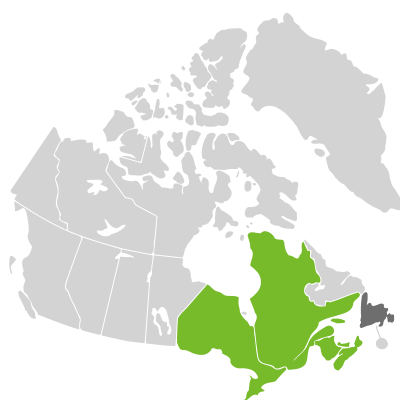
Ephemeral
Native
Introduced
Excluded
Extirpated
Doubtful
Absent
 Canadensis

No ecozone information available for this plant.
Ecological Benefits
Butterflies Supported by Actaea pachypoda
No butterfly data available for this plant.
Specialized Bees Supported by Actaea pachypoda
No bee data available for this plant.
Complementary Plants
- No complementary plants found.
Substitute For Non-Native Plants
No substitute plant data available for this plant.
Sowing Information
Download Seed Envelope Labels (PDF)
- Sowing depth: Surface sow
- Sow anytime
- Stratification duration: 2 years
- Double dormancy required
- Notes: Keep moist in fridge
Harvesting and Seed Sharing
- Harvest start month: August
- Harvesting indicator:
- Berries are ripen and easily fall off or have fallen off
- Harvesting:
- Squeeze berries to extract seeds, wash with soapy water to remove flesh, rinse throroughly using a strainer
- Seed viability test:
- Pas de test requis avant le don
- Packaging measure: None
- Seed storage:
- Garder humide et frais, danssac refermable au frigo, avec graines dans de terre, papier essuie-tout, filtre à café ou vermiculite, jusqu'au don
- Cultivar: Yes, do not donate unless you know source, and there are no known cultivars in your garden or at proximity
- Remove non-seed material
- No harvesting video available at this time.
Toxicity Notes
All parts of the plant, especially the berries and roots, contain toxins and should not be eaten by humans or pets.