Plant Names

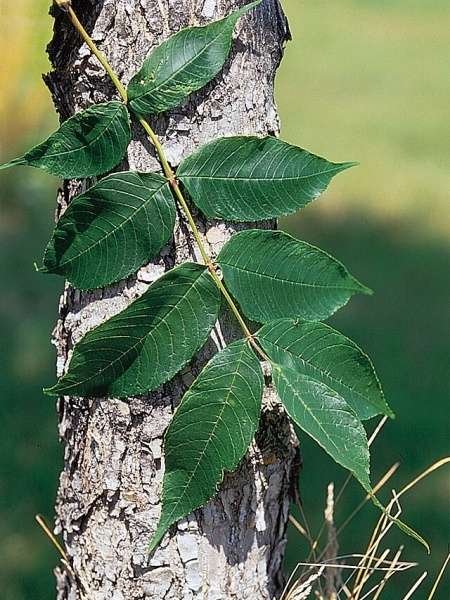
Fraxinus nigra
Black Ash
Frêne noir
Plant Characteristics
Couleur de floraison: Rose
Bloom Period: May - May
Hauteur max: 80,0 feet
Max Width: 40,0 feet
Light Condition:
 Plus de 6 heures d'ensoleillement par jour
Soil conditions:
Plus de 6 heures d'ensoleillement par jour
Soil conditions:
 Tolerates medium soil condition
Plus de 6 heures d'ensoleillement par jour
Tolerates medium soil condition
Lifespan:
Vivace
des plantes qui reviennent année après année
Plant is
dioecious
Need a male and female plant to produce seeds
Gardener Experience:
 Ne se propage pas de manière incontrôlable
 Self-seeding
Ne se propage pas de manière incontrôlable
Self-seeding
Landscape Uses:
 Suitable for shoreline rehabilitation
 Suitable for woodland gardens
Suitable for shoreline rehabilitation
Suitable for woodland gardens
Ecological Benefits:
 Supports birds
 Butterfly host
 Keystone species
Supports birds
Butterfly host
Keystone species
Tolerates:
 Tolerates salt conditions
Tolerates salt conditions
Special Features and Considerations:
Seed and plant distribution status
No seeds available for this plant.
Nous acceptions les semences de cette plante
Faits intéressants
Black Ash is a medium-sized native tree and is one of the northernmost ash species in North America. Its importance goes beyond the garden: Black Ash has deep cultural significance, particularly because its wood has traditionally been used by Indigenous peoples for basket making. In Ontario, Black Ash is currently listed as Endangered, largely because of the devastating impact of Emerald Ash Borer.
Black Ash is sometimes called Basket Ash or Hoop Ash because its wood has traditionally been used to make baskets. Indigenous basket makers have developed specialized techniques for preparing and splitting the wood.
It is a dioecious tree, meaning male and female flowers are generally found on separate trees.
Black Ash is a very long-lived tree. Some individuals can survive for 200–300 years.
Its seeds have an unusual strategy: they have deep dormancy and may not germinate until their second year, while seeds in the soil can remain viable for several years.
Emerald Ash Borer is a major concern. Black Ash has particular cultural importance because the loss of the trees also threatens the continuation of Indigenous knowledge and traditional practices.
Collecting and preserving seed from healthy, locally adapted trees can contribute to maintaining genetic diversity. Natural Resources Canada maintains conservation collections of Black Ash seed.
Black Ash is sometimes called Basket Ash or Hoop Ash because its wood has traditionally been used to make baskets. Indigenous basket makers have developed specialized techniques for preparing and splitting the wood.
It is a dioecious tree, meaning male and female flowers are generally found on separate trees.
Black Ash is a very long-lived tree. Some individuals can survive for 200–300 years.
Its seeds have an unusual strategy: they have deep dormancy and may not germinate until their second year, while seeds in the soil can remain viable for several years.
Emerald Ash Borer is a major concern. Black Ash has particular cultural importance because the loss of the trees also threatens the continuation of Indigenous knowledge and traditional practices.
Collecting and preserving seed from healthy, locally adapted trees can contribute to maintaining genetic diversity. Natural Resources Canada maintains conservation collections of Black Ash seed.
Plant Location
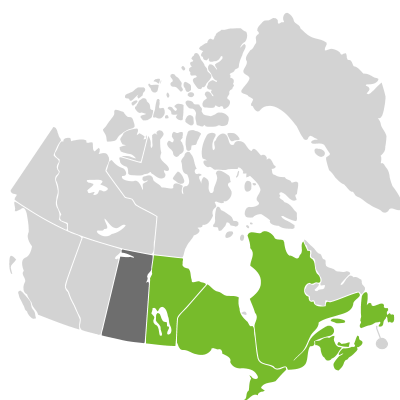
Native to Ottawa region: Oui
Distribution according to VASCAN
Ephemeral
Native
Introduced
Excluded
Extirpated
Doubtful
Absent
 Canadensis

Thrives in Ecozones
- Maritime de l'Atlantique
- Plaines boréales
- Plaines hudsoniennes
- Bouclier boréal
- Plaines à forêts mixtes
Ecological Benefits
Butterflies Supported by Fraxinus nigra
-
Acronicta radcliffei
Radcliffe’s dagger -
Cingilia catenaria
Chain-dotted geometer - Arpenteuse caténaire -
Hyphantria cunea
Fall webworm - Écaille Fileuse -
Sphinx chersis
Great Ash Sphinx - Sphinx du Frêne -
Sphinx kalmiae
Laurel Sphinx - Sphinx Laurier -
Spilosoma latipennis
Pink-legged tiger
Specialized Bees Supported by Fraxinus nigra
No bee data available for this plant.
Complementary Plants
- No complementary plants found.
Substitute For Non-Native Plants
- Rhamnus cathartica (Common Buckthorn)
- Rhamnus frangula (Glossy Buckthorn)
Sowing Information
Download Seed Envelope Labels (PDF)
- Sowing depth: 3/8 pouce
- Sow by January
- Stratification conditions: Soak for 12h
- Stratification duration: 90 days
- Self-seeding
Harvesting and Seed Sharing
- Harvest start month: July
- Harvesting indicator:
- Pods are released from plant
- Harvesting:
- Ouvrir la gousse, enlever les graines
- Seed viability test:
- Pas de test requis avant le don
- Packaging measure: Six (6) seeds (eyeball)
- Seed storage:
- Sécher à l'air dans un sac en papier ou contenant ouvert, pour quelques jours jusqu'à sec
- Secouer de temps à autre pour prévenir la moisissure
- Cultivar: Yes, do not donate unless you know source, and there are no known cultivars in your garden or at proximity
- Remove non-seed material
- No harvesting video available at this time.