Plant Names

Antennaria howellii
Howell's Pussytoes
Antennaire de Howell
Synonyms
small pussytoes
Plant Characteristics
Bloom Colour: White
Bloom Period: May - Jun
Max Height: 1.0 feet
Max Width: 1.0 feet (spreads by rhizome)
Light Condition:
 More than 6 hours of direct sun a day
 More than 2 or 3 hours but less than 6 hours of direct sun a day
Soil conditions:
More than 2 or 3 hours but less than 6 hours of direct sun a day
Soil conditions:
 Tolerates dry soil condition
More than 6 hours of direct sun a day
More than 2 or 3 hours but less than 6 hours of direct sun a day
Tolerates dry soil condition
Lifespan:
Perennial
plants that will come back year after year
Plant is
dioecious
Need a male and female plant to produce seeds
Gardener Experience:
 Suitable for beginner gardeners
 Does not spread uncontrollably
 Spreads by rhizome
 Self-seeding
Suitable for beginner gardeners
Does not spread uncontrollably
Spreads by rhizome
Self-seeding
Landscape Uses:
 Suitable for rock gardens
 Suitable for container garden
Suitable for rock gardens
Suitable for container garden
Ecological Benefits:
 Supports pollinators
 Butterfly host
Supports pollinators
Butterfly host
Tolerates:
 Deer resistant
 Rabbit resistant
 Tolerates sandy conditions
 Tolerates juglone conditions
 Tolerates transplantation
Deer resistant
Rabbit resistant
Tolerates sandy conditions
Tolerates juglone conditions
Tolerates transplantation
Special Features and Considerations:
 This plant is septic tank safe
This plant is septic tank safe
Seed and plant distribution status
No seeds available for this plant.
We currently accept seeds for this plant
Fun Facts
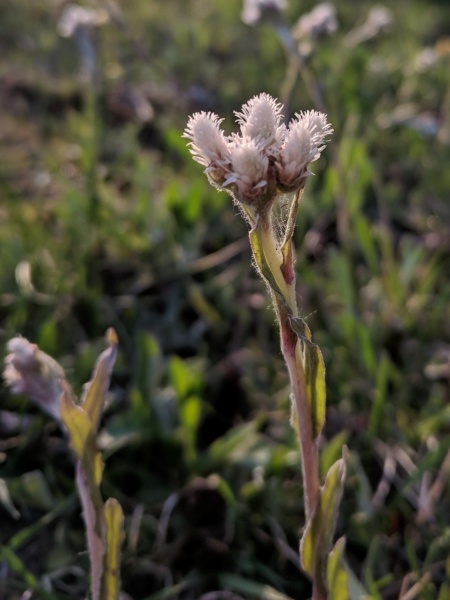
Howell’s Pussytoes is a low-growing, silvery native perennial that forms soft mats in dry, sunny sites such as rock gardens, prairies, open woods, or sandy slopes. It spreads gently by stolons to create a manageable groundcover. In spring, short stems rise with clusters of fuzzy white flowers that resemble tiny cat paws, giving the plant its whimsical name.
Howell's Pussytoes is drought-tolerant and hardy in poor soils, it attracts native pollinators. Its compact, steady-spreading habit makes it an ideal low-maintenance option for naturalized gardens, dry borders, or small patches in low-traffic areas.
Howell's Pussytoes is drought-tolerant and hardy in poor soils, it attracts native pollinators. Its compact, steady-spreading habit makes it an ideal low-maintenance option for naturalized gardens, dry borders, or small patches in low-traffic areas.
Plant Location
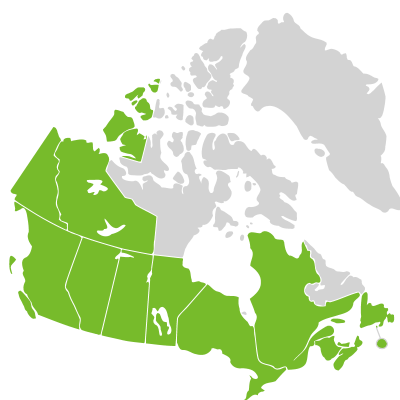
Native to Ottawa region: Yes
Distribution according to VASCAN
Ephemeral
Native
Introduced
Excluded
Extirpated
Doubtful
Absent
 Canadensis

Thrives in Ecozones
- Taiga Plains
- Atlantic Maritime
- Taiga Shield
- Boreal Plains
- Montane Cordillera
- Boreal Shield
- Mixed Wood Plains
Ecological Benefits
Butterflies Supported by Antennaria howellii
-
Vanessa virginiensis
American Lady - Vanesse de Virginie
Specialized Bees Supported by Antennaria howellii
No bee data available for this plant.
Complementary Plants
- Antennaria parlinii
Parlin's Pussytoes
Antennaire de Parlin - Fragaria virginiana
Virginia Strawberry
Fraisier des champs - Plantago rugelii
Rugel's Plantain
Plantain de Rugel - Sisyrinchium angustifolium
Narrow-leaved Blue-eyed Grass
Bermudienne à feuilles étroites - Sisyrinchium montanum
Strict Blue-eyed-grass
Bermudienne montagnarde
Substitute For Non-Native Plants
- Convallaria majalis (Lily of the Valley)
- Scilla siberica (Siberian Squill)
- Salvia (Non-Native Sage)
Sowing Information
Download Seed Envelope Labels (PDF)
- Sowing depth: Surface sow
- Sow anytime
- Stratification duration: 0 days
- Self-seeding
Harvesting and Seed Sharing
- Harvest start month: July
- Harvesting indicator:
- Seeds have become fluffy and can be easily removed by shaking on gently pulling off from stem
- Harvesting:
- Use hand to detach from main stem
- Seed viability test:
- No test needed before donating
- Packaging measure: 1 rounded 1/4 teaspoon
- Seed storage:
- Air dry in paper bag or open container, for a few days until crisp
- Shake seeds to move them once in a while to prevent molding
- Cultivar: No, you can donate without knowing the source as there are only straight species
- Harvesting video: Watch here
Toxicity Notes
Inadequate information on toxicity found.