
Plant Names

Lysimachia ciliata
Fringed Yellow Loosestrife
Lysimaque ciliée
Synonyms
ciliate loosestrife
fringed loosestrife
lysimaque cilié
lysimaque fimbriée
stéironéma cilié
Plant Characteristics
Bloom Colour: Yellow
Bloom Period: Jun - Aug
Max Height: 2.0 feet
Max Width: 3.0 feet (spreads by rhizome)
Light Condition:
 More than 6 hours of direct sun a day
 More than 2 or 3 hours but less than 6 hours of direct sun a day
Soil conditions:
More than 2 or 3 hours but less than 6 hours of direct sun a day
Soil conditions:
 Tolerates medium soil condition
More than 6 hours of direct sun a day
More than 2 or 3 hours but less than 6 hours of direct sun a day
Tolerates medium soil condition
Lifespan:
Perennial
plants that will come back year after year
Gardener Experience:
 Spreads by rhizome
 Self-seeding
Spreads by rhizome
Self-seeding
Landscape Uses:
 Suitable for wetland garden
 Suitable for rain gardens
 Suitable for container garden
 Suitable for school gardens
 Suitable for woodland gardens
Suitable for wetland garden
Suitable for rain gardens
Suitable for container garden
Suitable for school gardens
Suitable for woodland gardens
Ecological Benefits:
 Bee host
Bee host
Tolerates:
 Tolerates transplantation
Tolerates transplantation
Special Features and Considerations:
Seed and plant distribution status
No seeds available for this plant.
We currently accept seeds for this plant
Fun Facts
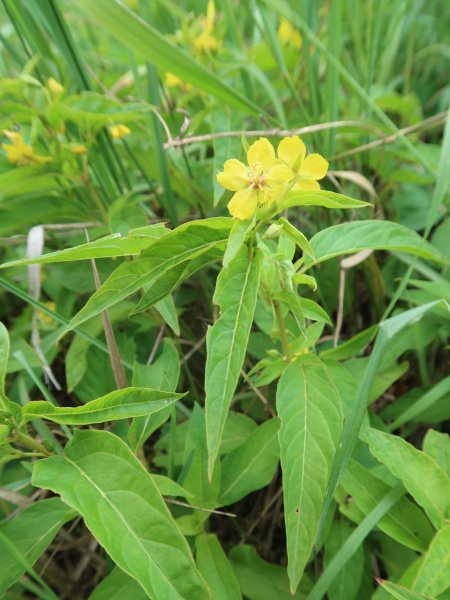
Fringed Loosestrife is found in moist woodlands, wetlands, stream edges, and damp meadows. It produces tall stems with pairs of oval leaves and bright yellow, five-petaled flowers in early to mid-summer. Unlike the invasive purple loosestrife (Lythrum salicaria), this species is a beneficial native plant and is unrelated despite the similar common name. It prefers moist, rich soils and it works well in woodland edges and naturalized garden areas. It is best grown in consistently moist soil. It can tolerate some shade but flowers best with more sunlight.
Plant Location
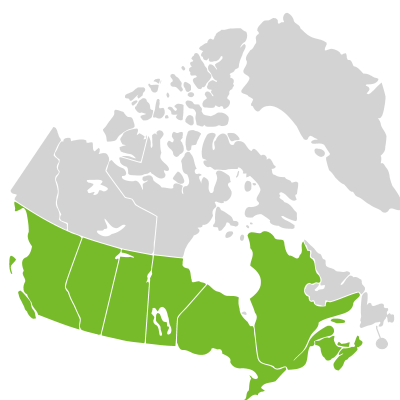
Native to Ottawa region: Yes
Distribution according to VASCAN
Ephemeral
Native
Introduced
Excluded
Extirpated
Doubtful
Absent
 Canadensis

Thrives in Ecozones
- Taiga Plains
- Atlantic Maritime
- Taiga Shield
- Boreal Plains
- Montane Cordillera
- Hudson Plains
- Boreal Shield
- Pacific Maritime
- Mixed Wood Plains
Ecological Benefits
Butterflies Supported by Lysimachia ciliata
No butterfly data available for this plant.
Specialized Bees Supported by Lysimachia ciliata
- Macropis nuda
Complementary Plants
- Asclepias incarnata
Swamp Milkweed
Asclépiade incarnate - Calamagrostis canadensis
Bluejoint Reedgrass
Calamagrostide du Canada - Lilium michiganense
Michigan Lily
Lis du Michigan - Lobelia cardinalis
Cardinal Flower
Lobélie cardinale - Mimulus ringens
Square-stemmed Monkeyflower
Mimule à fleurs entrouvertes
Substitute For Non-Native Plants
- Iris pseudacorus (Yellow Iris)
- Iris (Iris Cultivars)
Sowing Information
Download Seed Envelope Labels (PDF)
- Sowing depth: Surface sow
- Sow by February
- Stratification duration: 60 days
- Self-seeding
Harvesting and Seed Sharing
- Harvest start month: August
- Harvesting indicator:
- Pods are brown and slightly open
- Harvesting:
- Cut top edge then shake seeds off in bag or container
- Seed viability test:
- No test needed before donating
- Packaging measure: 1 rounded 1/8 teaspoon
- Seed storage:
- Air dry in paper bag or open container, for a few days until crisp
- Shake seeds to move them once in a while to prevent molding
- Cultivar: Yes, do not donate unless you know source, and there are no known cultivars in your garden or at proximity
- Remove non-seed material
- No harvesting video available at this time.
Toxicity Notes
Inadequate information on toxicity found.