
Plant Names

Phlox divaricata
Wild Blue Phlox
Phlox divariqué
Synonyms
blue phlox
blue woodland phlox
forest phlox
Louisiana phlox
wild sweet William
woodland phlox
phloce divariqué
Plant Characteristics
Bloom Colour: Blue
Bloom Period: Apr - May
Max Height: 1.0 feet
Max Width: 1.0 feet (spreads by rhizome)
Light Condition:
 Less than 2 or 3 hours of direct sun a day
Soil conditions:
Less than 2 or 3 hours of direct sun a day
Soil conditions:
 Tolerates medium soil condition
Less than 2 or 3 hours of direct sun a day
Tolerates medium soil condition
Lifespan:
Perennial
plants that will come back year after year
Gardener Experience:
 Suitable for beginner gardeners
 Does not spread uncontrollably
 Spreads by rhizome
 Easy to germinate
 Self-seeding
Suitable for beginner gardeners
Does not spread uncontrollably
Spreads by rhizome
Easy to germinate
Self-seeding
Landscape Uses:
 Suitable for Right of Way gardens
 Suitable for container garden
 Suitable for woodland gardens
 Tolerates boulevard garden conditions
Suitable for Right of Way gardens
Suitable for container garden
Suitable for woodland gardens
Tolerates boulevard garden conditions
Ecological Benefits:
 Supports hummingbirds
 Butterfly host
Supports hummingbirds
Butterfly host
Tolerates:
 Tolerates limestone conditions
 Tolerates sandy conditions
 Tolerates juglone conditions
 Tolerates transplantation
Tolerates limestone conditions
Tolerates sandy conditions
Tolerates juglone conditions
Tolerates transplantation
Special Features and Considerations:
 This plant is a GRASP candidate
This plant is a GRASP candidate
Seed and plant distribution status
No seeds available for this plant.
We currently accept seeds for this plant
Fun Facts
Wild Blue Phlox produces fragrant, pale blue, lavender, or occasionally white flowers in spring. It naturally grows in rich deciduous woods, woodland edges, and shaded slopes. It prefers moist, well-drained soil, although established plants can tolerate somewhat drier conditions. The spreading stems create an attractive groundcover beneath trees and shrubs. It benefits from consistent moisture during establishment. Avoid hot afternoon sun and very dry soil.
Plant Location
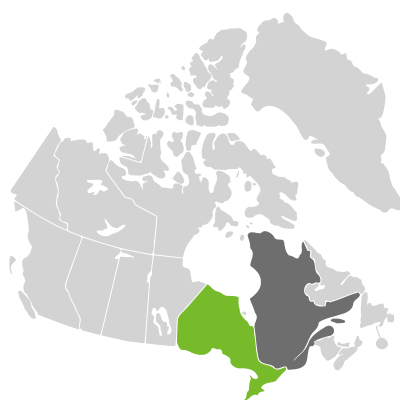
Native to Ottawa region: Yes
Distribution according to VASCAN
Ephemeral
Native
Introduced
Excluded
Extirpated
Doubtful
Absent
 Canadensis

Thrives in Ecozones
- Atlantic Maritime
- Mixed Wood Plains
Ecological Benefits
Butterflies Supported by Phlox divaricata
No butterfly data available for this plant.
Specialized Bees Supported by Phlox divaricata
No bee data available for this plant.
Complementary Plants
- Aquilegia canadensis
Red Columbine
Ancolie du Canada - Asarum canadense
Canada Wild Ginger
Asaret du Canada - Hepatica acutiloba
Sharp-lobed Hepatica
Hépatique à lobes aigus - Hepatica americana
Round-lobed Hepatica
Hépatique d’Amérique - Stylophorum diphyllum
Wood Poppy
Stylophore à deux feuilles
Substitute For Non-Native Plants
- Lamium (Dead nettle)
- Ajuga reptans (Bugleweed)
- Aegopodium podagraria (Goutweed)
- Convallaria majalis (Lily of the Valley)
- Lysimachia nummularia (Creeping Jenny)
- Iridaceae (Crocus)
- Scilla siberica (Siberian Squill)
- Salvia (Non-Native Sage)
- Funkia (Hosta)
- Vinca major and Vinca minor (Periwinkle)
- Campanula (Non-native Bellflower)
- Petunia (Non-Native Petunias)
- Myosotis sylvatica (Forget-me-not)
- Phlox subulata (Moss Phlox)
- Lamium galeobdolon (Yellow Archangel)
- Glechoma hederacea (Creeping Charlie)
- Hesperis matronalis (Dame Rocket)
Sowing Information
Download Seed Envelope Labels (PDF)
- Sowing depth: Sow just below surface
- Sow by February
- Stratification duration: 60 days
- Self-seeding
Harvesting and Seed Sharing
- Harvest start month: June
- Harvesting indicator:
- Seeds are dark and dry, and easily fall off when you gently pull them off
- Harvesting:
- Use hand to detach from main stem
- Seed viability test:
- No test needed before donating
- Packaging measure: 1 rounded 1/8 teaspoon
- Seed storage:
- Keep moist and cool, in a ziploc bag, in the fridge, with the seeds in soil, paper towel or coffee filter, until donation
- Cultivar: Yes, do not donate unless you know source, and there are no known cultivars in your garden or at proximity
- Remove non-seed material
- No harvesting video available at this time.
Toxicity Notes
Inadequate information on toxicity found.
GRASP Candidate
Rare/endangered native plants within 50km radius of Ottawa approximately. Burton is anchor study, plus iNaturalist observations to corroborate if any recent spotting.