 Inconnu - Inadequate information on toxicity found.
Plant Names

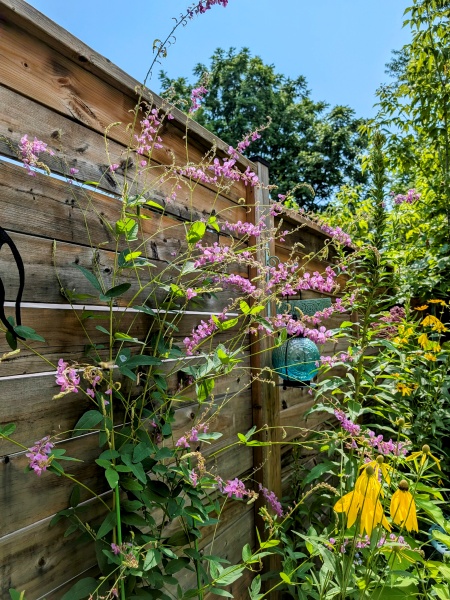
Desmodium canadense
Canada Tick-trefoil
Desmodie du Canada
Synonyms
showy tick-trefoil
Plant Characteristics
Couleur de floraison: Violet
Bloom Period: Jul - Aug
Hauteur max: 5,0 feet
Max Width: 1,0 feet
Light Condition:
 Plus de 6 heures d'ensoleillement par jour
 More than 2 or 3 hours but less than 6 hours of direct sun a day
Soil conditions:
More than 2 or 3 hours but less than 6 hours of direct sun a day
Soil conditions:
 Tolerates medium soil condition
Plus de 6 heures d'ensoleillement par jour
More than 2 or 3 hours but less than 6 hours of direct sun a day
Tolerates medium soil condition
Lifespan:
Vivace
des plantes qui reviennent année après année
Gardener Experience:
 Ne se propage pas de manière incontrôlable
 Self-seeding
Ne se propage pas de manière incontrôlable
Self-seeding
Landscape Uses:
 Suitable for rock gardens
 Suitable for rain gardens
 Suitable for shoreline rehabilitation
 Suitable for container garden
 Tolerates boulevard garden conditions
Suitable for rock gardens
Suitable for rain gardens
Suitable for shoreline rehabilitation
Suitable for container garden
Tolerates boulevard garden conditions
Ecological Benefits:
 Butterfly host
 Fixes nitrogen in the soil
Butterfly host
Fixes nitrogen in the soil
Tolerates:
 Tolerates drought conditions
 Tolerates salt conditions
 Tolerates limestone conditions
 Tolerates transplantation
Tolerates drought conditions
Tolerates salt conditions
Tolerates limestone conditions
Tolerates transplantation
Special Features and Considerations:
 This plant produces burs
This plant produces burs
Seed and plant distribution status
Semences disponible
Disponible à la table Plein soleil, moyen
Disponible à la table Plein soleil, moyen
Nous acceptions les semences de cette plante
Faits intéressants
Canada Tick-trefoil is the showiest of the tick trefoils. They are more attractive in colonies than isolated plants because they will support one another. Due to their slender stems they have an inclination to lean so a trellis can be helpful. Plants can be weighed down by a full head of flowers. The stems, leaves and seed pods are covered in velvety hooked hairs. This plant can take over a small garden. Nectar, pollen, seeds and foliage of this species appeal to insects, birds and animals.
Plant Location
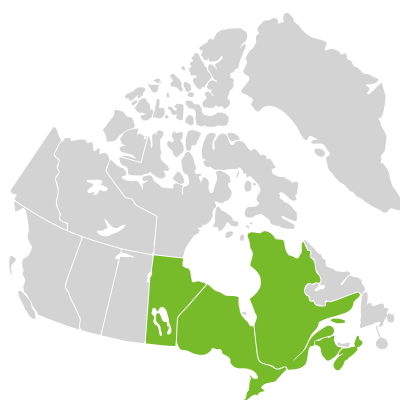
Native to Ottawa region: Oui
Distribution according to VASCAN
Ephemeral
Native
Introduced
Excluded
Extirpated
Doubtful
Absent
 Canadensis

Thrives in Ecozones
- Plaines à forêts mixtes
Ecological Benefits
Butterflies Supported by Desmodium canadense
-
Cecropterus lyciades
Hoary Edge -
Strymon melinus
Gray hairstreak - Porte-queue gris -
Thorybes pylades
Northern Cloudywing - Hespérie Nuageuse
Specialized Bees Supported by Desmodium canadense
No bee data available for this plant.
Complementary Plants
- Doellingeria umbellata
Flat-topped White Aster
Aster à ombelles - Helianthus giganteus
Giant Sunflower
Hélianthe géant - Solidago rigida
Stiff Goldenrod
Verge d'or rigide - Sorghastrum nutans
Yellow False-sorghum
Faux-sorgho penché - Symphyotrichum novae-angliae
New England Aster
Aster de Nouvelle-Angleterre
Substitute For Non-Native Plants
- Lamium (Dead nettle)
- Ajuga reptans (Bugleweed)
- Delphinium (Delphinium)
Sowing Information
Download Seed Envelope Labels (PDF)
- Sowing depth: Couvrir très légèrement
- Sow anytime
- Stratification duration: 0 days
- Self-seeding
- Notes: Can be sown in late spring in warm soil. Scarify if not hulled.
Harvesting and Seed Sharing
- Harvest start month: August
- Harvesting indicator:
- Seeds easily fall off when you gently pull them off
- Harvesting:
- Secouer le porte-graines dans un sac de papier
- Seed viability test:
- Pas de test requis avant le don
- Packaging measure: 1 rounded 1/4 teaspoon
- Seed storage:
- Sécher à l'air dans un sac en papier ou contenant ouvert, pour quelques jours jusqu'à sec
- Secouer de temps à autre pour prévenir la moisissure
- Cultivar: No, you can donate without knowing the source as there are only straight species
- No harvesting video available at this time.
Toxicity Notes
Inadequate information on toxicity found.