
 Inconnu - Inadequate information on toxicity found.
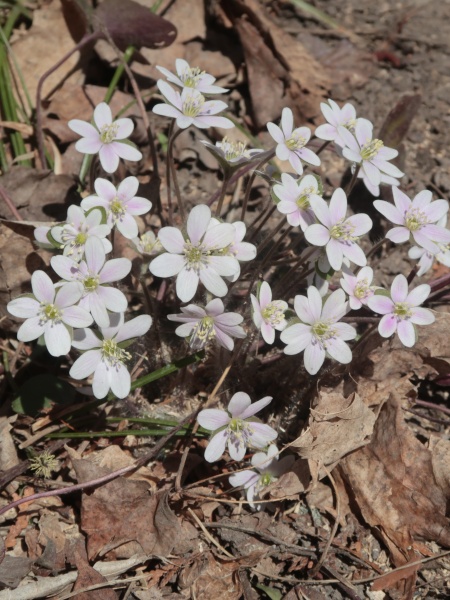
Plant Names

Hepatica americana
Round-lobed Hepatica
Hépatique d’Amérique
Synonyms
American hepatica
American liverleaf
anémone d'Amérique
hépatique noble
trinitaire
Plant Characteristics
Couleur de floraison: Blanc
Bloom Period: Apr - May
Hauteur max: 0,5 feet
Max Width: 0,75 feet
Light Condition:
 Less than 2 or 3 hours of direct sun a day
Soil conditions:
Less than 2 or 3 hours of direct sun a day
Soil conditions:
 Tolerates medium soil condition
Less than 2 or 3 hours of direct sun a day
Tolerates medium soil condition
Lifespan:
Vivace
des plantes qui reviennent année après année
Gardener Experience:
 Ne se propage pas de manière incontrôlable
Ne se propage pas de manière incontrôlable
Landscape Uses:
 Suitable for woodland gardens
Suitable for woodland gardens
Ecological Benefits:
No ecological benefits information available.
Tolerates:
 Deer resistant
 Rabbit resistant
 Tolerates limestone conditions
Deer resistant
Rabbit resistant
Tolerates limestone conditions
Special Features and Considerations:
 This plant causes skin rashes
This plant causes skin rashes
Seed and plant distribution status
No seeds available for this plant.
Nous acceptions les semences de cette plante
Faits intéressants
Round-lobed Hepatica is a beautiful early spring woodland flower with blue, lavender, pink, or white blossoms. It thrives in rich woodland soils with partial to full shade and often forms small colonies over many years. It provides valuable early nectar and pollen for native bees, small flies, and early pollinating insects. Ants help disperse the seeds. It is slow to establish but exceptionally long-lived. It is excellent beneath mature trees. Avoid excessive mulch over crowns and it is best left undisturbed.
Plant Location
Native to Ottawa region: Oui
Distribution according to VASCAN
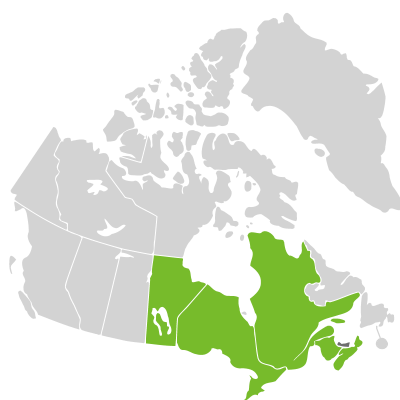
Ephemeral
Native
Introduced
Excluded
Extirpated
Doubtful
Absent
 Canadensis

Thrives in Ecozones
- Plaines à forêts mixtes
Ecological Benefits
Butterflies Supported by Hepatica americana
No butterfly data available for this plant.
Specialized Bees Supported by Hepatica americana
No bee data available for this plant.
Complementary Plants
- Aquilegia canadensis
Red Columbine
Ancolie du Canada - Asarum canadense
Canada Wild Ginger
Asaret du Canada - Hepatica acutiloba
Sharp-lobed Hepatica
Hépatique à lobes aigus - Phlox divaricata
Wild Blue Phlox
Phlox divariqué - Stylophorum diphyllum
Wood Poppy
Stylophore à deux feuilles
Substitute For Non-Native Plants
- Ajuga reptans (Bugleweed)
- Convallaria majalis (Lily of the Valley)
- Lysimachia nummularia (Creeping Jenny)
- Iridaceae (Crocus)
- Scilla siberica (Siberian Squill)
- Vinca major and Vinca minor (Periwinkle)
- Phlox subulata (Moss Phlox)
- Hedera helix (English Ivy)
- Glechoma hederacea (Creeping Charlie)
Sowing Information
Download Seed Envelope Labels (PDF)
- Sowing depth: Couvrir très légèrement
- Sow anytime
- Stratification duration: 0 days
- Notes: Sow promptly. Can be kept in fridge up to 2 months.
Harvesting and Seed Sharing
- Harvest start month: May
- Harvesting indicator:
- Seeds easily fall off when you gently pull them off
- Harvesting:
- Utiliser la main pour détacher de la tige principale
- Seed viability test:
- Pas de test requis avant le don
- Packaging measure: 1 rounded 1/8 teaspoon
- Seed storage:
- Garder humide et frais, danssac refermable au frigo, avec graines dans de terre, papier essuie-tout, filtre à café ou vermiculite, jusqu'au don
- Cultivar: Yes, do not donate unless you know source, and there are no known cultivars in your garden or at proximity
- Remove non-seed material
- Harvesting video: Watch here
Toxicity Notes
Inadequate information on toxicity found.