 Connu comme étant toxique - Toxic to mammals if ingested.
Plant Names

Teucrium canadense
Canada Germander
Germandrée du Canada
Synonyms
American germander
creeping germander
hairy germander
head betony
wild germander
Plant Characteristics
Couleur de floraison: Rose
Bloom Period: Jul - Sep
Hauteur max: 3,0 feet
Max Width: 2,0 feet (spreads by rhizome)
Light Condition:
 Plus de 6 heures d'ensoleillement par jour
 More than 2 or 3 hours but less than 6 hours of direct sun a day
Soil conditions:
More than 2 or 3 hours but less than 6 hours of direct sun a day
Soil conditions:
 Tolerates medium soil condition
Plus de 6 heures d'ensoleillement par jour
More than 2 or 3 hours but less than 6 hours of direct sun a day
Tolerates medium soil condition
Lifespan:
Vivace
des plantes qui reviennent année après année
Gardener Experience:
 Spreads by rhizome
 Facile à germer
 Self-seeding
Spreads by rhizome
Facile à germer
Self-seeding
Landscape Uses:
 Souhaitable dans les jardins de zone humide
 Suitable for rain gardens
 Suitable for container garden
 Suitable for school gardens
Souhaitable dans les jardins de zone humide
Suitable for rain gardens
Suitable for container garden
Suitable for school gardens
Ecological Benefits:
No ecological benefits information available.
Tolerates:
 Tolerates salt conditions
 Deer resistant
 Rabbit resistant
 Tolerates limestone conditions
 Tolerates transplantation
Tolerates salt conditions
Deer resistant
Rabbit resistant
Tolerates limestone conditions
Tolerates transplantation
Special Features and Considerations:
Seed and plant distribution status
No seeds available for this plant.
Nous acceptions les semences de cette plante
Faits intéressants
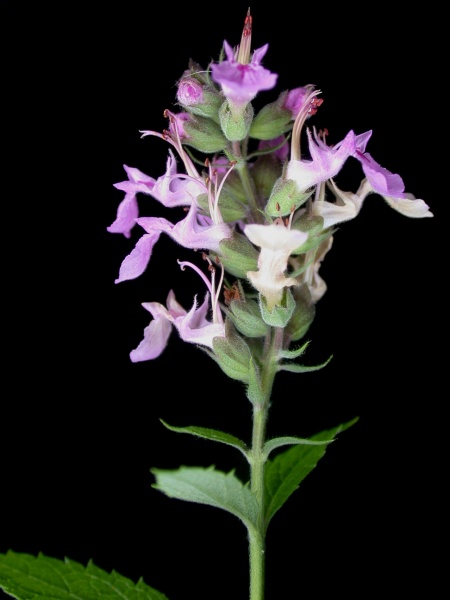
Canada Germander has upright stems, soft green leaves, and elegant spikes of pale pink to lavender flowers that bloom in mid‑ to late summer. The blossoms are two‑lipped and delicately patterned, attracting a wide range of pollinators. Canada Germander forms colonies over time and brings height, texture, and movement to meadows, wet edges, and naturalized plantings.
Canada Germander tolerates periodic flooding, though it will also grow in average garden soil if moisture is consistent. It produces its tallest and most abundant flower spikes in brighter locations. Blooming from mid‑summer into early fall, its foliage stays attractive until frost. Regular watering during the first season and a layer of mulch help maintain soil moisture and support strong establishment. In small gardens, consider root barriers or pair with equally robust neighbours. Ideal for naturalized or restoration settings where its spreading habit is an asset.
Canada Germander tolerates periodic flooding, though it will also grow in average garden soil if moisture is consistent. It produces its tallest and most abundant flower spikes in brighter locations. Blooming from mid‑summer into early fall, its foliage stays attractive until frost. Regular watering during the first season and a layer of mulch help maintain soil moisture and support strong establishment. In small gardens, consider root barriers or pair with equally robust neighbours. Ideal for naturalized or restoration settings where its spreading habit is an asset.
Plant Location
Native to Ottawa region: Oui
Distribution according to VASCAN
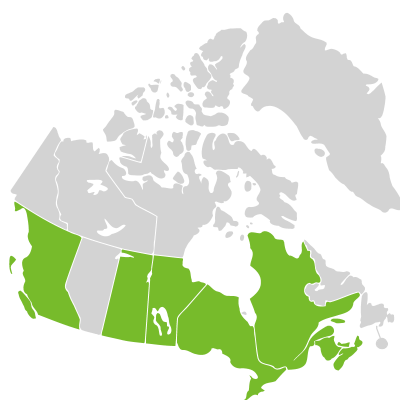
Ephemeral
Native
Introduced
Excluded
Extirpated
Doubtful
Absent
 Canadensis

Thrives in Ecozones
- Maritime de l'Atlantique
- Plaines à forêts mixtes
Ecological Benefits
Butterflies Supported by Teucrium canadense
No butterfly data available for this plant.
Specialized Bees Supported by Teucrium canadense
No bee data available for this plant.
Complementary Plants
- Helianthus giganteus
Giant Sunflower
Hélianthe géant - Lobelia spicata
Pale-spike Lobelia
Lobélie à épi - Solidago rigida
Stiff Goldenrod
Verge d'or rigide - Sorghastrum nutans
Yellow False-sorghum
Faux-sorgho penché - Symphyotrichum novae-angliae
New England Aster
Aster de Nouvelle-Angleterre
Substitute For Non-Native Plants
- Sorbaria sorbifolia (False spirea)
- Aruncus dioicus (Goat's Beard)
- Lamium (Dead nettle)
- Lupinus (Non-Native Lupins)
- Ajuga reptans (Bugleweed)
- Buddleia (Butterfly Bush)
- Delphinium (Delphinium)
- Iris (Iris Cultivars)
- Hyacinthus (Non-Native Hyacynth)
- Myosotis sylvatica (Forget-me-not)
- Astilbe (Astilbe)
- Melilotus albus (Sweet White Clover)
- Lavandula (Lavender)
Sowing Information
Download Seed Envelope Labels (PDF)
- Sowing depth: Couvrir très légèrement
- Sow by February
- Stratification duration: 60 days
- Self-seeding
Harvesting and Seed Sharing
- Harvest start month: September
- Harvesting indicator:
- Pods are brown and slightly open
- Harvesting:
- Cut stem (including pods), let air dry in paper bag, then shake seeds off after a few days
- Seed viability test:
- Pas de test requis avant le don
- Packaging measure: 1 rounded 1/8 teaspoon
- Seed storage:
- Sécher à l'air dans un sac en papier ou contenant ouvert, pour quelques jours jusqu'à sec
- Secouer de temps à autre pour prévenir la moisissure
- Cultivar: No, you can donate without knowing the source as there are only straight species
- No harvesting video available at this time.
Toxicity Notes
Toxic to mammals if ingested.