Plant Names

Typha latifolia
Broad-leaved Cattail
Quenouille à feuilles larges
Plant Characteristics
Couleur de floraison: Brun
Bloom Period: Jun - Jul
Hauteur max: 10,0 feet
Max Width: 7,0 feet (spreads by rhizome)
Light Condition:
 Plus de 6 heures d'ensoleillement par jour
 More than 2 or 3 hours but less than 6 hours of direct sun a day
Soil conditions:
More than 2 or 3 hours but less than 6 hours of direct sun a day
Soil conditions:
 Tolère des conditions de sol humide
Plus de 6 heures d'ensoleillement par jour
More than 2 or 3 hours but less than 6 hours of direct sun a day
Tolère des conditions de sol humide
Lifespan:
Vivace
des plantes qui reviennent année après année
Gardener Experience:
 Spreads by rhizome
Spreads by rhizome
Landscape Uses:
 Souhaitable dans les jardins de zone humide
 Suitable for shoreline rehabilitation
Souhaitable dans les jardins de zone humide
Suitable for shoreline rehabilitation
Ecological Benefits:
 Butterfly host
Butterfly host
Tolerates:
 Deer resistant
 Tolerates sandy conditions
 Tolerates acidic soil conditions
Deer resistant
Tolerates sandy conditions
Tolerates acidic soil conditions
Special Features and Considerations:
Seed and plant distribution status
Semences disponible
Disponible à la table Mi-soleil, humide
Disponible à la table Mi-soleil, humide
Nous acceptions les semences de cette plante
Faits intéressants
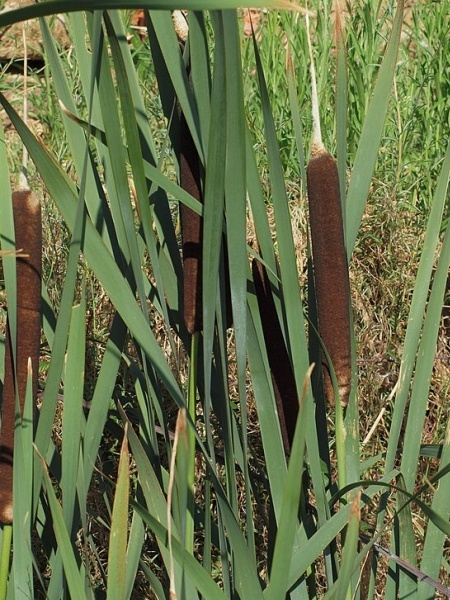
Broad-leaved Cattail is a tall, vigorous native wetland plant with long, sword-like leaves and the familiar brown cylindrical flower heads that appear in summer. It grows in marshes, pond edges, shallow water, ditches, and permanently wet soils. It can tolerate standing water. It is an important structural plant for wetland restoration but is generally too aggressive for a small garden pond. It can be grown in large containers placed in water to restrict the rhizomes. It can rapidly colonize shallow water and wet soil. It is best reserved for large ponds, wetlands, and naturalized areas.
Plant Location
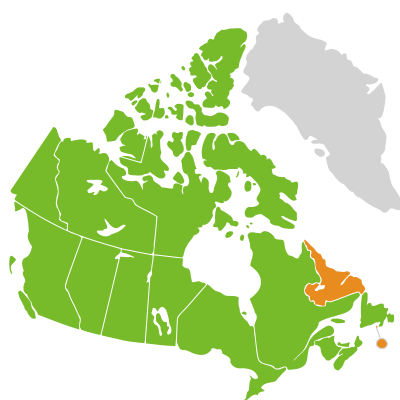
Native to Ottawa region: Oui
Distribution according to VASCAN
Ephemeral
Native
Introduced
Excluded
Extirpated
Doubtful
Absent
 Canadensis

Thrives in Ecozones
- Taïga des plaines
- Maritime de l'Atlantique
- Bas-Arctique
- Plaines boréales
- Cordillière montagnarde
- Plaines hudsoniennes
- Taïga de la Cordillière
- Bouclier boréal
- Cordillière boréale
- Maritime du Pacifique
- Plaines à forêts mixtes
Ecological Benefits
Butterflies Supported by Typha latifolia
-
Acronicta insularis
Henry's Marsh Moth - Acronicta insularis -
Bellura obliqua
Cattail Borer Moth - Bellura obliqua -
Globia oblonga
Oblong sedge borer - Globia oblonga
Specialized Bees Supported by Typha latifolia
No bee data available for this plant.
Complementary Plants
- Asclepias incarnata
Swamp Milkweed
Asclépiade incarnate - Eutrochium maculatum
Spotted Joe Pye Weed
Eupatoire maculée - Iris versicolor
Harlequin Blue Flag Iris
Iris versicolore - Ludwigia alternifolia
Bushy Seedbox
Ludwigie à feuilles alternes - Lysimachia ciliata
Fringed Yellow Loosestrife
Lysimaque ciliée
Substitute For Non-Native Plants
- NA (Black Eyed Susan's Cultivars)
Sowing Information
Download Seed Envelope Labels (PDF)
- Sowing depth: Couvrir très légèrement
- Sow anytime
- Stratification conditions: Can be sown in late spring in warm soil
- Stratification duration: 0 days
Harvesting and Seed Sharing
- Harvest start month: August
- Harvesting indicator:
- Seeds have become fluffy and can be easily removed by shaking on gently pulling off from stem
- Harvesting:
- Secouer le porte-graines dans un sac de papier
- Seed viability test:
- Pas de test requis avant le don
- Packaging measure: 1 rounded 1/8 teaspoon
- Seed storage:
- Sécher à l'air dans un sac en papier ou contenant ouvert, pour quelques jours jusqu'à sec
- Secouer de temps à autre pour prévenir la moisissure
- Cultivar: No, you can donate without knowing the source as there are only straight species
- No harvesting video available at this time.