 Inconnu - Inadequate information on toxicity found.
Plant Names

Andropogon gerardi
Big Bluestem
Barbon de Gérard
Synonyms
tall bluestem
turkeyfoot
barbon à épis digités
barbon de Gerard
barbon fourchu
Plant Characteristics
Couleur de floraison: Vert
Bloom Period: Jun - Sep
Hauteur max: 7,0 feet
Max Width: 3,0 feet (spreads by rhizome)
Light Condition:
 Plus de 6 heures d'ensoleillement par jour
 More than 2 or 3 hours but less than 6 hours of direct sun a day
Soil conditions:
More than 2 or 3 hours but less than 6 hours of direct sun a day
Soil conditions:
 Tolère des conditions de sol sec
 Tolerates medium soil condition
Plus de 6 heures d'ensoleillement par jour
More than 2 or 3 hours but less than 6 hours of direct sun a day
Tolère des conditions de sol sec
Tolerates medium soil condition
Lifespan:
Vivace
des plantes qui reviennent année après année
Gardener Experience:
 Suitable for beginner gardeners
 Ne se propage pas de manière incontrôlable
 Spreads by rhizome
 Self-seeding
Suitable for beginner gardeners
Ne se propage pas de manière incontrôlable
Spreads by rhizome
Self-seeding
Landscape Uses:
 Suitable for rock gardens
 Suitable for rain gardens
Suitable for rock gardens
Suitable for rain gardens
Ecological Benefits:
 Supports birds
 Butterfly host
Supports birds
Butterfly host
Tolerates:
 Tolerates drought conditions
 Deer resistant
 Rabbit resistant
 Tolerates limestone conditions
 Tolerates sandy conditions
 Tolerates juglone conditions
 Tolerates transplantation
Tolerates drought conditions
Deer resistant
Rabbit resistant
Tolerates limestone conditions
Tolerates sandy conditions
Tolerates juglone conditions
Tolerates transplantation
Special Features and Considerations:
Seed and plant distribution status
Semences disponible
Disponible à la table Mi-soleil, sec
Disponible à la table Mi-soleil, sec
Nous acceptions les semences de cette plante
Faits intéressants
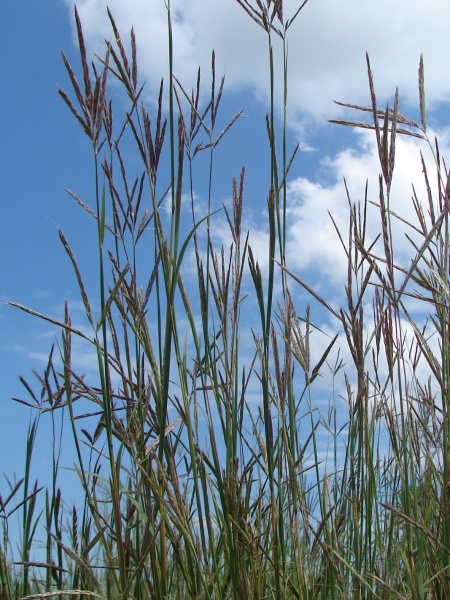
Big Bluestem is blue-green in summer, changing to a bronze colour in the fall. It is a long-lived, easy to grow clump forming grass. It can become floppy in shade. The seedhead branches into three parts resembling a “turkey foot” at the top and moves gracefully in the wind.
Plant Location
Native to Ottawa region: Oui
Distribution according to VASCAN
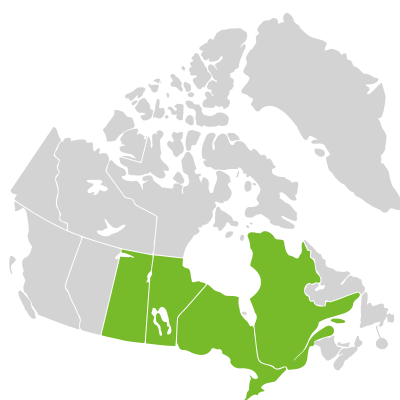
Ephemeral
Native
Introduced
Excluded
Extirpated
Doubtful
Absent
 Canadensis

Thrives in Ecozones
- Plaines boréales
- Prairies
- Plaines à forêts mixtes
Ecological Benefits
Butterflies Supported by Andropogon gerardi
-
Anatrytone logan
Delaware skipper - Hespérie de Logan -
Atrytonopsis hianna
Dusted Skipper - Hespérie Pointillée -
Cercyonis pegala
Common wood-nymph - Satyre des prés -
Dargida diffusa
Wheat head armyworm - Légionnaire des épis de blé -
Stereomita Andropogonis
Stereomita Andropogonis
Specialized Bees Supported by Andropogon gerardi
No bee data available for this plant.
Complementary Plants
- Agastache foeniculum
Blue Giant-hyssop
Agastache fenouil - Heliopsis helianthoides
False Sunflower
Héliopsis faux-hélianthe - Solidago juncea
Early Goldenrod
Verge d'or jonciforme - Symphyotrichum oolentangiense
Sky Blue Aster
Aster azuré - Veronicastrum virginicum
Culver's Root
Véronique de Virginie
Substitute For Non-Native Plants
- Miscanthus (Silvergrass)
- Cortaderia selloana (Pampas Grass)
- Phalaris arundinacea (Reed Canary Grass)
Sowing Information
Download Seed Envelope Labels (PDF)
- Sowing depth: Couvrir très légèrement
- Sow anytime
- Stratification duration: 0 days
- Self-seeding
- Notes: Can be sown in late spring in warm soil.
Harvesting and Seed Sharing
- Harvest start month: October
- Harvesting indicator:
- Seeds easily fall off when you gently pull them off
- Harvesting:
- Utiliser la main pour détacher de la tige principale
- Seed viability test:
- Pas de test requis avant le don
- Packaging measure: A dozen (12) seeds (eyeball)
- Seed storage:
- Sécher à l'air dans un sac en papier ou contenant ouvert, pour quelques jours jusqu'à sec
- Secouer de temps à autre pour prévenir la moisissure
- Cultivar: Yes, do not donate unless you know source, and there are no known cultivars in your garden or at proximity
- No harvesting video available at this time.
Toxicity Notes
Inadequate information on toxicity found.