 Connu comme étant toxique - Toxic to mammals if ingested.
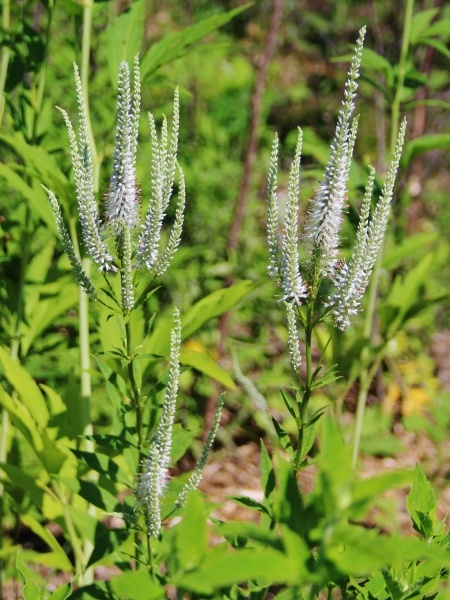
Plant Names

Veronicastrum virginicum
Culver's Root
Véronique de Virginie
Synonyms
Virginia Culver's root
véronicastre de Virginie
Plant Characteristics
Couleur de floraison: Blanc
Bloom Period: Jun - Sep
Hauteur max: 5,0 feet
Max Width: 3,0 feet
Light Condition:
 Plus de 6 heures d'ensoleillement par jour
 More than 2 or 3 hours but less than 6 hours of direct sun a day
Soil conditions:
More than 2 or 3 hours but less than 6 hours of direct sun a day
Soil conditions:
 Tolère des conditions de sol sec
 Tolerates medium soil condition
Plus de 6 heures d'ensoleillement par jour
More than 2 or 3 hours but less than 6 hours of direct sun a day
Tolère des conditions de sol sec
Tolerates medium soil condition
Lifespan:
Vivace
des plantes qui reviennent année après année
Gardener Experience:
 Suitable for beginner gardeners
 Ne se propage pas de manière incontrôlable
 Self-seeding
Suitable for beginner gardeners
Ne se propage pas de manière incontrôlable
Self-seeding
Landscape Uses:
 Suitable for rain gardens
 Suitable for shoreline rehabilitation
 Suitable for container garden
Suitable for rain gardens
Suitable for shoreline rehabilitation
Suitable for container garden
Ecological Benefits:
No ecological benefits information available.
Tolerates:
 Deer resistant
 Rabbit resistant
 Tolerates limestone conditions
 Tolerates sandy conditions
 Tolerates acidic soil conditions
 Tolerates transplantation
Deer resistant
Rabbit resistant
Tolerates limestone conditions
Tolerates sandy conditions
Tolerates acidic soil conditions
Tolerates transplantation
Special Features and Considerations:
Seed and plant distribution status
Semences disponible
Disponible à la table Mi-soleil, sec
Disponible à la table Mi-soleil, sec
Nous acceptions les semences de cette plante
Faits intéressants
Culver’s Root is elegant white to pale lavender flower spires that rise above whorled tiers of lance‑shaped leaves. Blooming in mid‑ to late summer, its candelabra‑like inflorescences add height, movement, and a serene vertical rhythm to meadows, wet edges, and naturalized gardens. The plant’s clean lines and airy structure make it a favourite in naturalistic designs. Plants may become less prominent during the hottest part of summer if soil dries out, so mulching and steady moisture help maintain vigor. Once established, it is long‑lived, sturdy, and reliably upright even in wind or rain. Avoid letting soil dry out during establishment; consistent moisture produces the best flower displays. Works beautifully in mass plantings where its vertical form creates visual rhythm.
Plant Location
Distribution according to VASCAN
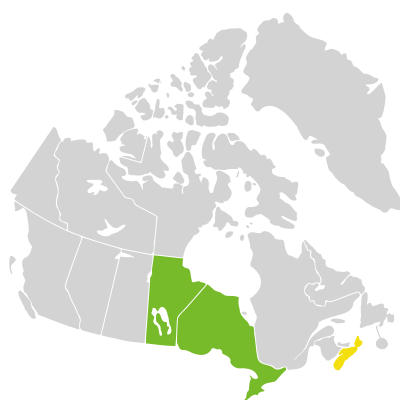
Ephemeral
Native
Introduced
Excluded
Extirpated
Doubtful
Absent
 Canadensis

Thrives in Ecozones
- Maritime de l'Atlantique
- Plaines boréales
- Plaines à forêts mixtes
Ecological Benefits
Butterflies Supported by Veronicastrum virginicum
No butterfly data available for this plant.
Specialized Bees Supported by Veronicastrum virginicum
No bee data available for this plant.
Complementary Plants
- Agastache foeniculum
Blue Giant-hyssop
Agastache fenouil - Andropogon gerardi
Big Bluestem
Barbon de Gérard - Heliopsis helianthoides
False Sunflower
Héliopsis faux-hélianthe - Solidago juncea
Early Goldenrod
Verge d'or jonciforme - Symphyotrichum oolentangiense
Sky Blue Aster
Aster azuré
Substitute For Non-Native Plants
- Sorbaria sorbifolia (False spirea)
- Aruncus dioicus (Goat's Beard)
- Buddleia (Butterfly Bush)
- Melilotus albus (Sweet White Clover)
Sowing Information
Download Seed Envelope Labels (PDF)
- Sowing depth: Surface sow
- Sow anytime
- Stratification duration: 0 days
- Self-seeding
- Notes: Can be sown in late spring in warm soil.
Harvesting and Seed Sharing
- Harvest start month: September
- Harvesting indicator:
- Pods are brown, seeds are dark, and crisp, and little stem connecting the pod to the main stem is brown (not green)
- Harvesting:
- Cut stem (including pods), let air dry in paper bag, then shake seeds off after a few days
- Seed viability test:
- Pas de test requis avant le don
- Packaging measure: 1 rounded 1/32 teaspoon
- Seed storage:
- Sécher à l'air dans un sac en papier ou contenant ouvert, pour quelques jours jusqu'à sec
- Secouer de temps à autre pour prévenir la moisissure
- Cultivar: Yes, do not donate unless you know source, and there are no known cultivars in your garden or at proximity
- No harvesting video available at this time.
Toxicity Notes
Toxic to mammals if ingested.