 Connu comme étant toxique - Toxic to pets and humans if ingested.
Plant Names

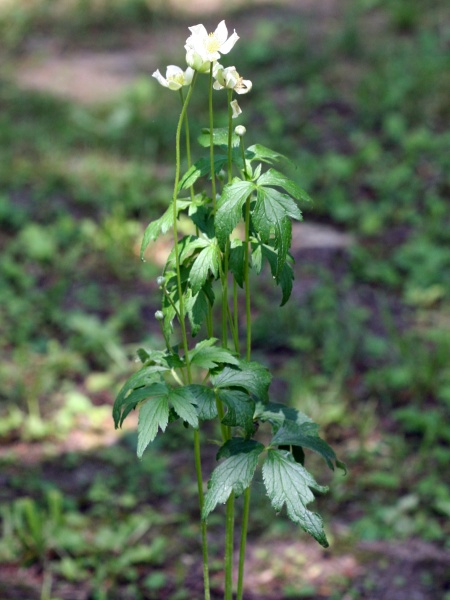
Anemone virginiana
Tall Anemone
Anémone de Virginie
Synonyms
tall thimbleweed
Virginia anemone
Plant Characteristics
Couleur de floraison: Blanc
Bloom Period: May - Jun
Hauteur max: 3,0 feet
Max Width: 2,0 feet (spreads by rhizome)
Light Condition:
 Plus de 6 heures d'ensoleillement par jour
 More than 2 or 3 hours but less than 6 hours of direct sun a day
 Less than 2 or 3 hours of direct sun a day
Soil conditions:
Less than 2 or 3 hours of direct sun a day
Soil conditions:
 Tolère des conditions de sol sec
 Tolerates medium soil condition
Plus de 6 heures d'ensoleillement par jour
More than 2 or 3 hours but less than 6 hours of direct sun a day
Less than 2 or 3 hours of direct sun a day
Tolère des conditions de sol sec
Tolerates medium soil condition
Lifespan:
Vivace
des plantes qui reviennent année après année
Gardener Experience:
 Ne se propage pas de manière incontrôlable
 Spreads by rhizome
 Facile à germer
 Self-seeding
Ne se propage pas de manière incontrôlable
Spreads by rhizome
Facile à germer
Self-seeding
Landscape Uses:
 Suitable for rock gardens
 Suitable for container garden
 Suitable for school gardens
 Suitable for woodland gardens
Suitable for rock gardens
Suitable for container garden
Suitable for school gardens
Suitable for woodland gardens
Ecological Benefits:
 Supports birds
Supports birds
Tolerates:
 Deer resistant
 Rabbit resistant
 Tolerates limestone conditions
 Tolerates juglone conditions
 Tolerates transplantation
Deer resistant
Rabbit resistant
Tolerates limestone conditions
Tolerates juglone conditions
Tolerates transplantation
Special Features and Considerations:
 This plant causes skin rashes
This plant causes skin rashes
Seed and plant distribution status
Semences disponible
Disponible à la table Ombre
Disponible à la table Ombre
Nous acceptions les semences de cette plante
Faits intéressants
Tall Thimbleweed has upright stems, large compound leaves, and clusters of greenish-white summer flowers. By fall, the flowers turn into distinctive thimble-shaped seed heads that persist into winter, providing architectural interest. Clump-forming and slow to spread, it is well-behaved in naturalized gardens, woodland edges, or shady borders. It prefers rich soils, making it a low-maintenance, wildlife-friendly native. Its long-lasting seed heads, summer blooms, and quiet stature make it a graceful perennial that adds seasonal structure without overtaking other plants.
Plant Location
Native to Ottawa region: Oui
Distribution according to VASCAN
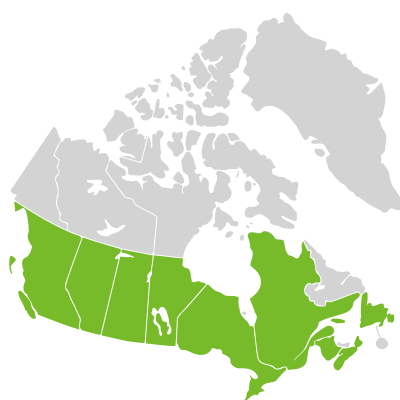
Ephemeral
Native
Introduced
Excluded
Extirpated
Doubtful
Absent
 Canadensis

Thrives in Ecozones
- Taïga des plaines
- Maritime de l'Atlantique
- Cordillière montagnarde
- Prairies
- Bouclier boréal
- Plaines à forêts mixtes
Ecological Benefits
Butterflies Supported by Anemone virginiana
No butterfly data available for this plant.
Specialized Bees Supported by Anemone virginiana
No bee data available for this plant.
Complementary Plants
- Blephilia ciliata
Downy Wood Mint
Bléphilie ciliée - Oenothera fruticosa
Narrow-leaved Evening-primrose
Onagre frutescente - Polanisia dodecandra
Red-whiskered Clammyweed
Polanisie à douze étamines - Sporobolus heterolepis
Prairie Dropseed
Sporobole à glumes inégales - Tradescantia ohiensis
Ohio Spiderwort
Tradescantie d'Ohio
Substitute For Non-Native Plants
- Sorbaria sorbifolia (False spirea)
- Aruncus dioicus (Goat's Beard)
- Polygonatum odoratum (Solomon's Seal)
Sowing Information
Download Seed Envelope Labels (PDF)
- Sowing depth: Surface sow
- Sow by February
- Stratification duration: 60 days
- Self-seeding
Harvesting and Seed Sharing
- Harvest start month: August
- Harvesting indicator:
- Seeds have become fluffy and can be easily removed by shaking on gently pulling off from stem
- Harvesting:
- Utiliser la main pour détacher de la tige principale
- Seed viability test:
- Pas de test requis avant le don
- Packaging measure: 1 rounded 1/4 teaspoon
- Seed storage:
- Sécher à l'air dans un sac en papier ou contenant ouvert, pour quelques jours jusqu'à sec
- Secouer de temps à autre pour prévenir la moisissure
- Cultivar: No, you can donate without knowing the source as there are only straight species
- Harvesting video: Watch here
Toxicity Notes
Toxic to pets and humans if ingested.