 Connu comme étant toxique - The sap can cause skin irritation or allergic reactions. Wear gloves when handling the plant if you have sensitive skin. Ingestion may also cause stomach upset.
Plant Names

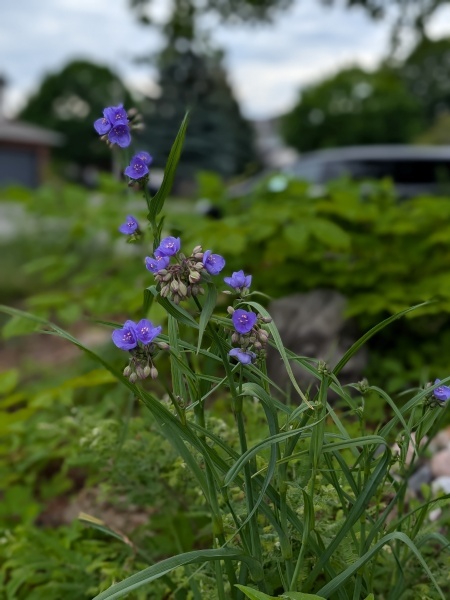
Tradescantia ohiensis
Ohio Spiderwort
Tradescantie d'Ohio
Synonyms
smooth spiderwort
éphémère d'Ohio
Plant Characteristics
Couleur de floraison: Bleu
Bloom Period: May - Jul
Hauteur max: 3,0 feet
Max Width: 1,5 feet (spreads by rhizome)
Light Condition:
 Plus de 6 heures d'ensoleillement par jour
 More than 2 or 3 hours but less than 6 hours of direct sun a day
Soil conditions:
More than 2 or 3 hours but less than 6 hours of direct sun a day
Soil conditions:
 Tolère des conditions de sol sec
 Tolerates medium soil condition
Plus de 6 heures d'ensoleillement par jour
More than 2 or 3 hours but less than 6 hours of direct sun a day
Tolère des conditions de sol sec
Tolerates medium soil condition
Lifespan:
Vivace
des plantes qui reviennent année après année
Gardener Experience:
 Suitable for beginner gardeners
 Ne se propage pas de manière incontrôlable
 Spreads by rhizome
 Facile à germer
 Self-seeding
Suitable for beginner gardeners
Ne se propage pas de manière incontrôlable
Spreads by rhizome
Facile à germer
Self-seeding
Landscape Uses:
 Suitable for rock gardens
 Suitable for rain gardens
 Suitable for container garden
 Suitable for school gardens
Suitable for rock gardens
Suitable for rain gardens
Suitable for container garden
Suitable for school gardens
Ecological Benefits:
No ecological benefits information available.
Tolerates:
 Tolerates acidic soil conditions
 Tolerates juglone conditions
 Tolerates transplantation
Tolerates acidic soil conditions
Tolerates juglone conditions
Tolerates transplantation
Special Features and Considerations:
 This plant is septic tank safe
 This plant causes skin rashes
This plant is septic tank safe
This plant causes skin rashes
Seed and plant distribution status
Semences disponible
Disponible à la table Mi-soleil, sec
Disponible à la table Mi-soleil, sec
Nous acceptions les semences de cette plante
Faits intéressants
Ohio Spiderwort is a hardy native perennial that forms upright clumps of long, narrow, blue-green leaves. Clusters of three-petalled blue to violet flowers appear from late spring through summer. Individual flowers often open in the morning and close by afternoon, with new flowers continuing to appear over an extended period. It is an excellent choice for prairie gardens, sunny borders, meadows, and naturalized plantings.
Ohio Spiderwort forms clumps and can spread gradually by short rhizomes and self-seeding. It is generally well behaved, although it can become fairly vigorous in rich, moist soil. It is very tolerant of drought once established. It can be divided in spring or fall if the clump becomes too large. The foliage can become somewhat floppy or untidy later in summer; cutting it back is an easy way to refresh the plant. Although each flower lasts only a short time, the plant produces new flowers repeatedly, giving it a surprisingly long flowering season.
Ohio Spiderwort forms clumps and can spread gradually by short rhizomes and self-seeding. It is generally well behaved, although it can become fairly vigorous in rich, moist soil. It is very tolerant of drought once established. It can be divided in spring or fall if the clump becomes too large. The foliage can become somewhat floppy or untidy later in summer; cutting it back is an easy way to refresh the plant. Although each flower lasts only a short time, the plant produces new flowers repeatedly, giving it a surprisingly long flowering season.
Plant Location
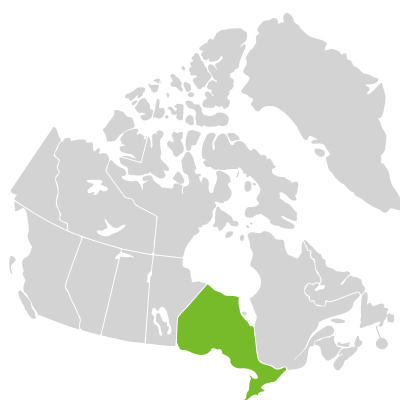
Distribution according to VASCAN
Ephemeral
Native
Introduced
Excluded
Extirpated
Doubtful
Absent
 Canadensis

Thrives in Ecozones
- Plaines à forêts mixtes
Ecological Benefits
Butterflies Supported by Tradescantia ohiensis
No butterfly data available for this plant.
Specialized Bees Supported by Tradescantia ohiensis
No bee data available for this plant.
Complementary Plants
- Anemone virginiana
Tall Anemone
Anémone de Virginie - Blephilia ciliata
Downy Wood Mint
Bléphilie ciliée - Oenothera fruticosa
Narrow-leaved Evening-primrose
Onagre frutescente - Polanisia dodecandra
Red-whiskered Clammyweed
Polanisie à douze étamines - Sporobolus heterolepis
Prairie Dropseed
Sporobole à glumes inégales
Substitute For Non-Native Plants
- Pennisetum setaceum (Fountain Grass)
- Hemerocallis (Daylily)
- Baptisia (False Indigo)
Sowing Information
Download Seed Envelope Labels (PDF)
- Sowing depth: Couvrir très légèrement
- Sow by December
- Stratification duration: 120 days
- Self-seeding
- Notes: Best planted outdoors in fall in cool soil.
Harvesting and Seed Sharing
- Harvest start month: July
- Harvesting indicator:
- Pods are slightly open and seeds inside are dark
- Harvesting:
- Cut stem (including pods), let air dry in paper bag, then shake seeds off after a few days
- Seed viability test:
- Pas de test requis avant le don
- Packaging measure: 1 rounded 1/8 teaspoon
- Seed storage:
- Sécher à l'air dans un sac en papier ou contenant ouvert, pour quelques jours jusqu'à sec
- Secouer de temps à autre pour prévenir la moisissure
- Cultivar: Yes, do not donate unless you know source, and there are no known cultivars in your garden or at proximity
- Remove non-seed material
- No harvesting video available at this time.
Toxicity Notes
The sap can cause skin irritation or allergic reactions. Wear gloves when handling the plant if you have sensitive skin. Ingestion may also cause stomach upset.